
Эволюция спиралевидной инновационной модели как фундаментальный индикатор уровня устойчивого развития агропромышленных кластеров
Рябчикова Н.Н.1 
1 Институт аграрных проблем - обособленное структурное подразделение Федерального государственного бюджетного учреждения науки Федерального исследовательского центра "Саратовский научный центр Российской академии наук" (ИАгП РАН), Саратов, Россия
Скачать PDF | Загрузок: 5
Статья в журнале
Вопросы инновационной экономики (РИНЦ, ВАК)
опубликовать статью | оформить подписку
Том 16, Номер 3 (Июль-сентябрь 2026)
Аннотация:
В статье рассмотрен вопрос эволюции спиралевидной инновационной модели как инструмента развития агропромышленных кластеров на пути к устойчивому развитию. В работе обоснована идея о том, что трансформированная спиралевидная модель может выступать фундаментальным индикатором устойчивого развития агропромышленных кластеров. Отдельное внимание в статье уделено описанию инновационных моделей, следующих после «тройной спирали». В заключении сделан вывод о том, что разработка индикаторов устойчивого развития агропромышленных кластеров должна находиться в плоскости социо-эколого-экономического ориентира с учетом этапа эволюции инновационной модели. Результаты данной статьи могут быть использованы органами государственной власти, бизнес-структурами, научно-образовательными организациями для стратегического планирования и развития социально-экономической системы
Ключевые слова: агропромышленный комплекс, агропромышленный кластер, экономика, устойчивое развитие, инновационное развитие, конкурентоспособность, индикатор развития, спиралевидная модель, модель «тройной спирали»
JEL-классификация: R11, Q01, Q18, Z31, Z32
Тезисы (Highlights):
Введение
Как известно, в современной аграрной экономике понятия устойчивость, инновации и конкурентоспособность тесно связаны между собой, и их соотношение проявляется в различных аспектах хозяйственной деятельности институтов агропромышленного комплекса (АПК). В соответствии с этим утверждением и темой исследования, главной целью данной работы стала – установить и проанализировать связь между указанными категориями по отношению к институту агропромышленной кластеризации и показать, как соответствующие трансформированные инновационные модели могут выступать индикаторами его устойчивого развития. Почему именно такие модели? Потому что, в нынешнее время инновационный процесс максимально интерактивен и спиралевидные модели в вопросе устойчивого развития, как всего АПК, так и в частности агропромышленных кластеров приобретают ключевое значение в части учета различных аспектов взаимодействия в нем.
Важно заметить, что по мере усложнения и переплетения взаимосвязей и взаимозависимостей в рамках кластеров как сложных экосистемах, а также усиления значения неэкономических аспектов, которые отражены в национальных целях развития России и которым принадлежит значительная роль в обеспечении устойчивого развития, спираль трансформировалась. Поэтому эволюцию спиралевидной модели рассматриваем как фундаментальный индикатор устойчивого развития кластеров АПК.
Объектом данного исследования выступила базовая модель «тройной спирали» и последующие расширенные в процессе формирования ее спиралевидные циклы, как индикатор устойчивого развития кластера АПК.
Предметом исследования стал процесс эволюции спиралевидной инновационной модели, обусловленный как соответствующими влияниями со стороны внешней среды, так и трансформацией самих субъектов взаимодействия, изменения их специфики функционирования для достижения устойчивого развития с учетом инновационного вектора.
Гипотеза автора заключается в предположении о том, что «уровни-витки» спиральной модели оказывают значительное влияние на функционирование и развитие агропромышленных кластеров через инновационную составляющую, и, изучив их принципы влияния и взаимодействия, можно выстроить упорядоченную систему индикаторов для устойчивого развития кластеров АПК.
Научный поиск, посвященный отдельным аспектам исследуемого вопроса в рамках спиральных моделей, прослеживается в большом количестве исследований. Разнообразные формы инновационного развития в рамках модели тройной спирали часто рассматриваются как на примерах зарубежного опыта [20–25] (Etzkowitz, Leydesdorff, 2000; Etzkowitz, Zhou, 2018; Carayannis, Campbell, 2009; Saad, Zawdie, 2011; Mabrouki, 2022), так и российкого [2; 4; 5; 7; 9; 12; 17; 18] (Bondarenko, 2015; Bondarenko, Dubovik, Gubarev, 2018; Borisoglebskaya, Mikhaylov, 2016; Batrakova, 2020; Kojnova, 2015; Pochebut, 2026; Trofimov, 2018; Udalczova, Krutskix, 2021).
В работе M. Mabrouki [25] (Mabrouki, 2022) эмпирическим путем подтверждается, что достижение устойчивого роста, основанного на инновациях и знаниях, возможны благодаря использованию модели тройной спирали. Многие авторы уже обозначили свой взгляд на развитие данной модели, путем включения новых элементов в ее структуру. Так, Э. Караянис и Э. Григорудис предложили модель четырехзвенной спирали The Quadruple Helix Model (2009), которая представляет собой единое пространство для трансфера инноваций между бизнесом и наукой при поддержке государства и участии гражданского общества, прежде всего, в контексте СМИ и культурного фактора [23] (Carayannis, Grigoroudis, 2016).
Исследователи Н.Е Бондаренко, Т.П. Максимова считают важным дополнение формализованной модели «тройной спирали» четвертым структурным элементом в виде финансовых институтов. По их мнению, структурными элементами модели агропромышленного кластера являются: государственные институты, разные формы хозяйствования (как крупные, так и мелкие), научные учреждения (университеты и НИИ, инновационные центры) и финансовые институты. Сектор пересечения всех четырех структурных элементов предполагает «зону» генерирования инновационных эффектов в процессе функционирования агропромышленного кластера [3] (Bondarenko, Maksimova, 2016).
Авторы С.А. Жиронкин, Ю.Ю. Суслова, С.К. Демченко, А.В. Волошин, О.С. Демченко доказали, что пятеричная спираль является результатом эволюции четверной спирали инноваций в условиях повышения роли ценностей устойчивого развития [26] (Zhironkin, Suslova, Demchenko, Voloshin, Demchenko, 2022).
Интересный материл, отражающий исследование развития инновационной модели «тройной спирали», причин и условий ее эволюции, сравнительный анализ, представлен автором И.В. Разинкиной [15] (Razinkina, 2022).
Мысль авторов Е.А. Кирилловой, М.И. Дли, Т.В. Какатуновой и В.А. Епифанова о том, что рассматриваемые паттерны представляют собой единый цикл вращения переходов между взаимосвязанными фазовыми состояниями в рамках устойчивого экономического роста, считаем, приобретает особое значение для современных агропромышленных кластеров. Особенно это важно в части выявления индикаторов их социо-эколого-экономического развития [10] (Kirillova, Dli, Kakatunova, Epifanov, 2022).
В прикладной части выбранного направления исследования Г.И. Поподько, О.С. Нагаева разработали свою систему показателей и методику оценки уровня инновационного развития ресурсного региона [14] (Popodko, Nagaeva, 2019). Н.Е. Егоров, Н.В. Васильева представили методику оценки уровня инновационного развития российских регионов на основе авторской эконометрической модели «Тройная спираль» [8] (Egorov, 2022).
Результаты исследования Н. В. Лясникова, В. М. Пахомова, Ю. А. Романова, А. С. Остальцева подтвердили, что будущее многопрофильных промышленных предприятий напрямую зависит от их способности к проактивному формированию инновационных траекторий, а их эволюционный сценарий обеспечивает более высокий уровень устойчивости [11] (Lyasnikov, Paxomov, Romanova, Ostalcev, 2026).
Как видим, вышеназванные направления исследования подтверждают актуальность и целесообразность темы статьи, а также необходимость ее дальнейшего развития в части формирования системы индикаторов устойчивого развития агропромышленных кластеров.
Основная часть
Начнем с того, что одним из ключевых факторов обеспечения устойчивого развития агропромышленных кластеров в стратегической перспективе являются инновации, которые, как правило, по больше мере обуславливают конкурентоспособность данной интеграционной формы, а также являются критическим условием ее устойчивого экономического роста. Необходимо учитывать, что в настоящее время инновации служат важным фактором устойчивого развития кластера АПК тогда, когда максимально соответствуют экономико-социолого-экологическим принципам.
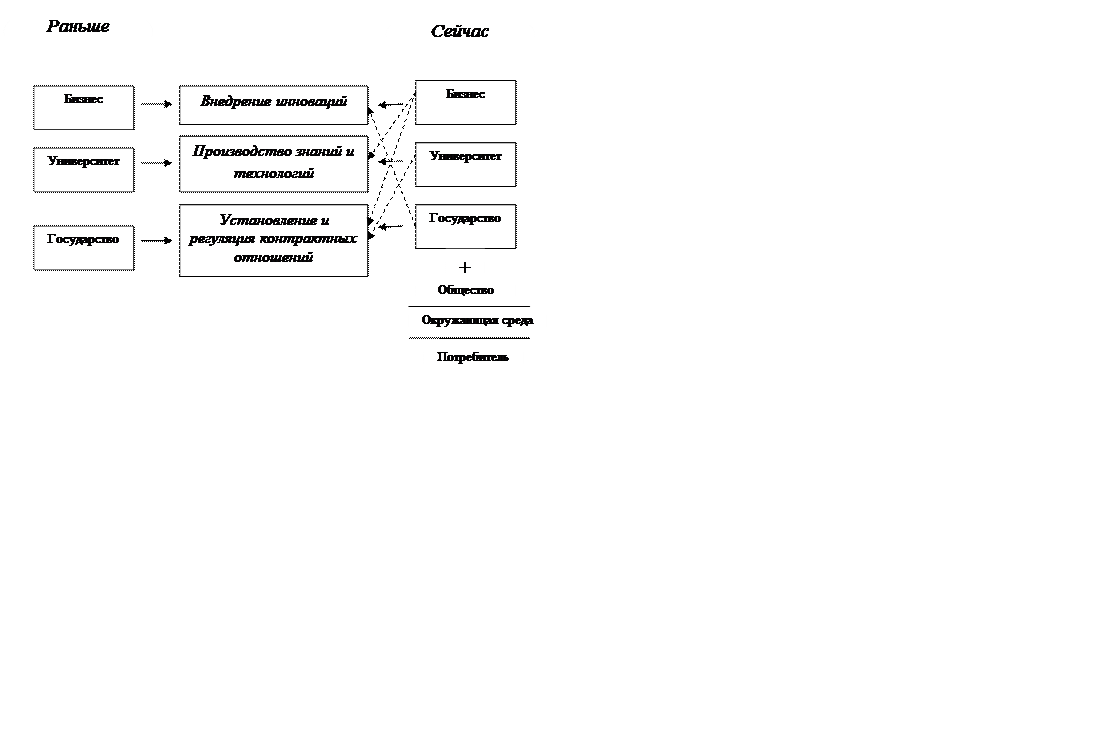 Примем
во внимание, что если ранее за внедрение инноваций преимущественно отвечал
бизнес, за производство знаний и технологий – университеты, а государство
регулировало контрактные взаимоотношения, то в настоящее время линейные связи
переросли в более сложные и неоднозначные. К ним добавились иные участники инновационного
процесса, которые ранее не были в него вовлечены (рис.1).
Примем
во внимание, что если ранее за внедрение инноваций преимущественно отвечал
бизнес, за производство знаний и технологий – университеты, а государство
регулировало контрактные взаимоотношения, то в настоящее время линейные связи
переросли в более сложные и неоднозначные. К ним добавились иные участники инновационного
процесса, которые ранее не были в него вовлечены (рис.1).
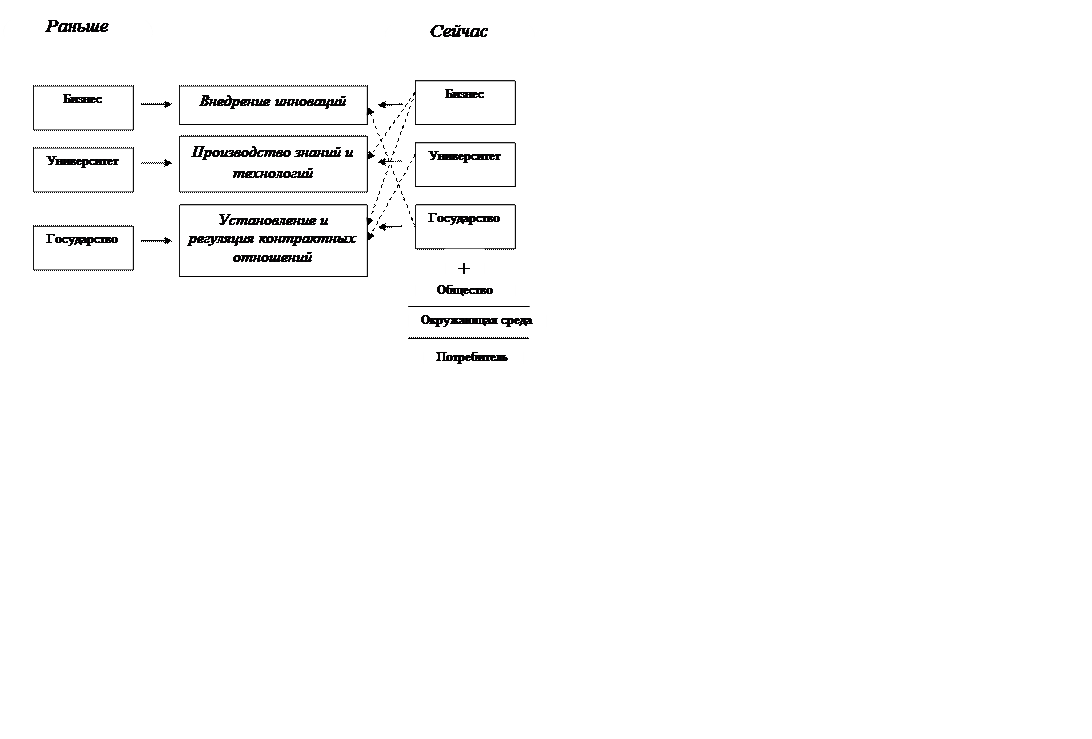 |
Рисунок 1. Процесс внедрения инноваций раньше и сейчас
Источник: составлено автором
Такие участники как общество, окружающая среда и потребитель в современном мире выступают полноправными акторами практически всех инновационных бизнес-процессов.
Что касается непосредственно агропромышленных кластеров, то они, как и все реальные функционирующие кластеры способствуют ускорению инновационного процесса. Эта их склонность к новаторству проявляется буквально во всех процессах, сопровождающих деятельность, начиная от организации деятельности субъектов кластеров до сбыта готовой продукции. В рамках кластера АПК у участников формируется прочная восприимчивость к инновациям, рационализация бизнеса и опережающий рост производительности [16] (Aleksandrova, 2025). Почему так происходит? (рис. 2).
 | |||
 | |||
 | |||
 | |||
 | |||
 | |||
 | |||
Рисунок 2. Ключевые причины ускорения инновационного процесса кластерами
Источник: составлено по материалам [16]
Таким образом, будучи в кластере компании быстрее включаются в процесс отработки новых технологий и своевременно реагируют на потребности локального рынка.
Как уже было отмечено выше, современный инновационный процесс максимально интерактивен и спиралевидные модели в вопросе устойчивого развития агропромышленных кластеров играют большую роль, поэтому целесообразно их развитие по всем траекториям с целью доведения оригинальной идей до реального воплощения конкретного продукта. Например, у научной организации может не быть лабораторных условий для воплощения результатов, а у производства соответствующих знаний и разработок, то тогда общий интерес в производстве инновационного продукта побуждает к совместной инновационной деятельности, нацеленной на результат. Отдельные звенья в спиралевидных моделях переплетаются, и тем самым, запускают череду системных преобразований, происходит генерация нового знания и его эффективная передача. Результаты интеллектуальной деятельности – это связующий элемент всех звеньев спирали. Интеллектуальная инновационная деятельность рассматривается с точки зрения трех векторов: создание дополнительной стоимости в агропромышленном производстве, обеспечение конкурентоспособности кластера и как результат научной деятельности по созданию уникального абсолютно нового продукта.
В целом, спиралевидные модели отражают взаимосвязь между уровнем инновационного и устойчивого развития, что является основанием для выделения ключевых индикаторов (моделирование прогнозных оценок влияния результативности инновационной деятельности на рост уровня кластерного развития). Полагаем, что в рамках спиралевидных моделей можно показать перспективу роста устойчивого развития в зависимости от уровня кластерного взаимодействия в вопросах, связанных с инновационной деятельностью.
Считаем, что эволюция спиралевидной инновационной модели является неким фундаментальным индикатором уровня устойчивого развития агропромышленных кластеров, а каждое звено спирали – это интегрированная институциональная область, которая требует отдельного внимания, изучения и выделения, соответствующих для нее «точечных» индикаторов развития [1] (рис .3).
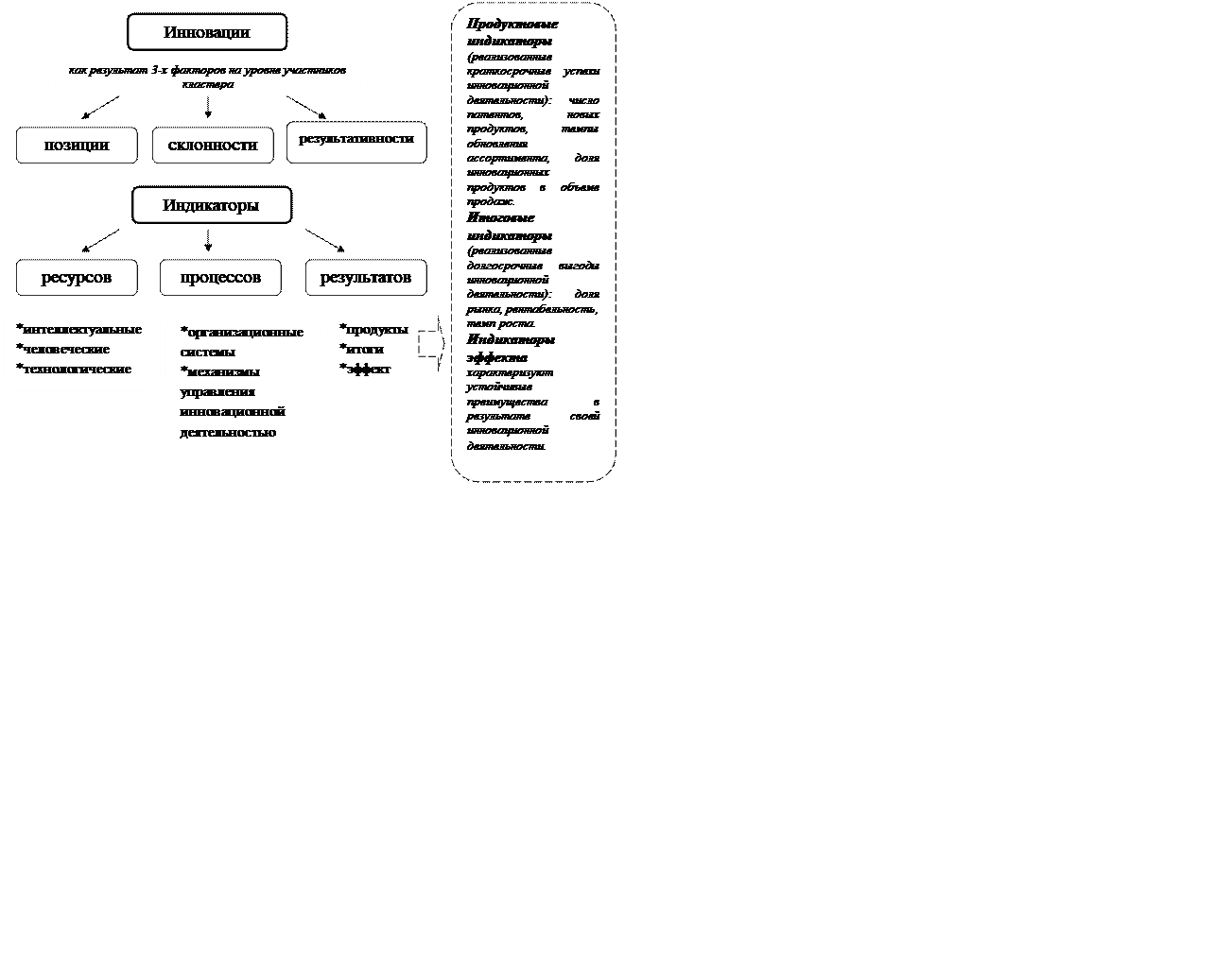 |
Рисунок 3. Продуктовые, итоговые и индикаторы эффекта
Источник: составлено автором по данным источника [23] (Carayannis, Grigoroudis, 2016).
Есть предположение, что инновационные процессы в российских агропромышленных кластерах недостаточно динамичны. Освоение результатов исследования происходит не так интенсивно, как могло бы быть. Чтобы кластеру стать успешным, недостаточно его участникам сфокусироваться на одном типе инноваций и развивать конкурентное преимущество, опираясь на выбранный фактор. Для получения устойчивого конкурентного преимущества необходим комплексный триединый подход к инновациям (ориентир на продукты, процессы, бизнес-модели). Соответственно, многоступенчатая тактика требуется и для выявления индикаторов устойчивого развития кластеров.
Заметим, что с учетом спиралевидной модели инновационного развития для агропромышленного кластера можно разработать индикатор эффекта устойчивого развития, но с учетом неопределенности прогнозной оценки данной модели. Для введения такого индикатора, нужно провести глубокий анализ эволюционных изменений модели для максимальной его сбалансированности и точности.
Модель «Тройной спирали» наряду с кластерной концепцией закономерно эволюционирует. Исследовав тренды агропромышленной кластеризации через призму трехуровневой спирали, возникла гипотеза об изменении вектора ее развития в соответствии с эволюцией развития инновационной модели. Считается, что еще более явно отображает значимость университетов в развитии агропромышленного комплекса четырехзвенная модель, которая содержит еще один компонент – общество, как конечный пользователь инноваций, влияющий на создание знаний и технологий [20] (Etzkowitz, Leydesdorff, 2000). Авторы Carayannis E. G., Campbell D. F. предложили дополнить Тройную спираль Лейдесдорфа и Ицковица четвертой спиралью – общественностью. Они предположили под ней «медиа», «креативную индустрию», «культуру», «ценности», «стили жизни», «искусство», «творческий класс» [22] (Carayannis, Campbell, 2009).
Культура, ценностные ориентиры общества, с одной стороны, и участие средств массовой информации в формировании общественного сознания, донесении знаниевых ценностей, инноваций, популяризации науки, технологий и изобретательства, с другой, обладает мощным потенциалом влияния на развитие экономики знаний и переход к индустрии 4.0. В итоге четырехзвенная спираль отражает взаимодействие четырех подсистем: наука и образование (университеты и научно-исследовательские организации); экономический сектор (промышленность, сфера услуг и банковского обслуживания и др.); государственные и политические институты, задающие вектор социально-экономического и в т.ч. инновационного развития; общественность (представители СМИ и культуры).
В настоящее время уже активно исследуются не только «четверная» (Quadruple Helix model), но и «пятерная», и «шестипиральная» модели (Quintuple Helix model) (рис. 4).

Рисунок 4. Эволюция модели «тройная спираль»
Источник: составлено автором
Вопрос охраны окружающей среды и необходимость экологической ответственности, как бизнеса, научных институтов, так и общества, поспособствовали дальнейшему развитию модели «Тройной спирали» и включению в нее пятого элемента – среды общества.
В 2025 году авторы А.И. Шинкевич и Е.С. Щербакова, учитывая усиление человекоцентричности, предложили добавить в спиралевидную систему шестой элемент – клиента / потребителя с изменением вектора инноваций от запроса клиента к бизнесу до производства персонализированных товаров и услуг [19] (Shherbakova, Shinkevich, 2025). Так появилась «шестипиральная» модель, соответствующая Индустрии 5.0.
Как видим, механизм развития спиральной модели связан со способами мышления и ценностями, соответствующие общей «картине мира». Переплетение витков предполагаемой спирали означает соотнесение целей и интересов всех участников инновационного процесса, который и определит ход мышления и алгоритм решения поставленных задач. На рисунке 4 отображены шесть предполагаемых спирали, предложенными разными исследователями. Мы в свою очередь полагаем, что последующая спираль – это сфера разума, именно как активная креативная составляющая инновационного процесса. Важно не забывать, что центральная фигура любого инновационного и иного связанного процесса – человек, разрабатывающий инновации и их внедряющий. Именно интеллект, разум и способности человека гарантирует успех процесса инновационных разработок и их внедрения, создающего не только прибыль, но и обеспечивающее устойчивое развитие на долгосрочную перспективу.
Приведенное описание подходов считаем важным дополнить следующей поправкой. Во всех видах спиралевидных моделей наука и образование – это один актор («спираль»), но в российской науке встречаются рассуждения по вопросу их разделения по причине особенностей сложившейся национальной системы науки и образования. Например, Л.А. Александрова и Е.Н. Павлова, проводя исследование отечественного опыта сотрудничества вузов и ведущих предприятий сельскохозяйственной отрасли в регионах РФ, отметили, что в российском варианте инновационная спираль имеет свою специфику. Ученые подчеркнули, что в качестве актора со стороны нашей науки, в отличие от университетов развитых стран, которые изначально выполняют большой объем фундаментальных разработок, следует рассматривать непосредственно Российскую академию наук. По мнению ученых, закономерно превращение изначально тройной спирали в квадроспираль (государство + агробизнес + наука + образование) [1] (Aleksandrova, Pavlova, 2017).
Таким образом, спиральная динамика показывает открытость рассматриваемой модели с учетом внешних воздействий и понимания ценностей.
Для устойчивого развития зрелого агропромышленного кластера с учетом его инновационных эффектов определяющее значение имеет тесное реальное взаимодействие представителей всех институциональных секторов – науки, бизнеса, властей и иных. Когда все стороны вовлекаются в процесс коэволюции, они сближают функциональные сферы, обеспечивая кластеру возможность динамичного саморазвития. Такой механизм сложился в Кремниевой долине [3] (Bondarenko, 2016), где области функционального пересечения трех секторов выступили новым механизмом достижения консенсуса и универсальной институциональной матрицей для инновационного роста.
Отметим, что «Тройная спираль» изначально радикально отличается от модели государственно-частного партнерства индустриальной эпохи не только по характеру взаимодействий игроков, но и по их функциональной роли в экономическом процессе. Последующие ее вариации, соответствующие Индустрии 4.0, 5.0, 6.0 и даже 7.0 в перспективе, связаны с симбиотической интеллектуальной экономикой. Новая экономическая форма предполагает гармоничную коэволюцию биосферы и техносферы. Индустрия 5.0 служит переходом к эпохе индивидуализации и кастомизации, а Индустрия 6.0 [6] (Babkin, Shkarupet, 2024) принесет «эмоциональные машины», открывая новые возможности в психосоциальной сфере. Индустрия 7.0, в свою очередь, окончательно изменит взаимоотношения между человеком и машиной в эпоху науки о жизни.
Подводя итог вышесказанному, отметим, что для устойчивого развития агропромышленного кластера необходимо четко обозначить соотношение его устойчивости, инновационной составляющей и конкурентоспособности. Уровень его инновационного развития зависит от ключевых трендов в экономике и кластерной концепции, которые требуют тщательного анализа проекций спиралей инновационных моделей в части влияния на устойчивость и трансформационные моменты кластера. Поскольку главное достоинство модели тройной спирали как сетевого механизма согласования действий заключается в интегральном эффекте непрерывных обновлений [2], то ее эволюционные трансформации рассматриваем как фундаментальный показатель устойчивого развития, в нашем случае, агропромышленного кластера. Разработку отдельных индикаторов устойчивого развития агропромышленного кластера предлагаем производить по пути триединого подхода в рамках социо-эколого-экономических ориентиров с разделением на взаимоувязанные группы. Таким образом, отдельные группы индикаторов устойчивого развития агропромышленных кластеров сформируют логично выстроенную их систему, учитывающей эволюционные сдвиги спиралевидных моделей.
[1] Carayannis E., Grigoroudis E. (2016). [Электронный ресурс]. URL: Users/vladi/Downloads/chetyrehzvennaya-spiral-innovatsiy-i-umnaya-spetsializatsiya-proizvodstvo-znaniy-i-natsionalnaya-konkurentosposobnost.pdf. (дата обращения: 25.03.2026).
[2] Н. Смородинская. Тройная спираль как новая матрица экономических систем. [Электронный ресурс]. URL: https://cyberleninka.ru/article/n/troynaya-spiral-kak-novaya-matritsa-ekonomicheskih-sistem/viewer (дата обращения: 05.03.2026).
Источники:
2. Бондаренко Н.Е. Инновационные кластеры: теоретические основы и формы организации // Вестник российского экономического университета имени Г.В. Плеханова. – 2015. – № 5. – c. 29-41.
3. Бондаренко Н.Е., Максимова Т.П. Модель «тройной спирали» как механизм инновационного развития агропромышленных кластеров РФ // Инновации и инвестиции. – 2016. – № 9. – c. 14–20.
4. Бондаренко Н.Е., Дубовик М.В., Губарев Р.В. Тройная спираль как основа создания инновационных систем // Вестник Российского экономического университета имени Г.В. Плеханова. – 2018. – № 2. – c. 3-15. – doi: 10.21686/2413-2829-2018-2-3-15.
5. Борисоглебская Л.Н., Михайлов В.Н. Взаимодействие университетов, бизнеса и государства в контексте «тройной спирали» на зарубежном примере: проблемы и перспективы // Приоритетные научные направления: от теории к практике. – 2016. – № 21. – c. 175-186.
6. Бабкин А.В., Шкарупета Е.В. Индустрия 6.0: сущность, тенденции и стратегические возможности для России // Экономика промышленности. – 2024. – № 17. – c. 353-377. – doi: 10.17073/2072-1633-2024-4-1369.
7. Батракова Л.Г. Инновационное развитие регионов России по модели Тройной спирали // Социально-политические исследования. – 2020. – № 3. – c. 67–80. – doi: 10.20323/2658-428X-2020-3-8-67-80.
8. Егоров Н.Е., Васильева Н.В. Оценка уровня инновационного развития регионов на основе эконометрической модели «Тройная спираль» и российского регионального инновационного индекса // Вопросы инновационной экономики. – 2022. – № 3. – c. 1697-1710. – doi: 10.18334/vinec.12.3.115181.
9. Койнова Г.Н. Когнитивная психология в инновационной деятельности. / учеб. пособие / науч. ред. В.И. Сырямкин. - Томск: Издательский Дом Томского государственного университета, 2015. – 130 c.
10. Кириллова Е.А., Дли М.И., Какатунова Т.В., Епифанов В.А. Трансформация модели тройной спирали в условиях формирования инновационных экосистем в промышленности // Дискуссия. – 2022. – № 1. – c. 16-30. – doi: 10.46320/2077-7639-2022-1-110-16-30.
11. Лясников Н. В., Пахомов В. М., Романова Ю. А., Остальцев А. С. Инновационные траектории стратегического развития многопрофильных промышленных предприятий: баланс устойчивости и экономической безопасности // Вопросы инновационной экономики. – 2026. – № 1. – c. 209-230. – doi: 10.18334/vinec.16.1.124648.
12. Почебут Л. Г., Чикер В. А. Организационная социальная психология. / учебник для вузов / 2-е изд., испр. и доп. - Москва: Издательство Юрайт, 2026.
13. Пудовкина О.Е., Иваев М.И., Сафронов Е.Г., Нарыжная Н.Ю. Кластеризация в промышленности как потенциал для развития технологичной экономики // Креативная экономика. – 2024. – № 2. – c. 323-336. – doi: 10.18334/ce.18.2.120385.
14. Поподько Г.И., Нагаева О.С. Условия реализации модели «тройной спирали» в регионах ресурсного типа // Вопросы инновационной экономики. – 2019. – № 9. – c. 77–96. – doi: 10.18334/vinec.9.1.40494.
15. Разинкина И.В. Развитие спирали инноваций: сравнительный анализ инновационных моделей тройной, четверной и пятерной спиралей // Экономические науки. – 2022. – № 1. – c. 131-137. – doi: 10.14451/1.206.131.
16. Александрова Л. А. Теория и практика управления конкурентоспособностью агробизнеса. / монография. - Саратов: Изд-во Саратовский источник, 2025. – 217 c.
17. Трофимов Н.А. Как обеспечить экономическую безопасность? Между Сциллой тройной спирали и Харибдой перформативности // Экономическая безопасность. – 2018. – № 3. – c. 189-197. – doi: 10.18334/ecsec.1.3.100517.
18. Удальцова Н.Л., Крутских Д.А. Особенности становления и развития инновационной системы России в контексте «Тройной спирали» // Вопросы инновационной экономики. – 2021. – № 1. – c. 33-46. – doi: 10.18334/vinec.11.1.111894.
19. Щербакова Е.С., Шинкевич А.И. Тенденции успешности стартапов с технологиями искусственного интеллекта при стимулировании инноваций в рамках шестиспиральной модели // Управление устойчивым развитием. – 2025. – № 2. – c. 12-24. – doi: 10.55421/2499992X–2025–2–12.
20. Etzkowitz H., Leydesdorff L. The dynamics of innovation: from National Systems and «Mode 2» to a Triple Helix of university–industry–government relations // Research Policy. – 2000. – № 2. – p. 109-123. – doi: 10.1016/S0048-7333(99)00055-4.
21. Etzkowitz H., Zhou C. The Triple Helix: University–Industry–Government Innovation and Entrepreneurship. - New York: Routledge, 2018. – 328 p.
22. Carayannis E. G., Campbell D. F. J. «Mode 3 «and» Quadruple Helix»: toward a 21st century fractal innovation ecosystem // International Journal of Technology Management. – 2009. – № 3–4. – p. 201–234.
23. Carayannis E., Grigoroudis E. Quadruple Innovation Helix and Smart Specialization: Knowledge Production and National Competitiveness // Foresight and STI Governance. – 2016. – № 1. – p. 31-42. – doi: 10.17323/1995-459x.2016.1.31.42.
24. Saad M., Zawdie G. Theory and Practice of Triple Helix Model in Developing Countries: Issues and Challenges. - New York: Routledge, 2011. – 336 p.
25. Mabrouki M. Patent, education, human capital, and economic growth in Scandinavian countries: a dynamic panel CS-ARDL analysis // Journal of the Knowledge Economy. – 2022. – doi: 10.1007/s13132–022–01001–1.
26. Zhironkin S.A., Suslova Y. Yu., Demchenko S.K., Voloshin A.V., Demchenko O.S. From a triple to a Penta Helix: the evolution of innovative economy development methodology // J. Sib. Fed. Univ. Humanit. soc. sci.. – 2022. – № 12. – p. 1854-1864. – doi: 10.17516/1997–1370–0957.
Страница обновлена: 15.10.2026 в 18:46:13
Download PDF | Downloads: 5
The evolution of the helix innovation model: a key indicator of sustainable development in agro-industrial clusters
Ryabchikova N.N.Journal paper
Russian Journal of Innovation Economics
Volume 16, Number 3 (July-september 2026)
Abstract:
The article examines the evolution of the helix innovation model as a tool for developing agro-industrial clusters on the path to sustainability.
The article substantiates the idea that a transformed spiral model can serve as a fundamental indicator of the sustainable development of agro-industrial clusters. Special attention is given to the description of innovative models following the triple helix.
The conclusion is that the development of indicators for the sustainable development of agro-industrial clusters should be based on socio-ecological-economic guidelines, taking into account the stage of evolution of the innovative model. The results of this article can be used by public authorities, businesses, and scientific and educational organizations for strategic planning and development of the socio-economic system.
Keywords: agro-industrial complex, agro-industrial cluster, economy, sustainable development, innovative development, competitiveness, development indicator, helix model, triple helix model
JEL-classification: R11, Q01, Q18, Z31, Z32
Highlights:
References:
Aleksandrova L. A. (2025). Theory and practice of agribusiness competitiveness management
Aleksandrova L.A., Pavlova E.N. (2017). Integration of Universities and Agricultural Enterprises in the Framework of Innovative Quadro-Helix. Journal of agricultural science. (4). 75–80.
Babkin A.V., Shkarupeta E.V. (2024). Industry 6.0: The Essence, Trends and Strategic Opportunities for Russia. Russian Journal of Industrial Economics. (17). 353-377. doi: 10.17073/2072-1633-2024-4-1369.
Batrakova L.G. (2020). Innovative development of Russian regions according to the Triple Helix model. Sotsialno-politicheskie issledovaniya. (3). 67–80. doi: 10.20323/2658-428X-2020-3-8-67-80.
Bondarenko N.E. (2015). Innovation clusters: theoretical foundations and forms of organization. Bulletin of Plekhanov Russian University of Economics. (5). 29-41.
Bondarenko N.E., Dubovik M.V., Gubarev R.V. (2018). Analysis of the Relationship between Intellectual Capital and Performance of Incorporated University Based on Mediation of Good University Governance. International Journal of Management and Economics Invention volume. 11 (2). 3-15. doi: 10.21686/2413-2829-2018-2-3-15.
Bondarenko N.E., Maksimova T.P. (2016). The Triple Helix model as a mechanism for the innovative development of agro-industrial clusters in the Russian Federation. Innovatsii i investitsii. (9). 14–20.
Borisoglebskaya L.N., Mikhaylov V.N. (2016). Interaction of universities, business and the state in the context of the. Priority research areas: from theory to practice. (21). 175-186.
Carayannis E. G., Campbell D. F. J. (2009). «Mode 3 «and» Quadruple Helix»: toward a 21st century fractal innovation ecosystem International Journal of Technology Management. 46 (3–4). 201–234.
Carayannis E., Grigoroudis E. (2016). Quadruple Innovation Helix and Smart Specialization: Knowledge Production and National Competitiveness Foresight. 10 (1). 31-42. doi: 10.17323/1995-459x.2016.1.31.42.
Egorov N.E., Vasileva N.V. (2022). Assessing the level of regional innovative development based on the Triple Helix model and the Russian regional innovation index. Russian Journal of Innovation Economics. 12 (3). 1697-1710. doi: 10.18334/vinec.12.3.115181.
Etzkowitz H., Leydesdorff L. (2000). The dynamics of innovation: from National Systems and «Mode 2» to a Triple Helix of university–industry–government relations Research Policy. 29 (2). 109-123. doi: 10.1016/S0048-7333(99)00055-4.
Etzkowitz H., Zhou C. (2018). The Triple Helix: University–Industry–Government Innovation and Entrepreneurship
Kirillova E.A., Dli M.I., Kakatunova T.V., Epifanov V.A. (2022). Transformation of triple helix model in the conditions of innovative ecosystems formation in industry. Discussion. (1). 16-30. doi: 10.46320/2077-7639-2022-1-110-16-30.
Koynova G.N. (2015). Cognitive psychology in innovation
Lyasnikov N. V., Pakhomov V. M., Romanova Yu. A., Ostaltsev A. S. (2026). Innovative Trajectories of Strategic Development of Diversified Industrial Companies: Balance of Sustainability and Economic Security. Russian Journal of Innovation Economics. 16 (1). 209-230. doi: 10.18334/vinec.16.1.124648.
Mabrouki M. (2022). Patent, education, human capital, and economic growth in Scandinavian countries: a dynamic panel CS-ARDL analysis Journal of the Knowledge Economy. doi: 10.1007/s13132–022–01001–1.
Pochebut L. G., Chiker V. A. (2026). Organizational Social Psychology
Popodko G.I., Nagaeva O.S. (2019). Conditions of realization of model of triple helix in regions of resource type. Russian Journal of Innovation Economics. 9 (9). 77–96. doi: 10.18334/vinec.9.1.40494.
Pudovkina O.E., Ivaev M.I., Safronov E.G., Naryzhnaya N.Yu. (2024). Industrial clustering as a potential for the development of the technological economy. Creative Economy. 18 (2). 323-336. doi: 10.18334/ce.18.2.120385.
Razinkina I.V. (2022). Development of the spiral of innovation: comparative analysis of innovative models of triple, quadruple and fifth spirals. Economic sciences. (1). 131-137. doi: 10.14451/1.206.131.
Saad M., Zawdie G. (2011). Theory and Practice of Triple Helix Model in Developing Countries: Issues and Challenges
Scherbakova E.S., Shinkevich A.I. (2025). Trends in the Success of Startups with Artificial Intelligence Technologies in Stimulating Innovation within the Six-Spiral Model. Upravlenie ustoychivym razvitiem. (2). 12-24. doi: 10.55421/2499992X–2025–2–12.
Trofimov N.A. (2018). How to ensure economic security? Between the Scylla’s triple helix and the Charybdis of performativity. Economic security. (3). 189-197. doi: 10.18334/ecsec.1.3.100517.
Udaltsova N.L., Krutskikh D.A. (2021). Features of the creation and development of the Russian innovative system in the context of the Triple Helix System. Russian Journal of Innovation Economics. 11 (1). 33-46. doi: 10.18334/vinec.11.1.111894.
Zhironkin S.A., Suslova Y. Yu., Demchenko S.K., Voloshin A.V., Demchenko O.S. (2022). From a triple to a Penta Helix: the evolution of innovative economy development methodology J. Sib. Fed. Univ. Humanit. soc. sci.. 15 (12). 1854-1864. doi: 10.17516/1997–1370–0957.