
Конкурентные стратегии в этническом предпринимательстве
Рунова Н.Ю.1 
1 Российский экономический университет им. Г.В. Плеханова, Москва, Россия
Скачать PDF | Загрузок: 16
Статья в журнале
Экономика, предпринимательство и право (РИНЦ, ВАК)
опубликовать статью | оформить подписку
Том 16, Номер 3 (Март 2026)
Эта статья проиндексирована РИНЦ, см. https://elibrary.ru/item.asp?id=89188455 [89188455]
Аннотация:
Этнические предприниматели в России сталкиваются с недостаточным спросом на свои товары и высокой конкуренцией. В статье на основе классификации бизнес-моделей этнического предпринимательства, теории конкурентных стратегий М. Портера и институциональной теории У.Р. Скотта разработана типология конкурентных стратегий этнического предпринимательства с учетом мотивации предпринимателя (добровольная/вынужденная) и рыночной ориентации (продукт/сообщество). Для определения условий реализации стратегий разработана концепция трехуровневой конкуренции (внутригрупповая, межэтническая, массовая), которая определяет для каждой стратегии основные конкурентные преимущества и возможные риски. Предлагаемый аналитический инструмент связывает параметры бизнес-модели этнического предпринимательства с логикой рыночных действий компании и внешним институциональным контекстом и позволяет перейти разработке целевых маркетинговых стратегий и дифференцированных мер поддержки этнических предпринимателей, соответствующих различным стратегическим траекториям развития.
Ключевые слова: этническое предпринимательство, конкурентные стратегии, бизнес-модели, конкурентные преимущества
JEL-классификация: M21, M31, L26
Введение
Исследования этнического предпринимательства в России последовательно эволюционируют от изучения общих определений и социокультурного контекста к анализу маркетинговых и управленческих механизмов [6–9] (Runova, 2022; Runova et al., 2025; Runova, 2023; Runova, 2021). Одним из этапов изучения этнического предпринимательства как бизнес-феномена стала детализированная классификация бизнес-моделей этнического предпринимательства, основанная на мотивации, рыночной ориентации и месте реализации деятельности [5] (Runova, 2025), которая задает систему координат для анализа внутреннего устройства этнического бизнеса. Эмпирические данные, полученные в рамках этого исследования, четко обозначили ключевые практические проблемы, с которыми сталкиваются предприниматели: ограниченный спрос на этнические товары и услуги и высокая конкуренция как внутри этнических сообществ, так и со стороны массового рынка.
Для выбора маркетинговых конкурентных стратегий и разработки адресных мер поддержки этнических предпринимателей необходимо понять, почему выбирается та или иная модель поведения, как бизнес, построенный по этой модели, должен развиваться, чтобы стать устойчивым. Такой анализ требует применения инструментария стратегического менеджмента и теории конкуренции.
Целью данной статьи является разработка типологии конкурентных стратегий для этнического предпринимательства, которая служила бы логическим продолжением и инструментом операционализации классификации бизнес-моделей этнического предпринимательства [5] (Runova, 2025). Каждая конфигурация бизнес-модели в условиях ограниченности ресурсов и специфики спроса предопределяет доминирующий источник конкурентного преимущества и, соответственно, выбор оптимальной конкурентной стратегии в рамках классической парадигмы стратегического менеджмента, а именно типологии конкурентных стратегий М. Портера [13] (Porter, 1996).
Для достижения цели решаются следующие задачи:
1. Интегрировать классификацию бизнес-моделей этнического предпринимательства [5] (Runova, 2025) в классическую теоретическую парадигму конкурентных стратегий [13, 14] (Porter, 1996; Porter, 1985), путем установления связи между ее параметрами и типами конкурентных преимуществ.
2. На этой основе разработать и охарактеризовать типологию конкурентных стратегий, строго соответствующую базовым типам конкурентного преимущества по М. Портеру.
3. Ввести и теоретически обосновать концепцию трехуровневой конкурентной среды, интерпретировав ее как форму проявления институционального давления [15] (Scott, 2014), и показать, как она определяет риски и эффективность каждой стратегии.
4. Показать, как предложенный подход предлагает системное объяснение и пути решения выявленных ранее проблем низкой востребованности и высокой конкуренции.
Научная новизна заключается в синтезе микроуровня бизнес-модели (внутренняя архитектура создания ценности) и мезоуровня конкурентной стратегии (логика захвата и удержания ценности на рынке) применительно к этническому предпринимательству. Методологически исследование построено на стыке теоретического моделирования, основанного на дедуктивном выводе стратегий из комбинации параметров бизнес-модели, и кейс-анализе существующих бизнес-практик, что позволило верифицировать разработанную типологию.
1. Теоретическая обоснование: от бизнес-моделей к конкурентным преимуществам
Теоретическое осмысление этнического предпринимательства традиционно опиралось на концепцию этнических ресурсов (ethnic resources). Работы И. Лайта [12] (Light, 1972), Х. Олдрича, Р. Уолдингера [12] (Light, 1972) и других классиков подчеркивали роль сплоченных социальных сетей, семейного капитала, доверия и культурных знаний как стартовых преимуществ, позволяющих мигрантам и этническим меньшинствам занимать специфические рыночные ниши. Этот подход, объясняя первоначальные условия входа на рынок, однако, мало говорит о долгосрочной динамике и стратегической адаптации бизнеса.
Развивая тему этнического предпринимательства, более поздние исследования сместили фокус на системный анализ бизнес-моделей. Так, в работах Руновой Н.Ю. [5, 9] (Runova, 2025; Runova, 2021) было показано, что ключевыми параметрами, структурирующими деятельность этнического предпринимательства, являются:
‒ Мотивация: вынужденное или добровольное предпринимательство.
‒ Рыночная ориентация: фокус на этнический продукт или на этническое сообщество.
‒ География сбыта: внутри сообщества или за его пределами, в иноэтнической среде.
Данная модель эффективно описывает внутреннюю логику создания ценности. Следующим логическим шагом является анализ того, как эта созданная ценность защищается и приумножается на рынке. Здесь необходим диалог с теорией стратегического управления, краеугольным камнем которой является типология общих конкурентных стратегий Майкла Портера [13, 14] (Porter, 1996; Porter, 1985). Портер утверждал, что устойчивое конкурентное преимущество строится на одном из трех базовых стратегических выборов: лидерство по издержкам, дифференциация и фокусирование. Последний предполагает концентрацию на узком сегменте рынка, который может обслуживаться либо за счет низких издержек (фокусированное лидерство по издержкам), либо за счет уникального ценностного предложения (фокусированная дифференциация).
Этническое предпринимательство в силу своей природы почти всегда является фокусированным, т.е. ориентированным на специфический рыночный сегмент (диаспору, потребителей этнических товаров, локальный рынок). Поэтому применительно к нему релевантны именно фокусированные формы базовых стратегий М. Портера. Таким образом, наша задача – выявить, какая именно комбинация параметров бизнес-модели определяет выбор между фокусированной дифференциацией и фокусированным лидерством по издержкам. Тем самым мы создаем мост между классификацией бизнес-моделей и логикой конкурентного поведения, что позволяет не только диагностировать бизнес, но и прогнозировать траектории его развития и ключевые риски.
2. Типология конкурентных стратегий в этническом предпринимательстве
Разработанная ранее матрица бизнес-моделей [5] (Runova, 2025) систематизирует внутреннее устройство этнического предприятия по параметрам мотивации и ориентации. Однако для перехода к анализу рыночного поведения необходимо ответить на вопрос: какой именно тип конкурентного преимущества может быть построен на данной комбинации мотивации и ориентации, и почему?
Классическая парадигма стратегического управления [14] (Porter, 1985) говорит о том, что в основе долгосрочного преимущества лежат три базовых стратегических выбора: дифференциация (создание уникальной ценности, за которую потребитель готов платить премию), лидерство по издержкам (способность производить с минимальными затратами) и фокусирование (концентрация на узком сегменте рынка). В контексте фокусированного, нишевого характера этнического бизнеса актуальны их сфокусированные формы.
Наша гипотеза заключается в том, что мотивация и ориентация не просто описывают бизнес, а четко определяют доступные ему стратегические возможности. Добровольное предпринимательство, движимое возможностью построения бизнеса, обладает бóльшим потенциалом для инвестиций в нематериальные активы (бренд, дизайн, глубокие знания) – основу для дифференциации. Вынужденное предпринимательство, мотивированное необходимостью выживания, изначально ограничено в ресурсах и фокусируется на оптимизации операционной деятельности, что сужает выбор до управления издержками и операционной эффективностью. Ориентация же определяет, куда направляются эти усилия: на атрибуты продукта или на эксклюзивные отношения с сообществом.
Исходя из этой логики, мы выделяем и обосновываем четыре базовые конкурентные стратегии.
2.1. Стратегия дифференциации через аутентичность и инновации (С1)
Данная стратегия характерна для добровольного предпринимательства, ориентированного на этнический продукт. Предприниматель, обладая ресурсами и мотивацией для развития культурного наследия, инвестирует в уникальность продукта. Его конкурентное преимущество формируется на пересечении двух ключевых факторов: аутентичности (подлинность, соответствие традициям как гарантия качества и культурной ценности) и инноваций (адаптация дизайна, формата, технологии к современным запросам). Эта стратегия позволяет выйти за пределы узкого сообщества, так как уникальное ценностное предложение адресовано не только «своим» (для которых аутентичность – норма), но и внешним потребителям, ищущим подлинный опыт или премиальный этнический товар [5] (Runova, 2025). Альтернатива в виде конкуренции по цене для добровольного предпринимателя в этой нише маловероятна, так как она ведет к обесцениванию вложений в уникальность.
2.2. Стратегия фокусирования на глубоком понимании сообщества (С2)
Эта стратегия реализуется в рамках добровольного предпринимательства, ориентированного на этническое сообщество. Источником преимущества здесь является не уникальность продукта как такового, а эксклюзивный доступ к сегменту и глубина его обслуживания. Предприниматель, часто являясь частью сообщества, обладает непревзойденным знанием его ситуативных, не всегда явных потребностей (например, в специфических юридических, финансовых или образовательных услугах, адаптированных под культурные и религиозные нормы). Конкуренция строится на доверии, культурной компетентности и способности решать комплексные проблемы «своих». Выход на массовый рынок с такой стратегией затруднен, так как ее ключевое преимущество – связь с узкой группой – теряет ценность при масштабировании, а переход к конкуренции по цене невозможен из-за высокой индивидуализации услуги.
2.3. Стратегия конкуренции через сходную цену в нишевом сегменте (С3)
Данная стратегия присуща вынужденному предпринимательству, ориентированному на этнический продукт. Ограниченность ресурсов (финансовых, образовательных, сетевых за пределами диаспоры) и мотив выживания предопределяют выбор единственного доступного и понятного инструмента – цены. Предприниматель производит стандартизированный этнический продукт (например, хлеб, сыр, лепешки) и конкурирует с аналогичными мелкими производителями внутри своего сообщества, предлагая товар сопоставимого качества по более низкой цене [5] (Runova, 2025). Дифференциация через инновации или углубление сервиса в этой модели блокирована отсутствием излишков для инвестиций и часто – узким горизонтом планирования. Это стратегия, замкнутая на внутреннем спросе диаспоры, ведущая к ценовой войне и низкой рентабельности.
2.4. Стратегия адаптации и конкуренции через операционную эффективность на внешнем рынке (С4)
Эта стратегия возникает в условиях вынужденного предпринимательства, ориентированного на удовлетворение потребностей, которые могут быть востребованы и за пределами сообщества. Не имея возможности конкурировать внутри насыщенной ниши (как в С3) или инвестировать в уникальность (как в С1), предприниматель делает ставку на операционное превосходство в сегменте стандартных услуг (строительство, ремонт, логистика, клининг). Ключевыми источниками преимущества становятся адаптивность (готовность выполнять работы по стандартам массового рынка), высокая скорость и дисциплина исполнения при конкурентной цене. Успех зависит от способности минимизировать роль этнической идентичности как основного маркера и выдвинуть на первый план деловые и операционные качества. Для вынужденного предпринимателя это стратегия выхода из этнической ниши, сопряженная с необходимостью преодоления институциональных барьеров и стереотипов на массовом рынке.
2.5. Сводная матрица конкурентных стратегий
Таким образом, комбинация мотивации и рыночной ориентации закономерно приводит к формированию четырех типов конкурентных стратегий с четко определенными источниками преимущества. Их системное сопоставление представлено в таблице 1, которая служит наглядным итогом проведенного анализа и диагностическим инструментом.
Таблица 1
Матрица конкурентных стратегий этнического предпринимательства
|
Мотивация/ориентация
|
На этнический продукт
|
На этническое сообщество
|
|
Добровольное предпринимательство
|
С1. Дифференциация через аутентичность и инновации.
Источник преимущества: Аутентичность и уникальность продукта, культурная ценность,
инновации в традиции.
Аналог у Портера: Дифференциация / Фокусированная дифференциация.
Ключевое решение: инновации при сохранении аутентичности для борьбы с
массовыми аналогами
|
С2. Фокусирование на углубленном обслуживании
сообщества.
Источник преимущества: Глубокое соответствие ценностям и специфическим
потребностям узкого сегмента (диаспоры).
Аналог у Портера: Фокусирование.
Ключевое решение: опора на доверие и культурную компетентность |
|
Вынужденное предпринимательство
|
С3. Стратегия конкуренции через сходную цену
в нишевом сегменте.
Источник преимущества: Сходная (более низкая) цена при сохранении
стандартного качества для внутреннего сегмента (сообщества).
Аналог у Портера: Фокусированное лидерство по издержкам.
Ключевое решение (и проблема): снижение цены как основной метод конкуренции, что ведет к низкой рентабельности |
С4. Стратегия адаптации и конкуренции через
операционную эффективность на внешнем рынке.
Источник преимущества: Адаптация к рыночным условиям и операционная эффективность,
обеспечивающая лучшее соотношение цены и качества в стандартных услугах. Аналог
у Портера: Фокусирование (через низкие издержки).
Ключевое решение: конкуренция за счет операционных показателей, а не
этнической идентичности
|
Практический вывод и применение типологии
Представленная типология выполняет ключевую диагностическую функцию. Она позволяет предпринимателю или аналитику, зная мотивацию и рыночную ориентацию бизнеса, не только классифицировать его, но и с высокой вероятностью определить:
1. Естественную траекторию развития: Например, бизнес в квадранте С3 (вынужденный, продукт) с высокой вероятностью будет вовлечен в ценовую конкуренцию внутри своей группы, а его потенциал роста ограничен емкостью этого микрорынка.
2. Ключевые стратегические риски: Для С1 это риск обесценивания уникальности (коммодификации) со стороны крупных игроков, для С2 – постепенное снижение спроса внутри диаспоры.
3. Направления для трансформации: Осознание своей позиции в матрице открывает путь для планирования стратегического перехода. Наиболее критическим является переход из квадранта С3 (ценовая ловушка) либо в С1 (через инвестиции в аутентичность и дизайн), либо в С4 (через стандартизацию и выход на внешний рынок). Такие переходы требуют не только внутренних изменений, но и преодоления институциональных барьеров, что определяет направления для адресной поддержки.
Таким образом, данная типология служит не просто классификацией, а связующим звеном между описанием бизнес-модели и разработкой конкретного плана конкурентных действий, что будет детально проанализировано в контексте трехуровневой институциональной среды.
3. Трехуровневая конкурентная среда как форма институционального давления
При принятии маркетинговых решений важно учитывать уровень конкуренции. Конкуренция является одним из ключевых факторов, определяющих стратегическое позиционирование компании на рынке. Конкуренцию принято разделять на прямую и косвенную. Однако, в случае этнического предпринимательства конкурентная среда усложняется за счет дополнительного слоя конкуренции со стороны неэтнических компаний, что требует особого подхода к выбору маркетинговых решений и как следствие к позиционированию. Картина может усложняться еще и тем, что разные товары могут не иметь прямой конкуренции внутри этнического сообщества, но при этом иметь прямую конкуренцию со стороны массового рынка (например, единственная этно-деревня в регионе будет конкурировать с другими местами отдыха и досуга в виде отелей, кэмпингов и прочее). Тоже самое касается и косвенной конкуренции, которая может быть как этническая косвенная конкуренция, так и массовая. Пример – производители сыра по традиционным рецептам могут конкурировать с другими экологическими товарами, как этническими, так и массовыми.
Концепция трехуровневой конкурентной среды может быть содержательно интерпретирована через призму институциональной теории [1, 4, 11, 15] (Aleksandrova et al., 2016; Akhmadeev et al., 2022; Gamlen et al., 2019; Scott, 2014), где под институтами понимаются не организации, а устойчивые правила, нормы и схемы понимания, которые структурируют социальное поведение и делают его предсказуемым. Каждый уровень представляет доминирующий тип институционального давления. Уровень 1 (внутригрупповая конкуренция) формируется в первую очередь нормативными и культурно-когнитивными институтами этнического сообщества (традиции, ожидания, взаимные обязательства). Конкуренция происходит за лояльность и ресурсы внутри закрытой социальной группы. Уровень 2 (межэтническая косвенная конкуренция) отражает столкновение конкурирующих культурно-когнитивных схем разных групп. Здесь сталкиваются бизнес-модели, основанные на разных культурных кодах, но предлагающие функционально-схожие продукты/услуги. Уровень 3 (конкуренция с массовым рынком) олицетворяет давление формальных регулятивных институтов и доминирующих культурно-когнитивных моделей принимающего общества. Это уровень прямого столкновения с крупными компаниями и массовыми потребительскими предпочтениями. Таким образом, смена уровня конкуренции означает для предпринимателя необходимость адаптации к принципиально иной институциональной логике.
Каждая из четырех выше представленных конкурентных стратегий фокусирует основное конкурентное давление на определенном уровне, что определяет ее специфические риски (рис. 1).
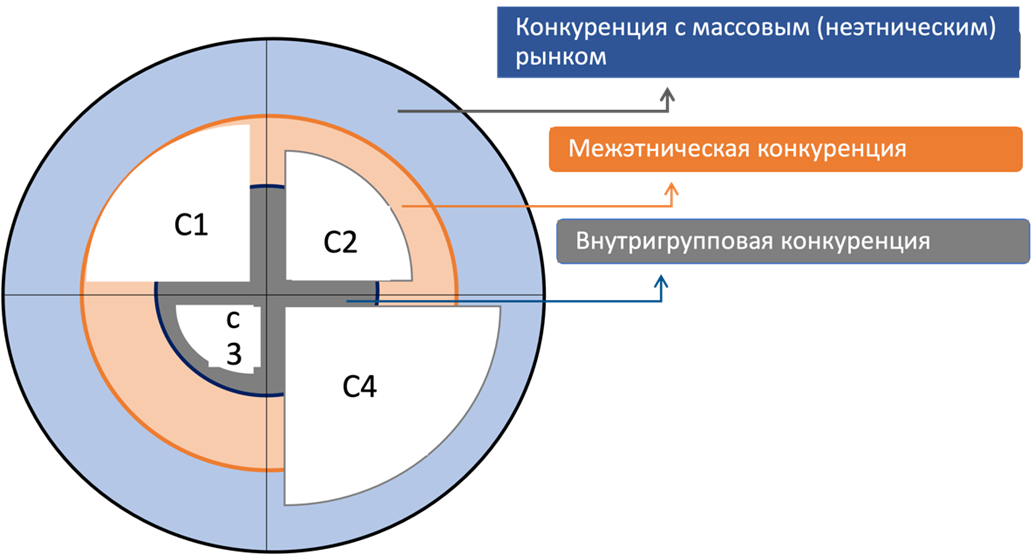
Рисунок 1. Конкурентные стратегии на трех уровнях конкурентной среды Источник: составлено автором.
Представленная модель трехуровневой среды позволяет не только констатировать наличие конкуренции, но и провести детальный анализ того, на каком именно институциональном «поле» разворачивается основное конкурентное усилие каждой стратегии и каковы границы ее эффективности.
Стратегия С1 (Дифференциация через аутентичность) обладает свойством двойной адресации. Ее преимущество (аутентичность + инновации) – это двухслойное ценностное предложение, обращенное к разным аудиториям (внутри группы и межэтнической) и ее успех зависит от одновременного подтверждения статуса на двух уровнях: на Уровне 1 (нормативном) – как «подлинного» носителя традиции в глазах своего сообщества, и на Уровне 2 (когнитивном) – как уникального и качественного «этнического бренда» в глазах внешних потребителей и конкурентов из других групп. Таким образом, С1 занимает стратегическую позицию на стыке Уровней 1 и 2. Однако именно это делает ее уязвимой для давления с Уровня 3 (регулятивного): крупный массовый игрок, не связанный нормами аутентичности, может формализовать и тиражировать ключевые элементы продукта, инициируя процесс его коммодификации. Следовательно, основное конкурентное усилие С1 направлено на укрепление позиций на Уровне 2, а оборонительная задача – на защиту от институциональных инструментов Уровня 3, например, через правовые механизмы защиты Народно-хозяйственных промыслов (НХП).
Стратегия С2 (Фокусирование на сообществе) демонстрирует максимальную глубину погружения в Уровень 1, что одновременно является ее силой и главной уязвимостью. Ее конкурентное преимущество всецело строится на нормативных и когнитивных институтах диаспоры (доверие, общие ценности, понимание контекста). Поэтому ее основное поле конкурентного взаимодействия локализовано внутри Уровня 1. Конкуренция с Уровнем 2 для нее малозначима, а прямое столкновение с Уровнем 3 изначально не предполагается. Однако угроза возникает опосредованно: ослабление и постепенная трансформация самих институтов Уровня 1 под влиянием макропроцессов (ассимиляция, цифровизация общения) напрямую ведет к сужению ее рыночной ниши. Таким образом, косвенное давление с Уровня 3 проявляется не в появлении прямых конкурентов, а в снижении устойчивости социальной базы, формирующей спрос. Это требует от С2 стратегий по поддержанию, актуализации и укреплению связей внутри сообщества [3] (Ekaterinovskaya, 2025).
Стратегия С3 (Конкуренция через сходную цену) представляет собой пример ограничения в рамках Уровня 1. Ее существование полностью обусловлено его нормами (потребность в базовом этническом продукте) и когнитивными схемами (понимание «своих»). Единственный инструмент в этих условиях – ценовые манипуляции в рамках жесткой ценовой конкуренции с такими же локальными производителями. Выход на Уровень 2 невозможен из-за отсутствия дифференциации, продукту не хватает уникальных культурных атрибутов или качества, чтобы конкурировать с другими этническими предложениями, где ценность стоится на аутентичности. Выход на Уровень 3 невозможен по двум ключевым причинам: 1) локальные издержки, часто не оптимизированные из-за малого объема, не выдерживают конкуренции с эффектом масштаба крупных производителей; 2) этнический продукт не обладает узнаваемостью и силой массового бренда с точки зрения маркетинга. Поэтому С3 не взаимодействует с другими уровнями, а существует исключительно внутри первого, что обуславливает ее низкую рентабельность и высокую зависимость от динамики локального спроса. С3 – это не столько сознательная стратегия, сколько вынужденная адаптация к условиям жестких ресурсных и институциональных ограничений внутри закрытого сегмента.
Стратегия С4 (Адаптация через операционную эффективность) делает осознанный выбор в пользу конкуренции на массовом рынке (Уровень 3). Ее источником преимущества является не этническая специфика, а соответствие универсальным рыночным стандартам: высокая операционная эффективность, надежность, скорость и конкурентная цена. Чтобы добиться успеха, бизнес должен минимизировать значение своей этнической идентичности как основного маркера и вместо этого сделать акцент на деловых и профессиональных качествах.
Основное конкурентное давление эта стратегия испытывает именно на Уровне 3, в прямом соперничестве с неэтническими компаниями. Ключевым вызовом здесь становится преодоление институциональных барьеров – в первую очередь, стереотипов и недоверия, которые могут существовать у клиентов массового рынка. Поэтому С4 делает ставку на демонстрацию операционного превосходства как главный аргумент для клиента: системное подтверждение своей надежности через отзывы, портфолио, соблюдение договоренностей и формальных стандартов.
Чаще всего это стратегия вынужденных предпринимателей, потому что она описывает адаптацию через нивелирование этнической специфики в пользу общепринятых рыночных стандартов. Добровольный же предприниматель, имея ресурсы и мотивацию, будет, наоборот, выводить этническую специфику на массовый рынок как бренд, что является предметом отдельного исследования.
Подводя итог, мы делаем вывод, что выбор стратегии – это и выбор уровня конкуренции. Трехуровневая среда диктует свои условия на каждом из них, создавая для стратегий разные наборы возможностей, рисков и возможных изменений.
4. Стратегические решения для ключевых проблем отрасли
Проведенный анализ показал, как выбор конкурентной стратегии определяет поле конкурентной борьбы для этнического предпринимателя в трехуровневой среде. Однако понимание своей позиции – это только первый шаг. Далее для предпринимателя важно понимать, какие конкретные действия должна предпринять компания, чтобы усилить свои преимущества и снизить риски, выявленные для ее стратегии.4.1. Решение ключевых проблем через выбор и корректировку стратегии
Предложенная модель напрямую отвечает на эмпирически выявленные проблемы низкой востребованности и высокой конкуренции [5] (Runova, 2025).
Первая проблема – это повышение востребованности. Для бизнесов, запертых в узкой нише (С2, С3), рост лежит либо в углублении связей с сообществом (для С2), либо в попытке выйти за его пределы. Именно стратегии С1 (Дифференциация через аутентичность) и С4 (Адаптация через операционную эффективность) являются главными инструментами такого прорыва. С1 создает новый спрос, превращая этничность в премиальную ценность для внешнего рынка. С4 переключает фокус с этничности на универсальные потребительские выгоды – надежность, скорость, цену.
Вторая проблема – перераспределение конкурентного давления. Задача умного позиционирования – не просто конкурировать, а конкурировать на выгодном для себя поле. Модель трехуровневой среды дает для этого четкие ориентиры. Наиболее показателен пример стратегии С3 (Конкуренция через сходную цену), которая обречена на изнурительную ценовую войну, потому что ее «поле» жестко ограничено Уровнем 1. Единственный путь к устойчивости для такого бизнеса – стратегический переход (в С1 через инвестиции в бренд или в С4 через выход на внешние рынки), то есть смена самого уровня конкуренции.
4.2. Маркетинговые задачи, вытекающие из логики стратегии и среды
Эффективность действий предпринимателя определяется их соответствием источнику его конкурентного преимущества и уровню, на котором разворачивается основная конкуренция. Таким образом, для каждой стратегии можно выделить ключевой маркетинговый приоритет.
- Для стратегии С1 (Дифференциация через аутентичность) основным приоритетом является легитимация уникальности и защита от имитации. Это напрямую вытекает из ее положения на стыке Уровней 1 и 2 и угрозы с Уровня 3. Следовательно, усилия должны быть сосредоточены на: 1) получении формальных статусов (НХП, сертификаты), которые служат внешним подтверждением аутентичности; 2) активном сторителлинге в цифровой среде, объясняющем культурную ценность и процесс создания продукта, что увеличивает его субъективную ценность; 3) выходе на специализированные, премиальные каналы сбыта, где ценность уникальности признается по умолчанию.
- Для стратегии С2 (Фокусирование на сообществе) центральной задачей становится укрепление и актуализация связей внутри диаспоры в ответ на риск сужения сегмента. Это обусловлено ее глубокой укорененностью в Уровне 1. Практические действия включают: 1) создание и поддержку закрытых коммуникационных платформ (чаты, сообщества) для усиления чувства принадлежности и оперативного информирования; 2) диверсификацию услуг в сторону решения комплексных проблем жизни сообщества (от языковых курсов к юридическому сопровождению); 3) адаптацию традиционных услуг к цифровому формату без потери персонального доверия.
- Для стратегии С3 (Конкуренция через сходную цену) единственным путем к устойчивости является выход из ценовой ловушки через микро-дифференциацию или кооперацию. Это прямо следует из ее блокировки в Уровне 1. Поэтому усилия должны быть направлены не на дальнейшее снижение цены, а на: 1) минимальное, но значимое улучшение продукта или его презентации (качество упаковки, история бренда); 2) объединение с другими мелкими производителями для снижения закупочных издержек и совместного выхода на новые рынки сбыта; 3) поиск альтернативных каналов сбыта (локальные фермерские рынки, сотрудничество с кафе).
- Для стратегии С4 (Адаптация через операционную эффективность) ключевым решением выступает системное доказательство надежности и профессионализма для преодоления стереотипов на Уровне 3. Это требует: 1) методичного формирования цифровой репутации через агрегаторы услуг (Яндекс.Услуги) и сбор отзывов; 2) стандартизации бизнес-процессов и коммуникации с клиентом (четкие договоры, сметы, гарантии) для формирования предсказуемости; 3) активного использования цифровых инструментов привлечения клиентов (SEO, таргетированная реклама), которые работают на массовом рынке.
4.3. Предложения для системы поддержки
Предложенные приоритеты указывают на необходимость перехода от универсальных мер господдержки этнических предпринимателей к стратегически адресным программам. Помощь должна быть направлена на усиление конкретного источника преимущества и снятие барьеров, характерных для целевого уровня конкуренции: от правовой и экспертной помощи для С1 и образовательных программ для С4 до поддержки кооперационных проектов для С3 и финансирования социокультурных инициатив для С2.
Заключение
Результаты данного исследования позволяют сделать несколько выводов, вносящих вклад в изучение этнического предпринимательства в России.1. Предложенная типология четырех стратегий доказывает, что различия в работе предприятий зависят от мотивации предпринимателя и характера спроса. Эта модель связывает внутреннее устройство бизнеса с его рыночным поведением.
2. Конкурентная среда структурирована. Концепция трехуровневой среды объясняет, что каждая стратегия конкурирует на своем уровне – внутри группы, с другими этническими бизнесами или на массовом рынке. Это позволяет точно определять специфические риски для каждого типа бизнеса.
3. Есть практический выход. Анализ превращает проблемы отрасли в вопросы стратегического выбора. Для каждой стратегии определены ключевые маркетинговые приоритеты. Это дает четкую основу для разработки адресных мер поддержки, а не общих программ.
Таким образом, работа предлагает инструмент для системного анализа этнического предпринимательства. Он объединяет оценку бизнес-модели, стратегии и конкурентного контекста. Это открывает путь к более точной диагностике и эффективной поддержке, основанной на понимании разных траекторий развития бизнеса.
Источники:
2. Антюхин Е.Н. Институциональная роль диаспор в миграционной системе на примере армянской диаспоры в США и Российской Федерации // Социодинамика. – 2025. – № 8. – c. 21-35. – doi: 10.25136/2409-7144.2025.8.75796.
3. Екатериновская М.А. Этнический компонент генотипа региона как фактор развития креативной экономики // Креативная экономика. – 2025. – № 4. – c. 909-924. – doi: 10.18334/ce.19.4.122923.
4. Ахмадеев Д.Р., Дятел Е.П., Ерзнкян Б.А., Заостровцев А.П., Калмычкова Е.Н., Колодняя Г.В. и др. Рональд Коуз и новая институциональная теория. / Монография. - Москва: Издательство Кнорус, 2022. – 252 c.
5. Рунова Н.Ю. Бизнес-модели этнического предпринимательства // Лидерство и менеджмент. – 2025. – № 2. – c. 305-316. – doi: 10.18334/lim.12.2.122627.
6. Рунова Н.Ю. Значение этнического предпринимательства в Российской Федерации: итоги исследования // Экономика, предпринимательство и право. – 2022. – № 3. – c. 1093-1106. – doi: 10.18334/epp.12.3.114311.
7. Рунова Н.Ю., Сагинова О.В. Модель этнического предпринимательства // Экономика, предпринимательство и право. – 2025. – № 2. – c. 1045-1058. – doi: 10.18334/epp.15.2.122647.
8. Рунова Н.Ю. Проблемы этнического предпринимательства в России // Экономика, предпринимательство и право. – 2023. – № 4. – c. 1187-1198. – doi: 10.18334/epp.13.4.117487.
9. Рунова Н.Ю. Этническое предпринимательство: анализ основных определений // Экономика, предпринимательство и право. – 2021. – № 2. – c. 323-332. – doi: 10.18334/epp.11.2.111589.
10. Aldrich H.E., Waldinger R. Ethnicity and Entrepreneurship // Annual Review of Sociology. – 1990. – p. 111-135. – doi: 10.1146/annurev.so.16.080190.000551.
11. Gamlen A., Cummings M.E., Vaaler P.M. Explaining the rise of diaspora institutions // Journal of Ethnic and Migration Studies. – 2019. – № 4. – p. 492-516. – doi: 10.1080/1369183X.2017.1409163.
12. Light I. Ethnic Enterprise in America: Business and Welfare among Chinese, Japanese, and Blacks. - California: University of California Press, 1972. – 209 p.
13. Porter M.E. What is Strategy? // Harvard Business Review. – 1996. – № 6. – p. 61-78.
14. Porter M.E. The Competitive Advantage: Creating and Sustaining Superior Performance. - NY: Free Press, 1985.
15. Scott W.R. Institutions and organizations: Ideas, interests, and identities. / 4th ed. - California: SAGE Publications, 2014. – 345 p.
Страница обновлена: 12.10.2026 в 19:31:41
Download PDF | Downloads: 16
Competitive Strategies in Ethnic Entrepreneurship
Runova N.Y.Journal paper
Journal of Economics, Entrepreneurship and Law
Volume 16, Number 3 (March 2026)
Abstract:
Ethnic entrepreneurs in Russia face low demand for their goods and services and high levels of competition. Using the classification of business models in ethnic entrepreneurship and integrating it with M. Porter's theory of competitive strategies and W.R. Scott's institutional theory a typology of four competitive strategies has been developed, determined by the entrepreneur's motivation (voluntary/forced) and market orientation (product/community). To analyze the conditions for their implementation, the concept of a three-level competitive environment (intra-group, inter-ethnic, mass-market) is introduced, which defines the main competitive advantages and possible risks for each strategy. The analytical tool developed links the parameters of an ethnic entrepreneurial business model with the logic of a company's market actions and its external institutional context. The results allow the development of competitive marketing strategies and differentiated support measures that correspond to various strategic development trajectories.
Keywords: ethnic entrepreneurship, competitive strategies, business models, competitive advantages
JEL-classification: M21, M31, L26
References:
Akhmadeev D.R., Dyatel E.P., Erznkyan B.A., Zaostrovtsev A.P., Kalmychkova E.N., Kolodnyaya G.V. i dr. (2022). Ronald Coase and the New Institutional Theory Moscow: Izdatelstvo Knorus.
Aldrich H.E., Waldinger R. (1990). Ethnicity and Entrepreneurship Annual Review of Sociology. 16 111-135. doi: 10.1146/annurev.so.16.080190.000551.
Aleksandrova E.A., Verkhovskaya O.R. (2016). Motivation of entrepreneurial activity: the role of institutional environment. Vestnik of Saint Petersburg University. (3). 108-139. doi: 10.21638/11701/spbu08.2016.305.
Antyukhin E.N. (2025). The Institutional Role of Diasporas in the Migration System: The Case of the Armenian Diaspora in the USA and the Russian Federation. Sotsiodinamika. (8). 21-35. doi: 10.25136/2409-7144.2025.8.75796.
Ekaterinovskaya M.A. (2025). The ethnic component of the region's genotype as a factor in the development of the creative economy. Creative Economy. 19 (4). 909-924. doi: 10.18334/ce.19.4.122923.
Gamlen A., Cummings M.E., Vaaler P.M. (2019). Explaining the rise of diaspora institutions Journal of Ethnic and Migration Studies. 45 (4). 492-516. doi: 10.1080/1369183X.2017.1409163.
Light I. (1972). Ethnic Enterprise in America: Business and Welfare among Chinese, Japanese, and Blacks California: University of California Press.
Porter M.E. (1985). The Competitive Advantage: Creating and Sustaining Superior Performance NY: Free Press.
Porter M.E. (1996). What is Strategy? Harvard Business Review. 74 (6). 61-78.
Runova N.Yu. (2021). Ethnic entrepreneurship: an analysis of the main definitions. Journal of Economics, Entrepreneurship and Law. 11 (2). 323-332. doi: 10.18334/epp.11.2.111589.
Runova N.Yu. (2022). The importance of ethnic entrepreneurship in the Russian Federation: research results. Journal of Economics, Entrepreneurship and Law. 12 (3). 1093-1106. doi: 10.18334/epp.12.3.114311.
Runova N.Yu. (2023). Problems of ethnic entrepreneurship in Russia. Journal of Economics, Entrepreneurship and Law. 13 (4). 1187-1198. doi: 10.18334/epp.13.4.117487.
Runova N.Yu. (2025). Business models of ethnic entrepreneurship. Leadership and Management. 12 (2). 305-316. doi: 10.18334/lim.12.2.122627.
Runova N.Yu., Saginova O.V. (2025). The model of ethnic entrepreneurship. Journal of Economics, Entrepreneurship and Law. 15 (2). 1045-1058. doi: 10.18334/epp.15.2.122647.
Scott W.R. (2014). Institutions and organizations: Ideas, interests, and identities California: SAGE Publications.