
Afghanistan-China trade cooperation: modern conditions and prospects
Арианпур М.1  , Акбар В.1 , Родригес А.1
1 Российский университет дружбы народов им. Патриса Лумумбы, Москва, Россия
Скачать PDF | Загрузок: 23
Статья в журнале
Вопросы инновационной экономики (РИНЦ, ВАК)
опубликовать статью | оформить подписку
Том 15, Номер 4 (Октябрь-декабрь 2025)
Эта статья проиндексирована РИНЦ, см. https://elibrary.ru/item.asp?id=88906548 [88906548]
Аннотация:
This article examines the status and prospects of trade cooperation between Afghanistan and China, particularly in the context of the post-2021 development dynamics under Taliban rule. Despite ongoing political instability in Afghanistan, China has emerged as a key economic partner, driven by strategic interests in regional stability and Afghanistan's vast untapped natural resources. The Belt and Road Initiative (BRI) plays a key role in China's cooperation, investing in infrastructure, mining, and energy projects aimed at strengthening regional connectivity. However, significant challenges remain, including security threats from extremist groups, weak governance, and international isolation. This study uses a systematic literature review to analyze the changing economic, geopolitical, and strategic factors shaping Sino-Afghan relations. Although current trade volumes remain modest, there is potential for deeper cooperation, particularly in critical minerals such as lithium and copper. The future of China-Afghanistan trade relations depends on Afghanistan achieving stability and good governance, and on China's ability to balance economic interests with security considerations to enable BRI-based development to transform Afghanistan into a regional transit hub linking South and Central Asia.
Ключевые слова: Afghanistan-China relations, Belt and Road Initiative, trade cooperation, regional connectivity, natural resources
JEL-классификация: F12, F13, F14, F15
Introduction
In recent years, the geopolitical and economic landscape of Central and South Asia has undergone significant transformation, with Afghanistan emerging as a focal point in discussions about regional connectivity, resource development, and strategic trade partnerships. Among its neighbors and global partners, China has taken a particularly active interest in fostering economic ties with Afghanistan, despite the country’s ongoing political instability and international isolation [13] (Tahiri, 2017, P. 9). As one of the few countries maintaining formal diplomatic relations and engaging in trade and investment activities with the Taliban-led government since 2021, China occupies a unique position in shaping Afghanistan’s external economic outlook [1; 11] (Rasooli et al., 2023, P 6; Acxir & RahmanZai, 2024, P 8). This evolving relationship is not only driven by China’s broader strategic ambitions in Eurasia but also by Afghanistan’s rich endowment of natural resources and its geographic significance as a potential hub linking South Asia, Central Asia, and China.
Historically, Afghanistan and China have maintained cordial bilateral relations rooted in mutual respect and non-interference. However, their economic interaction remained limited due to decades of conflict in Afghanistan and the country’s relatively underdeveloped infrastructure and institutions [11; 13] (Tahiri, 2017, P 7; Rasooli et al., 2023, P 4). The situation began to shift after the U.S. withdrawal from Afghanistan in August 2021, which led to a dramatic reconfiguration of the country’s foreign relations. With Western aid largely suspended and access to the global financial system restricted, Afghanistan found itself increasingly reliant on regional actors, especially China, Pakistan, and Iran, to sustain its fragile economy. In this context, China’s engagement has grown more pronounced—not through military involvement or political imposition, but through economic diplomacy, humanitarian assistance, and cautious investments aimed at securing long-term influence [8] (Kumar, 2023, P 13).
Trade cooperation between the two nations remains modest in scale compared to China’s massive economic footprint elsewhere, but it carries symbolic and strategic importance. Bilateral trade volumes have shown signs of growth since 2021, primarily driven by Afghan exports such as dried fruits, saffron, and minerals, while imports from China include consumer goods, construction materials, and machinery. More significantly, Chinese companies have expressed interest in investing in Afghanistan’s vast untapped mineral reserves—particularly lithium, copper, and rare earth metals—which are critical for modern technologies and green energy production. These developments suggest that while current economic ties may be nascent, they are laying the groundwork for deeper and potentially transformative cooperation in the coming years.
China and Afghanistan share a long history of economic and cultural exchanges dating back to the ancient Silk Road, which facilitated trade and connectivity between Central Asia and East Asia. In recent decades, bilateral relations have evolved, with China emerging as one of Afghanistan’s most significant economic partners. The two nations have engaged in various trade agreements, infrastructure projects, and investment deals, particularly under China’s Belt and Road Initiative (BRI). However, Afghanistan’s political instability, particularly after the Taliban’s return to power in 2021, has introduced new challenges and opportunities for this partnership.
The Belt and Road Initiative (BRI), launched by China in 2013, seeks to revive historic trade routes to boost global trade and enhance economic and political ties across Asia, Africa, and Europe. While it offers development opportunities for countries like Afghanistan, concerns exist over China’s intentions. Some compare its global influence to Europe’s historical rise, suggesting China may address global challenges similarly to how Europe managed its own during past transformative eras [6] (Hashimy, 2023, P 5). Since the U.S. troop drawdown in 2014, China has increased investments in Afghan transport infrastructure, including rail links, the Wakhan Corridor highway, and regional connectivity projects [11] (Rasooli et al., 2023, P. 3). The Taliban sees BRI as key to economic recovery, although progress has been hindered by insecurity, weak governance, and dependence on neighboring countries. Regional cooperation with Pakistan, Iran, and Central Asia is vital for success. Meanwhile, alternatives like the India-Middle East-Europe Economic Corridor bypass Afghanistan, reinforcing its reliance on China in the global geopolitical competition [1; 3] (Acxir & RahmanZai, 2024, P 8; Dkhar, 2021, P. 6).
Since the Taliban’s return to power in 2021, China has taken a leading diplomatic role, engaging pragmatically with the internationally isolated regime. Beijing sees Afghanistan as strategically important for regional stability and economic cooperation, particularly through the Belt and Road Initiative (BRI). The Taliban’s control over the country and suppression of rival groups makes them a key partner for China, especially in countering threats like Uyghur militancy and ISIS-K. While China conditions deeper integration on security guarantees, it seeks to boost trade and investment, potentially legitimizing Taliban rule. Economic gains may, however, overshadow concerns about human rights under Taliban governance [8] (Kumar, 2023, P. 3).
Afghanistan is rich in natural resources such as copper, lithium, iron, and hydrocarbons, many of which remain untapped due to decades of conflict. Geological surveys have identified over 20 mineral-rich sites, attracting strong Chinese interest. China seeks access to these resources to support its growing industries, particularly in technology and renewable energy. In return, China offers infrastructure investment and economic cooperation under initiatives like the Belt and Road, aiming to revive regional trade routes [6] (Hashimy, 2023, P. 3). Despite delays caused by Afghanistan’s internal instability and weak governance, both nations continue to pursue major connectivity initiatives under the BRI framework [10] (Munawari et al., 2022, P. 11). These efforts are intended to promote long-term economic cooperation and solidify Afghanistan's role in linking South and Central Asia.
China’s largest investment in Afghanistan is in the Amu Darya oil field, making it the biggest foreign investor in Afghan history. In 2011, the China National Petroleum Corporation (CNPC) secured a 25-year agreement to explore oil, committing $400 million initially. Under the deal, Afghanistan is set to earn up to $7 billion over 25 years through taxes and royalties. The project could generate annual revenue of $304 million and provide local jobs, supporting stability. More recently, a Chinese company invested an additional $35 million to drill 18 oil wells, aiming to increase national production to 3,000 tons daily [1; 11] (Rasooli et al., 2023, P 7; Acxir & RahmanZai, 2024, P. 8).
According to United Nations COMTRADE data, China exported $1.54 billion worth of goods to Afghanistan in 2024. The top categories included electrical and electronic equipment ($273.78 million), manmade filaments ($218.73 million), and synthetic fibers ($155.96 million), indicating Afghanistan’s heavy reliance on Chinese imports for industrial and consumer needs. In turn, Afghanistan exported mainly agricultural products such as pine nuts and saffron, totaling around $40 million in 2022, highlighting a highly imbalanced trade structure.
Security remains a central concern for China, particularly regarding the threat posed by extremist groups such as the East Turkestan Islamic Movement (ETIM), which Beijing views as a direct threat to internal security [1] (Acxir & RahmanZai, 2024, P 8). China has therefore pursued deeper security and military cooperation with Afghanistan, including trilateral coordination with Pakistan, training programs for Afghan forces, and support for counterterrorism efforts. At the same time, China continues to emphasize economic development as a means to stabilize the region and reduce extremism.
China-Afghanistan relations offer economic opportunities, particularly in mining and regional connectivity through the Belt and Road Initiative (BRI). Afghanistan’s lithium reserves are strategically valuable for China’s technology and electric vehicle industries. However, security threats—especially from extremist groups like ETIM—pose risks to Chinese interests and regional stability. Political instability under Taliban rule and weak governance further challenges long-term investments. Despite these concerns, China remains engaged, seeking to balance economic gains with security considerations. The future of their relationship depends on Afghanistan's ability to ensure stability and create a conducive environment for foreign investment, while China continues to cautiously pursue strategic and economic interests in the region.
This article analyzes the current state and future prospects of Afghanistan-China trade cooperation, focusing on post-2021 dynamics under Taliban rule and evaluating economic, geopolitical, and strategic factors shaping their evolving partnership within the framework of the Belt and Road Initiative.
Methods
This study employs a systematic literature review to examine Afghanistan’s integration into China’s Belt and Road Initiative (BRI) and its implications for bilateral trade cooperation. It draws upon a diverse range of scholarly and policy-oriented sources, including peer-reviewed academic articles, government publications, reports from international organizations, and official trade data. The focus is on understanding the evolving dynamics of Sino-Afghan economic relations, particularly in areas such as regional connectivity, investment flows, trade patterns, and foreign direct investment (FDI), while also analyzing the historical evolution of their bilateral ties and the strategic role of the BRI in shaping these interactions. To ensure comprehensive and reliable data collection, multiple academic platforms were utilized, including Google Scholar (https://scholar.google.com/schhp?hl=fr), Europe PMC (https://europepmc.org/), Dimensions (https://app.dimensions.ai/discover/publication), OpenAIRE (https://explore.openaire.eu/), Scopus (https://www.scopus.com/sources.uri) PubMed (https://pubmed.ncbi.nlm.nih.gov/), JSTOR (https://www.jstor.org/), ResearchGate (https://www.researchgate.net/) and alongside official national and international policy documents. These databases were selected for their broad coverage of peer-reviewed literature, policy analysis, and empirical studies relevant to trade, development, and geopolitical issues related to China and Afghanistan. A targeted keyword search strategy—incorporating terms such as “China-Afghanistan relations,” “Belt and Road Initiative,” “trade connectivity,” “regional cooperation,” and “FDI in Afghanistan”—was used to identify relevant literature and empirical studies UN COMTRADE (https://tradingeconomics.com/china/exports/afghanistan). This methodological approach allows for a nuanced understanding of current trends and future prospects in China-Afghanistan trade cooperation within the broader framework of BRI integration and regional geopolitical shifts.
Afghanistan's Dual Challenges: Economic Stagnation and Security Instability
Afghanistan faces severe challenges in economic development and security, both of which continue to hinder its stability and growth. Economically, the country suffers from widespread poverty, underdeveloped infrastructure, and a lack of investment in key sectors such as agriculture and mining. Despite employing nearly 70% of the population, the agricultural sector has declined due to years of conflict, environmental degradation, and insufficient modernization [11] (Safi, 2024, P. 15). Foreign aid over the past two decades was largely directed away from agriculture, resulting in limited improvements and missed opportunities for food self-sufficiency. Meanwhile, Afghanistan’s vast mineral wealth—estimated at over $1 trillion—remains largely untapped due to insecurity, poor infrastructure, and governance issues [11] (Safi, 2024, P. 20). The mining sector, often seen as a potential engine for economic recovery, lacks the institutional capacity and stable environment necessary for large-scale investment [5] (Hamidullah Nikzad, 2025, P. 7).
Infrastructure deficiencies further constrain development. Only a small percentage of Afghans have consistent access to electricity, and much of the road network remains in disrepair or vulnerable to conflict-related damage. These shortcomings limit trade, industrial growth, and access to basic services, deepening the country's isolation and economic stagnation. Trade relations are also unbalanced, with heavy reliance on imports and minimal export capacity, reflecting broader structural weaknesses [12] (Safi, 2024, P. 5).
From a security perspective, decades of war have devastated communities, displaced populations, and disrupted livelihoods. While large-scale combat has diminished since 2021, sporadic violence persists, especially from insurgent groups like the Islamic State Khorasan (ISK), which continues to carry out attacks across the country [5; 12] (Safi, 2024, P. 6; Hamidullah Nikzad, 2025, P. 4). Governance under the current administration is marked by strict control, limiting freedoms and civic space, particularly for women and minority groups. This restrictive environment has worsened humanitarian conditions, making it harder for aid agencies to operate and for vulnerable populations to access essential services. Climate-related disasters such as droughts and floods further compound existing hardships, increasing displacement and worsening food insecurity for millions.
Over 22 million people are projected to need humanitarian assistance in 2025, highlighting the urgent need for long-term strategies that promote inclusive development, enhance resilience, and address the root causes of instability [5] (Hamidullah Nikzad, 2025, P 7). Without significant improvements in governance, security, and infrastructure, Afghanistan’s path to sustainable recovery will remain fragile and uncertain.
Historical Background of Afghanistan-China Trade Relations and Modern Trade Conditions Between Afghanistan and China
Sino-Afghan relations have deep historical roots, dating back to the Silk Road era when Chinese monks traveled to Afghanistan in the 7th century, spreading Buddhism through regions such as Bamiyan. During the Mauryan Empire (500–321 BCE), areas like Kandahar and Herat flourished as Buddhist centers, symbolized by the monumental Bamiyan Buddhas until their destruction by the Taliban in 2001 [1; 15] (Acxir & RahmanZai, 2024, P 8; Yan, 2018, P. 6)). The formal diplomatic relationship between China and Afghanistan was established in 1955 and further strengthened through the Treaty of Economic and Technical Assistance in 1964 [13] (Tahiri, 2017, P. 10). In the following decades, bilateral trade expanded significantly, with China emerging as one of Afghanistan’s leading economic partners. By 2010, Chinese exports to Afghanistan had risen from $19.91 million in 2002 to $704 million, while investment reached over $700 million in total trade value [7] (Khan, 2015, P. 9).
China has played a crucial role in post-2001 reconstruction efforts, offering over $240 million in aid and engaging in high-level diplomatic exchanges despite periods of political upheaval, including the Soviet occupation and Taliban rule [1] (Acxir & RahmanZai, 2024, P. 8). Following the U.S. military drawdown in 2014, Beijing intensified its engagement, viewing Afghanistan as a strategic location for regional stability and economic development under the Belt and Road Initiative (BRI) [11] (Rasooli et al., 2023, P. 6). With the Taliban's return to power in August 2021, China has maintained diplomatic presence in Kabul, distinguishing itself from Western nations that withdrew their embassies [14] (The Diplomat 2023, P. 2]. This sustained engagement reflects China’s long-term vision of securing regional influence through economic cooperation rather than direct political recognition of the current regime [8] (Kumar, 2023, P. 10).
The Belt and Road Initiative, launched in 2013, has been central to China’s evolving strategy toward Afghanistan. As part of this initiative, China has invested in infrastructure projects such as the Wakhan Corridor highway, rail links, and fiber optic networks, aiming to enhance connectivity between Central Asia, South Asia, and Europe [1; 11] (Rasooli et al., 2023, P. 4; Acxir & RahmanZai, 2024, P 6). These developments are not only aimed at promoting trade but also at securing China’s western frontier, particularly Xinjiang, which faces security threats from groups like the East Turkestan Islamic Movement (ETIM) [1] (Acxir & RahmanZai, 2024, P 5). The Chinese government perceives Afghanistan as both a potential source of instability and a key partner in countering extremism through economic integration.
Modern trade conditions between China and Afghanistan show steady growth despite ongoing political uncertainties. In 2022, Chinese exports to Afghanistan reached $550.13 million, while Afghan exports to China stood at $40.02 million [9] (Kumar and Ramachandran, 2025, P 4). Trade volume continued to rise into 2023, with November showing a 95% increase in Chinese exports compared to the same month in 2022 [1] (Acxir & RahmanZai, 2024, P 4). China primarily exports machinery, electronics, construction materials, and consumer goods, accounting for approximately 83.4% of all imports into Afghanistan (United Nations COMTRADE, 2025). In return, Afghanistan exports agricultural products such as dried fruits, saffron, and pine nuts, although these remain limited in scale compared to China’s export dominance.
China’s interest in Afghanistan is also driven by the country’s vast untapped mineral resources. Geological surveys estimate Afghanistan’s lithium, copper, rare earth elements, and hydrocarbon reserves to be worth up to $3 trillion [8] (Kumar, 2023, P 7). These natural resources are strategically important for China’s growing industries, particularly in electric vehicle production and renewable energy technologies [1] (Acxir & RahmanZai, 2024, P 3). Among the most significant investments is the Aynak Copper Mine project, valued at $3.5 billion and operated by the China Metallurgical Group Corporation (MCC) [13] (Tahiri, 2017, P. 11). Additionally, the China National Petroleum Corporation (CNPC) signed a 25-year agreement in 2011 to explore oil fields in the Amu Darya Basin, projected to generate up to $7 billion for Afghanistan over the coming decades [11; 13] (Tahiri, 2017, P. 5; Rasooli et al., 2023, P. 2).
Despite these promising prospects, several challenges persist. Political instability, weak governance, and ongoing security concerns under Taliban rule continue to hinder large-scale foreign investment. Moreover, international isolation limits Afghanistan’s ability to attract diversified investment beyond China. However, Beijing sees opportunity in this vacuum, positioning itself as a key economic partner and leveraging the BRI to promote deeper regional integration. Analysts suggest that Afghanistan’s geographic position offers China a critical transit route connecting Central and South Asia, reinforcing its broader Eurasian ambitions [8] (Hashimy, 2023; Kumar, 2023, P. 7).
In recent years, China has also pursued soft diplomacy through humanitarian assistance. During the global pandemic, it pledged $200 million in aid to Afghanistan, including medical supplies and vaccines, underscoring its commitment to maintaining ties even amid shifting geopolitical dynamics [4] (Dwi Astuti et al., 2022, P. 3). This approach contrasts with Western hesitancy to engage with the Taliban-led government, allowing China to strengthen its foothold in the region.
As of 2024, China remains engaged in discussions about integrating Afghanistan into the BRI framework. This inclusion could bring significant infrastructure development, especially in transportation and energy sectors, potentially transforming Afghanistan into a regional trade hub [11] (Rasooli et al., 2023, P. 6). However, success will depend on addressing security risks, improving governance, and ensuring transparency in resource extraction and investment practices [16] (Zaki et al., 2023; P. 5). Given the mutual strategic interests and China’s cautious yet persistent engagement, the future of Sino-Afghan trade relations appears poised for gradual expansion, albeit within a complex and evolving geopolitical landscape [1] (Acxir & RahmanZai, 2024, P 9).
Belt and Road Initiative and China-Afghanistan Trade Cooperation
The Belt and Road Initiative (BRI), launched by China in 2013, seeks to boost global trade through large-scale infrastructure development across Asia, Europe, and Africa (figure 1). Due to its central location at the crossroads of Central and South Asia, Afghanistan has the potential to serve as a key transit point within this network. Following the U.S. withdrawal in 2014, China intensified its engagement in Afghan infrastructure projects such as the Wakhan Corridor highway and regional transport links, aligning with broader BRI goals [1; 11] (Rasooli et al., 2023, P. 3; (Acxir & RahmanZai, 2024, P 8).
For China, the BRI is not only an economic initiative but also a strategic tool to expand influence and ensure regional stability especially along its western frontier in Xinjiang. The Chinese government is particularly concerned about threats from extremist groups like the East Turkestan Islamic Movement (ETIM), which it believes could find refuge in Afghanistan [1] (Acxir & RahmanZai, 2024, P 9). As a result, Beijing has pursued closer ties with the Taliban, viewing them as a stabilizing force capable of countering such risks [9] (Kumar and Ramachandran, 2025, P. 5).
Despite delays caused by Afghanistan’s internal instability and weak governance, both nations continue to pursue major connectivity initiatives under the BRI framework [10] (Munawari et al., 2022, P. 6). These efforts are intended to promote long-term economic cooperation and solidify Afghanistan's role in linking South and Central Asia.
However, alternative corridors like the India-Middle East-Europe Economic Corridor largely exclude Afghanistan, reinforcing its economic dependence on China for integration into global trade networks [11] (Rasooli et al., 2023; P. 5). This dynamic gives China a strategic advantage in shaping Afghanistan’s future economic landscape, especially as Western countries remain hesitant to re-engage following the Taliban’s return to power [2; 9] (Anosh, 2025, P. 2; Kumar and Ramachandran, 2025, P. 3).
China continues to balance economic interests with security concerns, offering aid and pursuing investment opportunities while conditioning deeper integration on guarantees of stability and counterterrorism cooperation [8] (Kumar, 2023, P. 7)). This evolving partnership underscores the mutual interest in strengthening bilateral trade relations amid complex geopolitical realities.
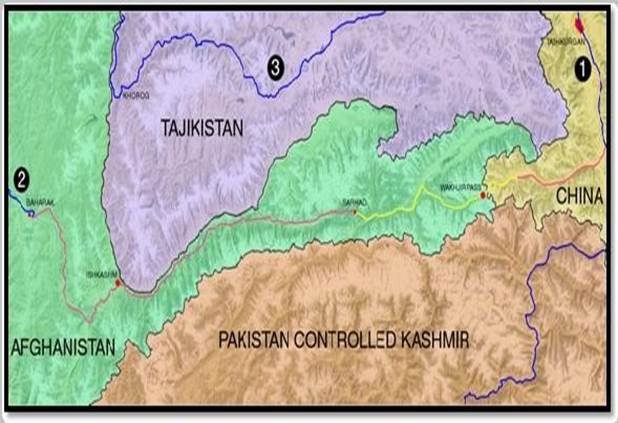
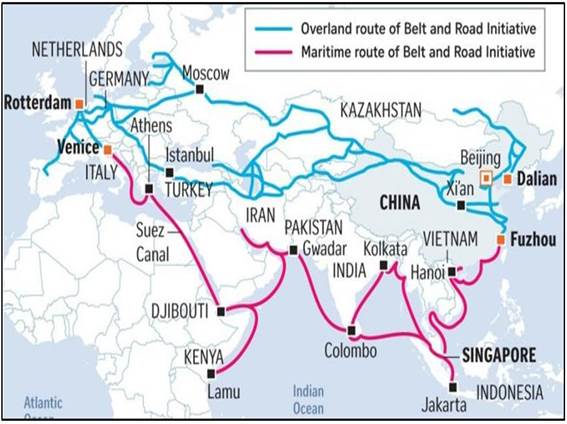
Figure 1. Land route between China and Afghanistan [1; 6] (Hashimy, 2023, P. 4; Acxir & RahmanZai, 2024, P. 7).
Key Sectors for Trade Cooperation
Afghanistan is endowed with vast natural resources, including copper, lithium, iron, and hydrocarbons, most of which remain untapped due to decades of political instability and conflict [6] (Hashimy, 2023, P. 5). Geological surveys conducted by Afghan and U.S. experts between 2007 and 2009 identified over 20 mineralized zones rich in copper, mercury, rare-earth elements, sulfur, chromites, and lithium—resources that have drawn significant Chinese interest [1] (Acxir & RahmanZai, 2024, P 8). China, as the world’s largest consumer of raw materials for electric vehicle production and renewable energy technologies, sees Afghanistan as a strategic partner in securing critical minerals necessary for global supply chains [8] (Kumar, 2023, P. 13).
One of the most prominent resource projects is the Mes Aynak copper mine, located 40 km southeast of Kabul. This site holds one of the world’s largest undeveloped copper deposits, estimated at 60 million metric tons [11] (Rasooli et al., 2023, P. 4). In 2008, the Chinese state-owned Metallurgical Corporation of China (MCC) won a $3.5 billion bid to develop the site, marking the single-largest foreign investment in Afghan history [13] (Tahiri, 2017, P. 5). Despite its economic potential, development has been stalled largely due to the presence of extensive archaeological sites in the area. Over a decade after the contract was signed, no major extraction has occurred, highlighting the complex trade-off between cultural preservation and economic development [1] (Acxir & RahmanZai, 2024, P 6).
Lithium, another key focus of Chinese investment, has also gained geopolitical significance. Soviet geologists first identified lithium reserves in Afghanistan during the 1980s, and later U.S. geological assessments placed the country’s lithium deposits at up to $3 trillion in value across Ghazni, Herat, and Nimroz provinces (Acxir & RahmanZai, 2024). With global demand for lithium projected to rise sharply due to the expansion of battery-based technologies, China has signed agreements with the Taliban government to explore two major lithium mines. As the leading global manufacturer of electric vehicles and solar panels, China’s interest in securing alternative sources of lithium is both economic and strategic, especially given its growing dependence on imports, currently estimated at around 55% [6] (Hashimy, 2023, P 5).
In addition to mining, Afghanistan’s oil and gas sector represents a major opportunity for Chinese investment. The Amu Darya Basin in northern Afghanistan is believed to contain more than 87 million barrels of crude oil and 16 trillion cubic feet of natural gas [13] (Tahiri, 2017; P. 3). In 2011, the China National Petroleum Corporation (CNPC) secured a 25-year agreement to explore three oil blocks in the region, committing an initial $400 million toward exploration efforts [13] (Tahiri, 2017, P. 7). Under the terms of the deal, Afghanistan could earn up to $7 billion over the next 25 years through taxes and royalties. More recently, in 2023, a Chinese company invested an additional $35 million to drill 18 new wells in the basin, aiming to increase national oil production from 50 tons per day to 3,000 tons daily [1; 11] (Rasooli et al., 2023, P. 6; Acxir & RahmanZai, 2024, P. 8).
Beyond extractive industries, China has also engaged in agricultural trade with Afghanistan. Initiatives such as the "Pine Nut Corridor", launched in January 2022, allowed for the direct air importation of 1,500 tons of pine nuts from Afghanistan, followed by pomegranates in 2023. According to Chinese customs data, Afghanistan exported goods worth $33.93 million to China in the first nine months of 2023, while China exported $959.69 million worth of goods to Afghanistan in the same period (Acxir & RahmanZai, 2024). These figures suggest a growing but highly imbalanced trade relationship, with China primarily exporting manufactured goods like electronics, machinery, textiles, and construction materials.
This table shows that China's exports to Afghanistan are dominated by industrial and consumer goods, with electrical and electronic equipment being the top category. While electronics and textiles dominate, smaller exports include pharmaceuticals, organic chemicals, and food items. This reflects Afghanistan's reliance on Chinese imports for both industrial development and daily consumption needs table 1.
Table 1: China's Exports to Afghanistan (2024) (Based on UN COMTRADE Database – Updated July 2025)
|
Electrical & Electronic Equipment
|
$273.78 million
|
17.8%
|
|
Manmade Filaments
|
$218.73 million
|
14.2%
|
|
Manmade Staple Fibers
|
$155.96 million
|
10.1%
|
|
Machinery, Nuclear Reactors, Boilers
|
$139.39 million
|
9.0%
|
|
Rubber Products
|
$128.46 million
|
8.3%
|
|
Vehicles (Non-Railway)
|
$127.38 million
|
8.2%
|
|
Knitted or Crocheted Fabrics
|
$97.34 million
|
6.3%
|
|
Other Textile Articles & Clothing
|
$49.55 million
|
3.2%
|
|
Plastics
|
$29.10 million
|
1.9%
|
|
Glass & Glassware
|
$29.04 million
|
1.9%
|
|
Iron & Steel Articles
|
$23.37 million
|
1.5%
|
|
Total Top 10 Categories
|
$1.29 billion
|
83.4%
|
|
All Other Products
|
$252.24 million
|
16.6%
|
|
Total China Exports to Afghanistan –
2024
|
$1.54 billion
|
100%
|
Moreover, transportation infrastructure plays a vital role in enabling resource extraction and export. China’s strategic investments in Afghanistan are closely tied to the country’s highway network, which serves as a backbone for logistics and trade connectivity (table 2). This table highlights the alignment of Afghanistan’s key mineral and energy resources with its national highway system. Critical resources such as lithium and rare earth metals are concentrated in Ghazni, Uruzgan, and Helmand provinces, all connected via NH0101, a major transport artery. Similarly, copper-rich areas such as Herat, Farah, Kandahar, Logar, and Kapisa are linked through multiple highways (NH0101, NH0102, NH0104), indicating the potential for improved logistics and export routes. Oil and gas fields in the Amu Darya basin and Herat are accessible via NH0103, suggesting a clear strategy for future energy development.
Table: Mapping China’s Mining Focus in Afghanistan and Land Transport Network, [8] (Kumar, 2023, P. 4)
|
Lithium
|
Ghazni, Uruzgan, and Helmand
|
NH0101
|
|
Rare Earth Metals
|
Ghazni, Uruzgan, and Helmand
|
NH0101
|
|
Copper
|
Herat, Farah, Kandahar, Logar, and
Kapisa
|
NH0101, NH0102, NH0104
|
|
Oil and Gas
|
Afghan-Tajik, Amu Darya basin, and Herat
|
NH0103
|
Despite these challenges, Beijing remains committed to expanding its economic footprint in Afghanistan, viewing it not only as a source of critical raw materials but also as a regional transit hub linking Central Asia, South Asia, and the Middle East [11] (Rasooli et al., 2023, P 5). The integration of Afghanistan into the BRI framework could bring significant infrastructure development, particularly in transportation and energy sectors, potentially transforming Afghanistan into a regional trade corridor.
Conclusion and Future Perspectives
The evolving relationship between China and Afghanistan presents both significant opportunities and notable challenges. As Afghanistan seeks to rebuild its war-torn economy, China has emerged as a key economic partner, offering investment, infrastructure development, and trade cooperation under the framework of the Belt and Road Initiative (BRI). With Afghanistan’s vast reserves of lithium, copper, rare earth metals, and hydrocarbons, Chinese interest in resource extraction has grown substantially. These resources are essential for China's expanding technology and renewable energy sectors, particularly in the production of electric vehicles and advanced electronics. However, translating this potential into sustainable economic growth requires a stable and secure environment in Afghanistan—an ongoing challenge under the current political climate.
Security remains a central concern for China, especially regarding the threat posed by extremist groups such as the East Turkestan Islamic Movement (ETIM), which Beijing views as a direct threat to internal security. The Chinese government sees regional stability as crucial not only for protecting its investments but also for preventing cross-border terrorism that could affect its western provinces. Therefore, while economic engagement is growing, it is closely tied to broader security considerations, including trilateral coordination with Pakistan and support for Afghan counterterrorism efforts.
Afghanistan’s future economic development hinges on improving infrastructure and enhancing trade connectivity. The country suffers from decades of underdevelopment, lacking sufficient roads, railways, and energy networks. Through the BRI, China aims to bridge these gaps by financing and constructing transport corridors, industrial zones, and digital infrastructure. If implemented effectively, such projects could position Afghanistan as a regional transit hub linking South Asia, Central Asia, and beyond. For China, Afghanistan’s strategic location offers a vital corridor for energy imports and trade routes, reinforcing its broader Eurasian ambitions.
To fully benefit from this partnership, Afghanistan must adopt policies that encourage foreign investment and promote long-term economic integration. This includes streamlining customs procedures, strengthening legal frameworks, and improving transparency in trade and investment practices. Equally important is the need to invest in human capital through education, technical training, and public-private partnerships that can enhance local workforce capabilities. Cultural diplomacy and soft power initiatives also play a role in building mutual trust and fostering deeper bilateral ties.
Despite the optimism surrounding Sino-Afghan economic cooperation, several risks remain. Political instability, weak governance, and international isolation continue to hinder large-scale investment. Moreover, Afghanistan’s reliance on informal trade networks and lack of access to global financial systems complicate formal economic exchanges. Geopolitical tensions and competing interests among regional powers further add uncertainty to the sustainability of this partnership.
Nonetheless, China remains committed to maintaining diplomatic and economic presence in Afghanistan. During the Taliban era, Beijing has continued to engage pragmatically, providing humanitarian aid and exploring new investment avenues. This sustained involvement reflects China’s long-term vision of shaping regional dynamics through economic influence rather than military or political imposition. As both countries navigate complex domestic and international realities, the future of their relationship will depend on mutual trust, policy alignment, and the ability to manage shared security and developmental challenges.
Источники:
2. Anosh H. A. Afghanistan and China: A Perspective on Geopolitical Relations and Strategic Interests // International Journal of Social Science and Humanity. – 2025. – № 2(2). – p. 50-59.
3. Dkhar A., Tamim M. A. M., Walid S. S. Perspectives and Obstacles for Afghanistan to be a Part of the China’s Belt and Road Initiative // In Proceedings of the 2021 International Conference on Social Science: Public Administration, Law and International Relations (SSPALIR 2021). Atlantis Press. 2021. – p. 169-173.– doi: 10.2991/assehr.k.210916.027.
4. Dwi Astuti W. R., Yudono R. M., Nathanael G. K. Diplomacy and Cooperation Between China and Afghanistan in Maintaining Security and Stability // KnE Social Sciences. – 2022. – № 7(12). – p. 90–97. – doi: 10.18502/kss.v7i12.11508.
5. Hamidullah Nikzad Political Instability and the Treadmill of Production: Sustainable Urban Processes in Kabul City // Sustainable Processes Connect. – 2025. – № 1. – p. 0003. – doi: 10.69709/SusProc.2025.149300.
6. Hashimy S. Q. China’s Belt-Road Initiative and Investment Strategies: A Two Pillar Approach to Afghanistan // International Journal of Science and Research. – 2023. – № 24(2). – p. 65-92. – doi: 10.51768/dbr.v24i2.242202307.
7. Khan R. M. China\'s economic and strategic interests in Afghanistan // FWU Journal of Social Sciences. – 2015. – № 1(1). – p. 1-11.
8. Kumar A. // Afghan Diaspora Network. – 2023. – url: https://afghandiaspora.org/2023/09/29/the-twin-threats-tehrik-e-taliban-pakistan-and-tehrik-e-taliban-afghanistans-strain-on-pakistans-national-security/.
9. Kumar A., Ramachandran V. Situating Afghanistan in China\'s GDI-BRI matrix: Taliban rule, Chinese ambitions, and the regeography of development // Politikon. – 2025. – № 1-22.
10. Munawari S. A., Keshvari A. M., Mobarakah S. // Foreign Relations Quarterly. – 2022. – url: https://frqjournal.csr.ir/article_160974.html?lang=en.
11. Rasooli M., Yawar M. E., Sharify A. J. Haqyar E. China-Afghanistan Relations: Change To the Path of Strategic Partnership // Akademik Tarih ve Düşünce Dergisi. – 2023. – № 10(6). – p. 2603-2627. – doi: 10.46868/atdd.2023.642.
12. Safi L. Review of Afghanistan’s development pattern from 2001 to 2021: a relative lack of sustainability, inclusiveness, and prosperity // Journal of Social and Economic Development. – 2024. – № 26(1). – p. 333-352. – doi: 10.1007/s40847-023-00268-7.
13. Tahiri N. R. Afghanistan and China trade relationship. / MPRA Paper No. 82098., 2017.
14. Afghanistan in China’s Grand Strategy. Retrieved from. The Diplomat. (2023). [Электронный ресурс]. URL: https://thediplomat.com/.
15. Yan W. The Cooperation between China and Afghanistan under the “Belt and Road Initiative // International Relations and Diplomacy. – 2018. – № 6. – p. 359-368. – doi: 10.17265/2328-2134/2018.06.005.
16. Zaki Z., Tian G., Amini M. Y. Literature Review on Belt and Road Initiative’s Integration for Trade Connectivity of Afghanistan // Open Journal of Business and Management. – 2023. – № 11(6). – p. 3287-3312.
Страница обновлена: 11.10.2026 в 12:25:09
Download PDF | Downloads: 23
Торговое сотрудничество между Афганистаном и Китаем: состояние и перспективы
Arianpoor M., Akbar W., Rodrigues A.Journal paper
Russian Journal of Innovation Economics
Volume 15, Number 4 (October-December 2025)
Abstract:
В этой статье рассматривается состояние и перспективы торгового сотрудничества между Афганистаном и Китаем, особенно в контексте развития событий после 2021 года под властью Талибана. Несмотря на продолжающуюся политическую нестабильность в Афганистане, Китай стал ключевым экономическим партнером, движимым стратегическими интересами в региональной стабильности и огромными нетронутыми природными ресурсами Афганистана. Инициатива «Пояс и путь» (ИПП) играет ключевую роль в сотрудничестве Китая, инвестируя в инфраструктурные, горнодобывающие и энергетические проекты, направленные на укрепление региональной связности. Однако остаются значительные вызовы, включая угрозы безопасности со стороны экстремистских групп, слабое управление и международную изоляцию. В данном исследовании используется систематический обзор литературы для анализа меняющихся экономических, геополитических и стратегических факторов, формирующих афгано-китайские отношения. Хотя текущие объемы торговли остаются скромными, существует потенциал для более глубокого сотрудничества, особенно в области критически важных минералов, таких как литий и медь. Будущее торговых отношений между Китаем и Афганистаном зависит от достижения Афганистаном стабильности и эффективного управления, а также от способности Китая сбалансировать экономические интересы с соображениями безопасности для реализации развития на базе инициативы «Пояс и путь» (ИПП), чтобы превратить Афганистан в региональный транзитный хаб, связывающий Южную и Центральную Азию.
Keywords: Афгано-китайские отношения, Инициатива «Пояс и путь» (ИПП), торговое сотрудничество, региональная связность, природные ресурсы
JEL-classification: F12, F13, F14, F15
References:
Acxir A. S., Rahman Zai S. R. (2024). Review of Opportunities and Challenges in China-Afghanistan Relations Post-U.S. Withdrawal Journal of Political Science and International Relations. (7(4)). 114-127. doi: 10.11648/j.jpsir.20240704.14.
Afghanistan in China’s Grand Strategy. Retrieved fromThe Diplomat. (2023). Retrieved from https://thediplomat.com/
Anosh H. A. (2025). Afghanistan and China: A Perspective on Geopolitical Relations and Strategic Interests International Journal of Social Science and Humanity. (2(2)). 50-59.
Dkhar A., Tamim M. A. M., Walid S. S. (2021). Perspectives and Obstacles for Afghanistan to be a Part of the China’s Belt and Road Initiative In Proceedings of the 2021 International Conference on Social Science: Public Administration, Law and International Relations (SSPALIR 2021). Atlantis Press. 169-173. doi: 10.2991/assehr.k.210916.027.
Dwi Astuti W. R., Yudono R. M., Nathanael G. K. (2022). Diplomacy and Cooperation Between China and Afghanistan in Maintaining Security and Stability KnE Social Sciences. (7(12)). 90–97. doi: 10.18502/kss.v7i12.11508.
Hamidullah Nikzad (2025). Political Instability and the Treadmill of Production: Sustainable Urban Processes in Kabul City Sustainable Processes Connect. (1). 0003. doi: 10.69709/SusProc.2025.149300.
Hashimy S. Q. (2023). China’s Belt-Road Initiative and Investment Strategies: A Two Pillar Approach to Afghanistan International Journal of Science and Research. (24(2)). 65-92. doi: 10.51768/dbr.v24i2.242202307.
Khan R. M. (2015). China\'s economic and strategic interests in Afghanistan FWU Journal of Social Sciences. (1(1)). 1-11.
Kumar A. (2023). The Twin Threats: Tehrik-e-Taliban Pakistan and Tehrik-e-Taliban Afghanistan’s Strain on Pakistan’s National Security Afghan Diaspora Network.
Kumar A., Ramachandran V. (2025). Situating Afghanistan in China\'s GDI-BRI matrix: Taliban rule, Chinese ambitions, and the regeography of development Politikon. (1-22).
Munawari S. A., Keshvari A. M., Mobarakah S. (2022). China’s Strategy for Expanding Cooperation with the Taliban After the U.S. Withdrawal Foreign Relations Quarterly.
Rasooli M., Yawar M. E., Sharify A. J. Haqyar E. (2023). China-Afghanistan Relations: Change To the Path of Strategic Partnership Akademik Tarih ve Düşünce Dergisi. (10(6)). 2603-2627. doi: 10.46868/atdd.2023.642.
Safi L. (2024). Review of Afghanistan’s development pattern from 2001 to 2021: a relative lack of sustainability, inclusiveness, and prosperity Journal of Social and Economic Development. (26(1)). 333-352. doi: 10.1007/s40847-023-00268-7.
Tahiri N. R. (2017). Afghanistan and China trade relationship
Yan W. (2018). The Cooperation between China and Afghanistan under the “Belt and Road Initiative International Relations and Diplomacy. (6). 359-368. doi: 10.17265/2328-2134/2018.06.005.
Zaki Z., Tian G., Amini M. Y. (2023). Literature Review on Belt and Road Initiative’s Integration for Trade Connectivity of Afghanistan Open Journal of Business and Management. (11(6)). 3287-3312.