
Исследование причин реализации некачественных товаров недобросовестными продавцами на маркетплейсах
Никишин А.Ф.1  , Каращук О.С.1 , Майорова Е.А.1 , Больдясов А.И.1
1 Российский экономический университет им. Г.В. Плеханова, Москва, Россия
Скачать PDF | Загрузок: 36
Статья в журнале
Экономика, предпринимательство и право (РИНЦ, ВАК)
опубликовать статью | оформить подписку
Том 15, Номер 12 (Декабрь 2025)
Эта статья проиндексирована РИНЦ, см. https://elibrary.ru/item.asp?id=89035408 [89035408]
Аннотация:
Работа посвящена изучению причин недобросовестного поведения продавцов, заключающегося в преднамеренной первичной и повторной реализации товаров ненадлежащего качества на маркетплейсах. По результатам экономико-математического моделирования установлено, что продавцы имеют объективный экономический стимул к продаже некачественных товаров в том случае, когда дополнительные расходы на обработку возврата при обнаружении покупателем недостатков товара компенсируются положительным экономическим результатом, если потребитель не сможет установить факт ненадлежащего качества товара. В целом преднамеренная реализация недобросовестными продавцами некачественных товаров является системной проблемой торговли на маркетплейсах, что диктует необходимость выработки особых подходов к контролю качества товаров, реализуемых на электронных торговых площадках, в целях защиты интересов потребителей и повышения общего уровня качества товаров на отечественном потребительском рынке
Ключевые слова: электронная торговля, качество товара, управление качеством, возврат товара, экономическая модель, прибыль
Финансирование:
Исследование выполнено за счет гранта Российского научного фонда №24-28-00657, https://rscf.ru/project/24-28-00657/
JEL-классификация: L81, M31, M11, M21, L25
Введение
Электронные продажи играют всё более значимую роль на российском потребительском рынке. Так, по данным Федеральной службы государственной статистики (Росстат), доля онлайн-покупок в розничном товарообороте с 2014 по 2024 годы увеличилась с 0,7 до 9,4%, что соответствует приросту в среднем на 0,87 п.п. ежегодно [1].
В то же время масштабное развитие электронной торговли в России привело не только к получению новых возможностей для увеличения продаж у предпринимателей и потребления населением, но также принесло новые проблемы для участников электронной торговли. Одной из таких проблем стало значительное количество возвратов товаров покупателями, в том числе по причине не соответствующего качества. Согласно оценкам, при онлайн-продажах удельный вес возвращённых товаров достигает от 24 до 30% от совокупной величины заказов, в то время как в офлайн-сегменте торговли данный показатель не превышает 9% [2]. При этом в составе возвращаемых товаров присутствуют как товары надлежащего качества, так и некачественные товары, являющиеся таковыми либо в результате несовершенства произведенного товара по вине производителя, либо вследствие несоответствующих действий при продаже товара со стороны продавца, либо в результате случайного повреждения товара отказавшимся от него покупателем, либо из-за нечаянного повреждения товара работниками маркетплейса или пункта выдачи заказов.
Недостаточное внимание к контролю качества возвращенных товаров влечет повторную продажу некачественных товаров и как следствие - дополнительные расходы по возврату товаров в случае очередного отказа от покупки, которые сокращают прибыль продавца и могут привести к убыткам. Поэтому разработка модели определения экономических результатов от продажи возвращаемых покупателями товаров является важным исследовательским вопросом, высокая значимость которого подтверждается наличием большого числа возвратов товаров в электронной торговле и отсутствием подобных исследований в научной литературе. С учетом того, что в составе продаваемых и возвращаемых товаров можно выделить две группы товаров: качественные и не соответствующие по качеству, моделирование экономических результатов от повторной продажи возвращенных товаров целесообразно осуществлять отдельно по каждому из возможных вариантов. В рамках данной работы исследовательский интерес будет ограничен построением модели определения экономического результата от реализации не соответствующих по качеству товаров в случае их намеренной продажи недобросовестным продавцом, так как добросовестный продавец откажется продавать товары, не соответствующие требованиям качества.
Цель данной работы заключается в том, чтобы посредством моделирования экономических результатов продавцов выявить наличие экономических стимулов к преднамеренной реализации некачественных товаров, а также описать механизм принятия недобросовестным продавцом решений о первичной и повторной продаже товаров ненадлежащего качества.
Обзор литературы
Причины и предпосылки проблемы преднамеренной реализации некачественных товаров на маркетплейсах в российских и зарубежных научных публикациях остается во многом неизученными. При этом в иностранной литературе получили широкое обсуждение близкие по смыслу вопросы, связанные с экономической целесообразностью последующей реализации любых возвращаемых товаров, без учета их качества.
В зарубежных публикациях, в первую очередь, исследуются вопросы управления обратными потоками товарной массы и соответствующее им формирование расходов для обеспечения указанного движения товаров. Так, в статье Беньек М. предлагается экономико-математическая модель, позволяющая определить оптимальные расходы на закупку единицы товара и объёмы необходимых закупок в логистической системе с возможностью возврата этих товаров [15, с. 289]. В статье Молленкопфа Д. и соавторов доказывается необходимость расходования средств для обеспечения управления совокупностью возвращаемых товаров с целью сохранения лояльности клиентов [19, с. 241]. Работа Бернона М. с соавторами содержит анализ бизнес-процессов и связанных с ними расходов при обработке возвратов товаров в предприятиях торговли [14]. В статье Кумар П. и Кумар Н. отмечается, что главная проблема в работе с возвратами в электронной торговле заключается в наличии дополнительных транспортных и складских издержек, оптимизация которых в условиях жёсткой конкуренции представляется сложной задачей [18, с. 1922]. В работе Асдекера Б. обосновывается нелинейная функция расходов на обработку возвратов товаров, зависящая от их доли в заказах, на основе которой автором разработаны подходы к оптимизации соответствующих расходов [11, c.6]. Статья Куллинан С. и Куллинан К. содержит вывод о том, что возвращаемые покупателями товары приводят к негативному влиянию предприятий торговли на окружающую среду и для его нейтрализации требуется расходование определенных средств [16, c.90]. В работе Карла Д. разрабатывается классификация целей и методов прогнозирования числа возвратов в онлайн-торговле, в том числе с учетом факторов расходов [17].
Отдельные зарубежные научные работы содержат практические рекомендации по повышению эффективности управления возвратами товаров. Например, в статье Айоделе О., указывается на целесообразность внедрения цифровых технологий в бизнес-процессы торговых компаний [13, с.406]. По мнению автора, цифровые решения способствуют более точной координации между продавцами и торговой площадкой, что снижает количество возвратов вследствие ошибок на разных этапах движения товара к потребителю и улучшает экономические результаты деятельности. В работе А. Стивенсона и Дж. Рика в качестве инструмента снижения числа возвратов товаров предлагаются различные способы поощрения покупателей [20, c.32]. Аналогичный вывод содержится в работе Асдекера Б. и соавторов, которые считают целесообразным внедрение бесплатных подарков для покупателей в целях снижения количества возвращаемых товаров [12, с. 4200]. В статье Араджио А. и соавторов доказывается высокая эффективность инструментов послепродажной поддержки потребителей в целях выяснения причин возврата товаров [10, с.16]. При этом авторы работы отмечают, что многие товары, возвращаемые покупателями, не проходят надлежащую проверку качества.
Подытоживая рассмотрение зарубежных работ, можно сделать вывод, что в иностранной научной литературе возврат товаров изучается чаще всего с точки зрения его влияния на конечные финансовые результаты торговой деятельности, так как при изучении основное внимание уделяется расходам, связанным с возвращаемыми товарами. И также в зарубежных работах ведется поиск путей улучшения финансовых результатов при возврате товаров покупателями. При этом в работах иностранных авторов экономические результаты от реализации возвращаемых товаров изучаются в целом и в них не отражаются отдельно результаты от продажи не качественных товаров, в том числе умышленно недобросовестными продавцами.
Несмотря на отсутствие масштабных исследований по изучаемой теме в российских работах отдельные проблемы, связанные с управлением возвращенными товарами, также изучаются отечественными учеными. Так, в статье Герами В. Д. и др. предлагается многокритериальный подход к управлению возвратами, учитывающий экономические факторы, факторы пропускной способности логистической системы и факторы уровня сервиса для принятия управленческих решений [7]. В работе Алямовской Н. С. и др. осуществляется систематизация причин возврата товаров потребителями [2], а в статье Алямовской Н. С. и Кольчугина Д. М. исследуются факторы, влияющие на количество возвращаемых товаров, а также выделяются уровни принятия решения при проектировании логистических систем с возвратами товаров [1].
Также в российских публикациях проблема управления возвратами товаров широко обсуждается с юридической точки зрения. Учёные и эксперты анализируют особенности трактовки норм гражданского законодательства РФ при возврате товаров, исследуют судебную практику по соответствующим спорам. Подобные работы, безусловно, представляют интерес с точки зрения управления качеством возвращаемых товаров, так как при изучении практики и нормативной базы регулирования возвратов товаров раскрываются различные проблемы, связанные с обеспечением интересов предпринимателей и потребителей. Так, в работе Шайдуллина В. К. отмечается, что покупатель должен иметь гарантии качества товаров, приобретаемых дистанционным способом, несмотря на стремление торгующих субъектов к минимизации расходов на обработку возвращаемых товаров [9, с. 225]. Следовательно, автором, хотя и неявно, указывается на необходимость исключения повторной реализации товаров ненадлежащего качества, что возможно лишь при соответствующем контроле качества возвращаемых товаров. В статье Баданова Е. В. содержится вывод о том, что при отсутствии в законодательстве чётких подходов к определению «товар надлежащего качества», предприниматели не имеют стимулов к контролю качества возвращаемых товаров, и покупатель чаще сталкивается с некачественными товарами [4, с. 83]. В работе Блинова Ю. В. и Утемова К. Е. возврат товаров на платной основе на маркетплейсах рассматривается негативно, так как, согласно мнению авторов, не приносит пользы потребителям [6, с. 73].
В российской научной литературе, кроме того, изучается положительное влияние на качество потребительских товаров различных электронных технологий, получивших широкое развитие на фоне цифровизации торговли. Использование цифровых решений, безусловно, является частью системы управления качеством возвращаемых товаров в электронной торговле. Например, в работе Пасковой А. А. цифровая инфраструктура торговых предприятий, которая может служить в целях контроля качества товаров, рассматривается как единство трёх составляющих: искусственный интеллект, «интернет вещей» («IoT») и аналитика данных [8, с. 127]. В работе Бабанской А. С. И др. показано, что современные технологии становятся одним из главных драйверов роста качества товаров при интернет-продажах [3]. При этом в статье Берг Т. И., сделан вывод о том, что уровень проникновения цифровых технологий в торговле ниже среднеотраслевых значений, что оставляет значительный потенциал для их использования при обеспечении качества в будущем [5, с. 5].
Таким образом, в публикациях российских авторов вопросам изучения причин целенаправленной продажи некачественных товаров до настоящего времени не уделялось должного внимания. В имеющихся отечественных работах рассматриваются либо факторы (причины) осуществляемого возврата товаров, либо юридические проблемы обеспечения баланса интересов продавца и покупателя в случае осуществления возврата, либо возможности современных цифровых технологий по обеспечению качества товаров (включая возвращаемые).
В целом следует заключить, что причины как первичной, так и повторной продажи некачественных товаров недобросовестными продавцами до настоящего времени системно не рассматривались и не моделировались. Таким образом, существует необходимость более глубокого исследования взаимосвязей между различными факторами и экономическими результатами от продажи товаров несоответствующего качества недобросовестными продавцами, чтобы смоделировать их взаимосвязь и получить картину вероятного поведения продавца не соответствующих по качеству товаров в зависимости от экономических результатов деятельности. В итоге это позволит предложить комплекс мер по предотвращению или снижению объемов продажи некачественных товаров и обеспечит лучшие условия защиты прав и интересов потребителей на рынке.
Материалы и методы
При проведении данного исследования использовались методы математического анализа, описания и сравнения.
Полученная в работе модель экономического результата от повторной продажи товаров недобросовестным продавцом представляет собой математическое ожидание прибыли продавца от реализации единицы товара ненадлежащего качества, взвешенного по вероятностям двух исходов: либо обнаружения покупателем недостатков товара, либо их не обнаружения.
Для эмпирической проверки полученной модели вместо прибыли продавца с единицы реализованного товара было взято соответствующее значение валового дохода (торговой надбавки). В качестве исходных количественных данных использовались показатели крупнейших в стране маркетплейсов в 2024-2025 году («Вайлдберриз», «Озон», «Яндекс Маркет»), в том числе модельный временной ряд валового дохода от продажи единицы товара (от 0 до 6 500 руб. на единицу товара) и тарифы на логистические услуги. Выбор в пользу валового дохода при эмпирическом анализе был обусловлен невозможностью расчета прибыли (убытка) с единицы реализуемого товара, так как из информации в открытых источниках определение совокупных расходов по продаже в ценах реализации потребительских товаров не представляется возможным. При этом валовой доход также является достаточно показательным для эмпирических расчетов и его возможно рассчитать. Для обеспечения экономической выгоды продавца товара он должен быть достаточным для формирования прибыли (или по меньшей мере – не допущения убытка), а также для покрытия расходов на продажу (в данном исследовании - на возврат и повторную продажу).
В настоящее время электронные торговые
площадки предлагают различные тарифы на логистические услуги, в связи с чем для
исключения завышенных экономических результатов от повторных продаж при
эмпирической проверке использовались тарифы того маркетплейса, чьи услуги
дороже. При эмпирических расчётах применялись такие тарифы расходов за единицу
товара: доставка от склада до пункта выдачи заказа – 500 руб.; обратная
логистика – 500 руб.; утилизация товара на складе маркетплейса – 40 руб. В то
же время при вычислениях не учитывались расходы на хранение товаров на складе
маркетплейса (  ),
так как тарифы на данную услугу составляют менее 1 рубля за единицу товара, что
существенно не влияет на достоверность полученных результатов.
),
так как тарифы на данную услугу составляют менее 1 рубля за единицу товара, что
существенно не влияет на достоверность полученных результатов.
Результаты
Изучение проблемы первичной и повторной реализации товаров ненадлежащего качества на маркетплейсах следует начать с характеристики условий, при которых некачественные товары могут снова оказаться в продаже. Подобное исследование необходимо для выявления причин повторной реализации некачественных товаров.
Продаваемые на маркетплейсах товары перед отправкой к покупателю, как правило, проходят контроль качества. Если в роли продавца выступает непосредственный производитель, то товары проверяются в рамках системы его выходного контроля качества. Торговые предприятия обычно организуют входной контроль качества закупаемых товаров. Таким образом, основная часть товаров ненадлежащего качества выявляется сразу и не допускается к продаже на торговой площадке. Следовательно, при наличии системы контроля качества в реализацию попадает лишь небольшая часть товаров ненадлежащего качества, не обнаруженных при проверке качества.
Реальность торговли на маркетплейсах далека от описанной ситуации. Многие продавцы на маркетплейсах не ведут контроль качества товаров на системной основе ввиду ограниченных финансовых возможностей или не могут организовать эффективный контроль качества, так как издержки на проверку товаров перекрывают выгоду от их продажи. Как следствие, потребитель во многом рискует приобрести некачественный товар.
В то же время даже при отсутствии системы контроля качества товаров продавец получает информацию о факте реализации некачественного товара, так как при возврате товаров сотрудниками пунктов выдачи заказов указывается причина обратной отправки. То есть торгующий субъект получает объективную информацию о продаже товаров ненадлежащего качества и имеет возможность своевременно изъять такие товары из оборота, например, утилизировав их. Как результат, первичная реализация некачественных товаров на маркетплейсах вероятна, в то время как вторичная продажа таких товаров если осуществляется продавцом, то уже осознанно.
Таким образом, продавец располагает всеми необходимыми возможностями для изъятия из реализации возвращённых товаров ненадлежащего качества. Поэтому повторная продажа некачественных товаров является или результатом ошибки в работе торговой площадки, или недобросовестной практикой, целесообразно осуществляемой продавцом.
Недобросовестное поведение торгующих на маркетплейсах продавцов обусловлено наличием экономических стимулов к повторной реализации некачественных товаров. Потребитель может не заметить недостатки товара по разным причинам: оплата товара без внимательной проверки, скрытый характер недостатков покупаемых товаров, проявление недостатков товаров лишь в процессе непосредственной эксплуатации, и также могут быть другие причины. Соответственно, продажа не качественных товаров может принести прибыль продавцу. Данные рассуждения могут быть проиллюстрированы математически.
Вводятся следующие условные обозначения:  –
цена реализации товара;
–
цена реализации товара;  –
тариф на доставку товара со склада маркетплейса до пункта выдачи заказа (на
единицу товара);
–
тариф на доставку товара со склада маркетплейса до пункта выдачи заказа (на
единицу товара);  –
тариф на утилизацию товара на складе маркетплейса (на единицу товара);
–
тариф на утилизацию товара на складе маркетплейса (на единицу товара);  –
тариф на хранение товара на складе маркетплейса (на единицу товара);
–
тариф на хранение товара на складе маркетплейса (на единицу товара);  –
тариф на обратную логистику маркетплейса, включающий обработку возврата и
возвращение товара на склад (на единицу товара);
–
тариф на обратную логистику маркетплейса, включающий обработку возврата и
возвращение товара на склад (на единицу товара);  –
среднее время обращения товара, дней;
–
среднее время обращения товара, дней;  –
вероятность, что покупатель обнаружит недостатки товара и осуществит возврат,
–
вероятность, что покупатель обнаружит недостатки товара и осуществит возврат,  ;
;
 –
прибыль продавца (с единицы товара).
–
прибыль продавца (с единицы товара).
Ожидаемая продавцом прибыль от реализации единицы товара ненадлежащего качества равна математическому ожиданию прибыли, то есть её значению, взвешенному по вероятностям двух исходов: 1) покупатель обнаружит недостатки товара; 2) покупатель не обнаружит недостатки товара:

где  –
количество исходов, равное двум в рассматриваемом случае; остальные обозначения
в соответствии с принятыми ранее.
–
количество исходов, равное двум в рассматриваемом случае; остальные обозначения
в соответствии с принятыми ранее.
Ожидаемая прибыль от первичной реализации некачественного товара:

То есть прибыль от реализации товара и убыток при его возврате взвешиваются по значению вероятности обнаружения потребителем недостатков товара при его получении в пункте выдачи заказа.
Ожидаемая прибыль от повторной (второй) реализации товара ненадлежащего качества:

При повторной реализации продавец уже понёс убыток от возврата, равный оплате обратной логистики маркетплейса и времени хранения на складе до повторной реализации.
Ожидаемая прибыль от повторной (  -ой)
реализации товара ненадлежащего качества составляет:
-ой)
реализации товара ненадлежащего качества составляет:

При торговле на маркетплейсе цены реализации диктует рынок, тарифы на логистику фиксируются торговой площадкой. Следовательно, экономическая целесообразность реализации товара ненадлежащего качества, в том числе и повторной, зависит от вероятности обнаружения покупателем дефектов. Чем больше данное значение, тем меньше ожидаемая прибыль от повторной продажи некачественного товара и, следовательно, тем меньше экономический стимул к подобного рода недобросовестному поведению.
По формуле (4) можно рассчитать значение
вероятности (  ),
при котором ожидаемая прибыль равна нулю (
),
при котором ожидаемая прибыль равна нулю (  ).
В таком случае продавец безразличен к повторной реализации возвращённого
некачественного товара и к его утилизации. Если вероятность обнаружения дефекта
ниже полученного значения (
).
В таком случае продавец безразличен к повторной реализации возвращённого
некачественного товара и к его утилизации. Если вероятность обнаружения дефекта
ниже полученного значения (  ),
то повторная реализация выгодна, так как ожидаемая прибыль положительна. Если
вероятность больше данного значения (
),
то повторная реализация выгодна, так как ожидаемая прибыль положительна. Если
вероятность больше данного значения (  ),
то математическое ожидание отрицательно (имеет место ожидаемый убыток).
Указанная величина вероятности может быть рассчитана по формуле:
),
то математическое ожидание отрицательно (имеет место ожидаемый убыток).
Указанная величина вероятности может быть рассчитана по формуле:

Вероятность обнаружения покупателем дефектов не является величиной теоретической, абстрактной. Напротив, данный показатель может быть чётко определён продавцом на основе статистики продаж и возвратов при наличии достаточной выборки по числу реализованных товаров. Тогда ожидаемая прибыль от продажи товаров ненадлежащего качества может быть представлена в виде «семейства» прямых на координатной плоскости (см. формулы (2), (3) и (4)), где на оси абсцисс отложена вероятность выявления дефектов товара, на оси ординат – значение ожидаемой прибыли. Описанное отражено на рисунке (рис. 1).
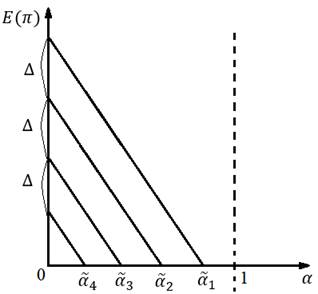
Рис.1. Ожидаемая прибыль от реализации единицы товара ненадлежащего качества при различном количестве повторных продаж
Источник: составлено авторами
Как можно заметить из рисунка, ожидаемая
прибыль недобросовестного продавца от реализации некачественного товара убывает
по мере увеличения вероятности обнаружения потребителем недостатков товара. Ожидаемая
прибыль от каждой следующей (повторной) продажи некачественного товара
снижается на величину расходов на обратную логистику, в первую очередь на
доставку товара до пункта выдачи заказа и на хранение на складе маркетплейса,
что выражается в сдвиге прямой вниз на сумму указанных значений (  ).
Каждой повторной реализации соответствует величина вероятности обнаружения
дефекта, при которой ожидаемая прибыль равна нулю. Ожидаемая прибыль
закономерно снижается с каждой следующей повторной реализацией. Поэтому можно утверждать,
что недобросовестный продавец будет возвращать некачественный товар в
реализацию, пока он не будет реализован или пока ожидаемая прибыль от повторной
реализации не станет отрицательной. Иными словами, продавец потеряет
экономический стимул к повторной реализации товара ненадлежащего качества лишь
в том случае, когда реальная вероятность обнаружения дефекта станет больше
значения, соответствующего нулевой ожидаемой прибыли.
).
Каждой повторной реализации соответствует величина вероятности обнаружения
дефекта, при которой ожидаемая прибыль равна нулю. Ожидаемая прибыль
закономерно снижается с каждой следующей повторной реализацией. Поэтому можно утверждать,
что недобросовестный продавец будет возвращать некачественный товар в
реализацию, пока он не будет реализован или пока ожидаемая прибыль от повторной
реализации не станет отрицательной. Иными словами, продавец потеряет
экономический стимул к повторной реализации товара ненадлежащего качества лишь
в том случае, когда реальная вероятность обнаружения дефекта станет больше
значения, соответствующего нулевой ожидаемой прибыли.
Полученные в ходе теоретического анализа выводы были подвергнуты эмпирической проверке. На основе формулы (5) для каждого значения валового дохода (разница между ценой реализации и закупочной ценой) рассчитывалась величина вероятности, при которой ожидаемая прибыль от реализации некачественного товара равна нулю. Указанный расчёт сделан для первичной реализации, а также для повторной реализации во второй, третий, четвёртый и пятый раз. Расчёт не привязан к конкретным товарам, так как на основе данных в свободном доступе нет возможности объективно определить составляющие цены реализации конкретного товара.
Величина вероятности выявления потребителем дефектов, соответствующая различным значениям валового дохода с единицы товара при осуществлении повторных продаж, отражена на нижеследующем рисунке (рис. 2).
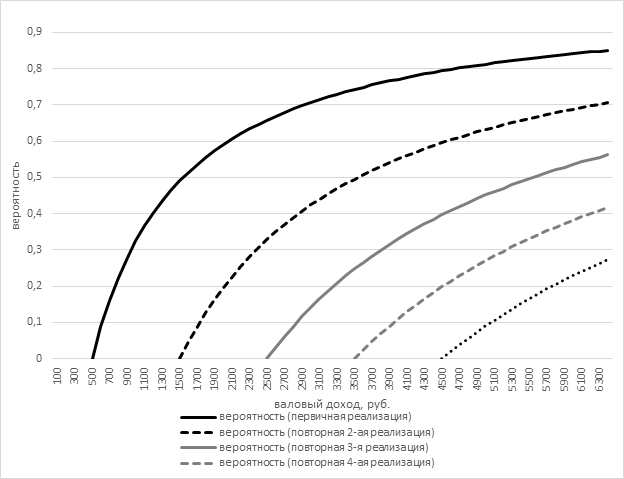
Рис. 2. Вероятность обнаружения недостатков покупателем, соответствующая валовому доходу с единицы товара при первичной реализации, а также при разном числе повторных продаж некачественных товаров недобросовестным продавцом
Источник: составлено авторами по данным маркетплейсов
Данные рисунка показывают, что продавец не имеет экономических стимулов к продаже некачественного товара при небольших значениях валового дохода от продажи (ниже 500 руб. в модельном примере), так как убытки в случае обнаружения потребителем дефектов товара перекрывают положительный экономический результат почти при любой вероятности их выявления при проверке на пункте выдачи заказа. При валовом доходе от 1500 руб. недобросовестный продавец имеет экономический интерес к преднамеренной продаже некачественного товара, однако вторичную его реализацию такой продавец рассматривает как слишком рискованную. По мере увеличения валового дохода повышается как значение вероятности, так и количество экономически целесообразных повторных продаж некачественного товара. То есть при высоких значениях торговой надбавки для продавца становятся доступны значения вероятности, лежащие на кривых, расположенных всё дальше от начала координат. Так, анализируя данные рисунка, можно заметить, что при высоких значениях валового дохода недобросовестному продавцу выгодно попытаться реализовать возвращенный некачественный товар даже с 5-ой попытки. Кроме того, при высоких значениях торговой надбавки такому продавцу выгодно реализовывать, в том числе и повторно, некачественные товары с часто выявляемыми покупателями недостатками. Как следствие, при покупке на маркетплейсе ряда категорий товаров потребитель может сталкиваться с некачественным товаром снова и снова, что осложняет процесс покупки и способствует формированию негативного потребительского опыта.
При этом возникает проблема обеспечения защиты прав потребителей, так как потребитель оказывается практически незащищён при покупке товаров с неочевидными недостатками или такими дефектами, которые проявляются лишь в процессе эксплуатации. При невысоком значении вероятности обнаружения недостатков товара недобросовестный продавец будет торговать некачественным товаром даже при небольшой торговой надбавке. Например, покупатель сильно рискует при приобретении бытовой техники или смартфонов со скидками. Технически сложные товары традиционно обладают высокой маржинальностью и валовой доход от их продажи позволяет повторно предлагать потребителю товар в случае, если он оказался некачественным. А наличие скрытых недостатков, вероятность обнаружения которых на пункте выдачи заказа невелика, позволяет торговать такими товарами даже при очень низких значениях валового дохода.
Таким образом, реализация некачественных товаров недобросовестными продавцами является одной из системных проблем электронной торговли, обусловленной экономической привлекательностью продажи товаров ненадлежащего качества в условиях, когда покупатель может не обнаружить недостатки товаров своевременно. Как следствие, потребитель страдает ввиду покупки некачественных товаров и необходимости делать повторные покупки. При этом потребители особенно уязвимы при приобретении дорогостоящих товаров и товаров со скрытыми, неочевидными недостатками и недостатками, проявляющимися в процессе использования товара.
Обсуждение
Выводы по итогам исследования в настоящей работе представляют собой результаты теоретического осмысления проблемы обращения некачественных товаров на маркетплейсах. Предложенная в работе экономико-математическая модель выступает формальным описанием механизма принятия недобросовестными продавцами решений и отражает наличие экономических стимулов к преднамеренной реализации товаров ненадлежащего качества. Таким образом, ключевой результат исследования заключается в выявлении экономической привлекательности продажи некачественных товаров как системной причины их массовой реализации в электронной торговле.
В существующих научных публикациях проблема реализации товаров ненадлежащего качества на маркетплейсах рассматривается, как правило, с позиций торгующего субъекта. Так, в работах Беньек М. [15], Асдекера Б. [11], Молленкопфа Д. [19] и других авторов обсуждаются пути оптимизации расходов на обработку возвратных потоков товарной массы в целях сокращения совокупной величины расходов компании и укрепления лояльности клиентов. Статьи Айоделе О. [13], Стивенсона А. и Рика Дж. [20], Араджио А. [10], а также прочих учёных и экспертов содержат практические рекомендации по совершенствованию бизнес-процессов, связанных с возвратной логистикой. То есть в имеющихся публикациях предлагаются различные способы повышения эффективности работы с возвращёнными товарами безотносительно их качественных свойств и причин повторной реализации. Сосредоточение на проблеме повторной продажи товаров ненадлежащего качества является ключевым отличием данной работы от существующих научных публикаций.
Полученная по итогам анализа модель, несмотря на другой угол рассмотрения проблемы, имеет ряд имеет ряд сходств с представленными в научных публикациях. Предложенная модель, как и в работах Беньек М. [15] и Асдекера Б. [11] включает дополнительные складские и транспортные издержки как основные категории расходов на обработку возвращённых товаров. Ключевое отличие от имеющихся в литературе моделей, описывающих экономические результаты от повторной реализации возвращённых товаров, заключается в стохастическом измерении прибыли от повторной реализации. Данная особенность закономерна ввиду того, что в настоящей работе анализируется поведение продавца при реализации некачественного товара, факт обнаружения недостатков которого носит вероятностный характер. В существующих же работах, хотя и неявно, предполагается, что возвращённый товар отвечает требованиям к качеству.
Предложенная в настоящей работе модель экономического результата от продажи некачественных товаров недобросовестными продавцами обладает как преимуществами, так и недостатками. Универсальный характер рассуждений, положенных в основу моделирования, а также простота количественного измерения ключевых переменных модели, несомненно, характеризуют ее сильные стороны. Например, в модели учитывается, что продавцы на маркетплейсах имеют реальную возможность статистически оценить риск обнаружения потребителем дефектов товара на основе информации о количестве и причинах возвратов, которую предоставляют электронные сервисы маркетплейсов.
Недостатками полученной модели выступает изменчивость значений рыночных цен на продаваемые товары, что влечет колебания величины получаемого валового дохода и прибыли. Указанные изменения заставляют лиц, принимающих решения в отношении цен товаров, постоянно пересматривать состав возвращенных товаров, целесообразных для повторной продажи. В частности, может иметь место ситуация, когда под влиянием снижения рыночной цены повторная реализация возвращённого товара сменится с прибыльной на убыточную. Также сложность предложенной модели состоит в необходимости постоянной актуализации размеров расходов на возврат и повторную доставку товаров, что также будет определять целесообразность повторной продажи товаров.
Полученная модель объясняет экономические предпосылки реализации некачественных товаров недобросовестными продавцами. В то же время важно отметить, что преднамеренная продажа товаров с дефектами является далеко не единственной причиной обращения некачественных товаров в электронной торговле. Подобные товары также реализуются ввиду отсутствия системы контроля качества и происхождения товаров со стороны продавцов, вследствие недостаточной компетентности продавцов, многие из которых пришли в торговлю без необходимого обучения данной профессии, а также в результате повреждения товаров покупателями и работниками маркетплейсов.
Заключение
По итогам проведенного исследования можно сделать выводы о полученной модели ожидаемого экономического результата недобросовестного продавца от реализации товаров ненадлежащего качества в электронной торговле.
1. В условиях жёсткой конкуренции в сфере электронной торговли продавцы в целях обеспечения прибыли и удержания лояльности клиентов заинтересованы в минимизации продажи товаров ненадлежащего качества, так как в случае обнаружения покупателями дефектов и возврата товаров у продавцов снижается прибыль или могут возникнуть убытки, и также формируется негативный образ такого продавца в форме отрицательных отзывов покупателей. Поэтому в большинстве случаев продавцы стараются обеспечить и контролировать соответствие высокого качества реализуемых товаров.
2. В то же время продавцы в сфере электронной торговли имеют объективный экономический стимул к преднамеренной реализации некачественных товаров, так как в определенных случаях риск обнаружения покупателем дефектов в полной мере компенсируется вероятностью продать брак по цене качественного товара, если покупатель не выявит недостатков товара. Причём, при текущих тарифах на услуги торговых площадок недобросовестный продавец может ожидать положительных результатов и от повторной продажи возвращённых некачественных товаров. В случае наличия у недобросовестного продавца не качественных товаров, вероятна попытка их повторной продажи. При этом ожидаемая прибыль (убыток) от повторной реализации товаров несоответствующего качества определяется вероятностью обнаружения недостатков товара.
3. Определение математического ожидания прибыли продавца от реализации единицы товара ненадлежащего качества, взвешенного по вероятностям двух исходов (обнаружения либо не обнаружения покупателем недостатков товара) позволило получить в работе модель взаимосвязи прибыли от продажи не соответствующих по качеству товаров в зависимости от величины значимых факторов, в числе которых были взяты вероятность обнаружения недостатков товара, количество повторных продаж товара, цена продажи единицы товара, расходы на доставку и возврат соответствующей единицы товара, расходы на утилизацию возвращенной единицы товара в случае такой необходимости. Полученная модель математически показывает, что попытки повторной продажи не соответствующих по качеству товаров будут продолжаться до тех пор, пока прибыль недобросовестного продавца от очередной попытки продать не сменится на убыток от реализации.
4. Эмпирическая проверка полученной модели с использованием данных ведущих маркетплейсов России показала, что при реализации низкодоходных товаров не стоит ожидать недобросовестного поведения продавца, предполагающего преднамеренную продажу некачественного товара. В случае наличия недостатков таких товаров, скорее всего, они будут следствием отсутствия системы менеджмента качества у продавца, либо некомпетентности продавца в вопросах оценки качества, либо повреждения товаров по вине покупателей или работников маркетплейсов. В случае же реализации высокодоходных товаров преднамеренные повторные продажи некачественного товара могут продолжаться до определенного количества попыток реализации, пока недобросовестный продавец будет ожидать положительный экономический результат, с учетом величины валового дохода от продажи таких товаров.
Перспективы дальнейших исследований по рассматриваемой теме связаны с определением совокупности организационных решений и средств эффективного контроля качества продаваемых товаров и недопущения недобросовестного поведения продавцов по продаже заведомо не качественных товаров. Ожидается, что для обеспечения необходимого качества товаров в условиях происходящей всеобъемлющей цифровизации всех сфер экономической деятельности в России ведущую роль приобретут современные Интернет-технологии контроля качества реализуемых товаров.
[1] Официальный сайт Федеральной службы государственной статистики. Показатель «доля продаж через Интернет в общем объеме оборота розничной торговли» (с 2014 г.). [Электронный ресурс]. URL: https://rosstat.gov.ru/statistics/roznichnayatorgovlya (дата обращения: 26.09.2025).
[2] Отраслевой портал «Logistics.ru». Скрытая угроза возвратов для российских селлеров. [Электронный ресурс]. URL: https://logistics.ru/internet-torgovlya-i-fulfilment-upravlenie-logisticheskimi-riskami/skrytaya-ugroza-vozvratov-dlya (дата обращения: 24.09.2025).
Источники:
2. Алямовская Н. С., Кольчугин Д. М., Винокурова В. О. Возвратные потоки в розничной интернет-торговле: общая характеристика и причины возникновения // Логистика и управление цепями поставок. 2017. № 6(83). С. 64-80. EDN: YLOFHT.
3. Бабанская А. С., Груднева А. А., Коломеева Е. С. Мигунов Р. А., Плиев Х. И. Инновационные цифровые технологии в розничной торговле АПК // Modern Economy Success. 2021. № 6. С. 225-230. EDN: KVKBYQ.
4. Баданова Е. В. Особенности возврата товара, приобретенного дистанционным способом // Закон. Право. Государство. 2024. № 3(43). С. 83-87. EDN: BENYPJ.
5. Берг Т. И. Цифровые технологии торговли: тенденции и перспективы // Торговля, сервис, индустрия питания. 2023. № 3(1). С. 1-12. EDN: XIPGZO.
6. Блинова Ю. В., Утемова К. Е. О некоторых проблемах правового регулирования маркетплейсов в России // Экономика. Социология. Право. 2024. № 1(33). С. 71-76. DOI: 10.22281/2542-1697-2024-03-01-71-76. EDN: KBAMLV.
7. Герами В. Д., Гусев Д. А., Саркисян А. А. Многокритериальный подход к формированию политики возвратов товаров компаниями электронной коммерции в России // Российский журнал менеджмента. 2022. Т. 20, № 1. С. 127-144. DOI: 10.21638/spbu18.2022.106. EDN: QVUHLU.
8. Паскова А. А. Цифровая трансформация розничной торговли: тенденции и технологии // Новые технологии. 2020. Т. 16, № 6. С. 123-131 DOI: 10.47370/2072-0920-2020-16-6-123-131. EDN: GHVVNN.
9. Шайдуллина В. К. Возврат и обмен товаров надлежащего качества при дистанционном способе торговли: проблемы теории и практики // Проблемы экономики и юридической практики. 2020. Т. 16, № 2. С. 223-226. EDN: OSHWGT.
10. Araújo A., Matsuoka E., Ung J., Massote A., Sampaio M. An exploratory study on the returns management process in an online retailer // International Journal of Logistics Research and Applications. 2017. Vol. 21. No. 2. P. 1-18. DOI: 10.1080/13675567.2017.1370080.
11. Asdecker B. Returning mail-order goods: analyzing the relationship between the rate of returns and the associated costs // Logistics Research. 2015. Vol. 8. No. 1. Pp. 1-12. DOI: 10.1007/s12159-015-0124-5.
12. Asdecker B., Karl D., Sucky E. Examining Drivers of Consumer Returns in E-Tailing with Real Shop Data // Hawaii International Conference on System Sciences. 2017. Pp. 4192-4201. DOI: 10.24251/HICSS.2017.507.
13. Ayodele O. The Impact of E-commerce Adoption on the Return Management of Product: A Case Study of Manufacturing Industry in Nigeria // Iconic Research And Engineering Journals. 2024. Vol. 7. No. 7. Pp. 399-408.
14. Bernon M., Cullen J., Gorst, J. Online retail returns management: Integration within an omni-channel distribution context // International Journal of Physical Distribution & Logistics Management. 2016. Vol. 46. No. (6/7). Pp. 584-605. DOI: 10.1108/IJPDLM-01-2015-0010.
15. Bieniek M. Returns handling in e-commerce: How to avoid demand negativity in supply chain contracts with returns? // Electronic Commerce Research. 2023. Vol. 25. No. 1. Pp. 271-294. DOI: 10.1007/s10660-023-09689-2.
16. Cullinane S., Cullinane K. The Logistics of Online Clothing Returns in Sweden and How to Reduce its Environmental Impact // Journal of Service Science and Management. 2021. Vol. 14. No. 01. Pp. 72-95. DOI: 10.4236/jssm.2021.141006.
17. Karl D. Forecasting e-commerce consumer returns: a systematic literature review // Management Review Quarterly. 2024. May. DOI: 10.1007/s11301-024-00436-x.
18. Kumar P., Kumar N. Study on E-commerce Returns Management: Minimizing Costs and Maximizing Customer Satisfaction // International Journal of Research Publication and Reviews. 2024. Vol. 5. No. 8. Pp. 1919-1922.
19. Mollenkopf D., Rabinovich E., Laseter T., Boyer K. Managing Internet Product Returns: A Focus on Effective Service Operations // Decision Sciences. 2007. Vol. 38. No. 2. Pp. 215-250. DOI: 10.1111/j.1540-5915.2007.00157.x.
20. Stevenson A., Rieck J. Investigating Returns Management across E-Commerce Sectors and Countries: Trends, Perspectives, and Future Research // Logistics. 2024. Vol. 8. No. 82. Pp. 1-37. DOI: 10.3390/logistics8030082
Страница обновлена: 26.09.2026 в 05:43:34
Download PDF | Downloads: 36
Reasons for the sale of low-quality goods by unscrupulous sellers on marketplaces
Nikishin A.F., Karashchuk O.S., Mayorova E.A., Boldiasov A.I.Journal paper
Journal of Economics, Entrepreneurship and Law
Volume 15, Number 12 (december 2025)
Abstract:
The article examines the reasons for the unfair behavior of sellers, which consists in the deliberate primary and repeated sale of non-conforming goods on marketplaces. According to the results of economic and mathematical modeling, it has been established that sellers have an objective economic incentive to sell low-quality goods in the event that the additional cost of processing a refund if the buyer finds defects in the goods is compensated by a positive economic result if the consumer is unable to establish the fact of inadequate quality of the goods. Thus, the deliberate sale of low-quality goods by unscrupulous sellers is a systemic problem of trading on marketplaces, which dictates the need to develop special approaches to quality control of goods sold on electronic trading platforms in order to protect the interests of consumers and improve the overall quality of goods on the domestic consumer market.
Keywords: e-commerce, product quality, quality management, product returns, economic model, profit
Funding:
The research was carried out under the grant of the Russian Science Foundation No. 24-28-00657, https://rscf.ru/project/24-28-00657/
JEL-classification: L81, M31, M11, M21, L25
References:
Alyamovskaya N. S., Kolchugin D. M. (2018). THEORETICAL ASPECTS OF RETURN FLOWS MANAGEMENT IN INTERNET RETAILING. Logistics and supply chain management. (6). 97-111.
Alyamovskaya N. S., Kolchugin D. M., Vinokurova V. O. (2017). RETURN FLOWS IN INTERNET RETAIL: GENERAL DESCRIPTION AND CAUSES OF OCCURRENCE. Logistika i upravlenie tsepyami postavok. (6). 64-80.
Araújo A., Matsuoka E., Ung J., Massote A., Sampaio M. (2017). An exploratory study on the returns management process in an online retailer International Journal of Logistics Research and Applications. 21 (2). 1-18. doi: 10.1080/13675567.2017.1370080.
Asdecker B. (2015). Returning mail-order goods: analyzing the relationship between the rate of returns and the associated costs Logistics Research. (1). 1-12. doi: 10.1007/s12159-015-0124-5.
Asdecker B., Karl D., Sucky E. (2017). Examining Drivers of Consumer Returns in E-Tailing with Real Shop Data Hawaii International Conference on System Sciences. 4192-4201. doi: 10.24251/HICSS.2017.507.
Ayodele O. (2024). The Impact of E-commerce Adoption on the Return Management of Product: A Case Study of Manufacturing Industry in Nigeria Iconic Research And Engineering Journals. (7). 399-408.
Babanskaya A. S., Grudneva A. A., Kolomeeva E. S. Migunov R. A., Pliev Kh. I. (2021). INNOVATIVE DIGITAL TECHNOLOGIES IN AGRIBUSINESS RETAIL. Modern Economy Success. (6). 225-230.
Badanova E. V. (2024). SPECIFICS OF THE RETURN OF GOODS PURCHASED REMOTELY. Zakon. Pravo. Gosudarstvo. (3). 83-87.
Berg T. I. (2023). DIGITAL TRADE TECHNOLOGIES: TRENDS AND PROSPECTS. Torgovlya, servis, industriya pitaniya. (3). 1-12.
Bernon M., Cullen J., Gorst J. (2016). Online retail returns management: Integration within an omni-channel distribution context International Journal of Physical Distribution & Logistics Management. (6/7). 584-605. doi: 10.1108/IJPDLM-01-2015-0010.
Bieniek M. (2023). Returns handling in e-commerce: How to avoid demand negativity in supply chain contracts with returns? Electronic Commerce Research. 25 (1). 271-294. doi: 10.1007/s10660-023-09689-2.
Blinova Yu.V., Utemova K.E. (2024). On some problems of the legal regulation of marketplaces in Russia. Economy. Sociology. Right. (1). 71-76. doi: 10.22281/2542-1697-2024-03-01-71-76.
Cullinane S., Cullinane K. (2021). The Logistics of Online Clothing Returns in Sweden and How to Reduce its Environmental Impact Journal of Service Science and Management. 14 (01). 72-95. doi: 10.4236/jssm.2021.141006.
Gerami V. D., Gusev D. A., Sarkisyan A. A. (2022). MULTI-CRITERIA APPROACH TO FORMING THE RETURN POLICY OF E-COMMERCE COMPANIES IN RUSSIA. Russian Management Journal. 20 (1). 127-144. doi: 10.21638/spbu18.2022.106.
Karl D. (2024). Forecasting e-commerce consumer returns: a systematic literature review Management Review Quarterly. doi: 10.1007/s11301-024-00436-x.
Kumar P., Kumar N. (2024). Study on E-commerce Returns Management: Minimizing Costs and Maximizing Customer Satisfaction International Journal of Research Publication and Reviews. 5 (8). 1919-1922.
Mollenkopf D., Rabinovich E., Laseter T., Boyer K. (2007). Managing Internet Product Returns: A Focus on Effective Service Operations Decision Sciences. 38 (2). 215-250. doi: 10.1111/j.1540-5915.2007.00157.x.
Paskova A.A. (2020). Updating and methodological research of the construction complex (a review). Novye tekhnologii. 16 (6). 123-131. doi: 10.47370/2072-0920-2020-16-6-123-131.
Shaydullina V. K. (2020). RETURN AND EXCHANGE OF GOODS OF THE APPROPRIATE QUALITY IN THE REMOTE TRADING: PROBLEMS OF THEORY AND PRACTICE. The problems of Economy. 16 (2). 223-226.
Stevenson A., Rieck J. (2024). Investigating Returns Management across E-Commerce Sectors and Countries: Trends, Perspectives, and Future Research Logistics. 8 (82). 1-37. doi: 10.3390/logistics8030082.