
Improving organizational and economic mechanisms for innovation management in oil and gas industry organizations: a conceptual perspective
Ал-Текрити М.1 , Кондратьева М.Н.1
1 Российский государственный геологоразведочный университет им. Серго Орджоникидзе, Москва, Россия
Статья в журнале
Лидерство и менеджмент (РИНЦ, ВАК)
опубликовать статью | оформить подписку
Том 13, Номер 11 (Ноябрь 2026)
Introduction
Innovation management has become a central pillar for sustaining competitiveness, operational efficiency, and long-term resilience in energy-intensive industries, particularly within the oil and gas sector. As global energy markets undergo structural transformation driven by technological advancement, environmental pressures, and efficiency-oriented reforms, oil and gas organizations are increasingly required to move beyond traditional production-centered models toward innovation-driven managerial systems [16]. As discussed in [5], innovation in contemporary industrial settings extends beyond technological advancement to encompass organizational and economic coordination mechanisms that sustain long-term value creation.
Despite their strategic importance, oil and gas industry organizations—especially in resource-dependent economies—continue to face persistent challenges in managing innovation effectively. Many organizations in resource-dependent and transitional economies operate within rigid administrative structures and centralized governance systems that limit organizational adaptability and reduce innovation performance [1, 3]. Empirical evidence from the Russian context further illustrates how institutional and administrative rigidities can significantly influence firms’ innovation capacity. Studies examining Russian enterprises indicate that regulatory complexity, weak enforcement of legal frameworks, and bureaucratic governance structures often increase transaction costs and create uncertainty for firms engaging in innovative activities. As a result, organizations tend to divert managerial attention toward navigating institutional constraints rather than investing in research, experimentation, and long-term innovation initiatives [3]. This institutional environment may therefore limit the ability of firms to translate innovative ideas into commercially viable products and processes, ultimately weakening their competitive performance in both domestic and international markets.
In developing and transitional economies, these challenges are further intensified by institutional complexity, state dominance, and fragmented governance structures. According to the Extractive Industries Transparency Initiative [6], oil and gas organizations in such contexts tend to prioritize short-term production targets and revenue maximization over long-term innovation capabilities. Calabrese [2] emphasizes that this short-term orientation results in innovation being treated as an episodic activity rather than a structured managerial process embedded within organizational and economic systems.
Existing literature on innovation management provides valuable insights into technological change, knowledge management, and strategic adaptation; however, much of this literature remains fragmented, with organizational mechanisms and economic mechanisms frequently examined in isolation [7]. Innovation models increasingly integrate both organizational and economic perspectives in order to explain how firms develop and sustain innovation capabilities within complex industrial environments [4, 16].
Moreover, dominant innovation management theories have largely been developed within private-sector contexts in advanced economies. As discussed in [13], these theories typically assume competitive markets, decentralized governance, and high managerial autonomy—assumptions that do not adequately reflect the realities of state-dominated oil and gas industry organizations. Regulatory constraints and centralized economic control often limit the applicability of conventional innovation models in state-dominated or institutionally constrained environments, as organizational strategies and innovation practices are strongly shaped by formal institutional rules and governance structures [12, 14].
Against this backdrop, the present paper adopts a conceptual and analytical approach to examine how organizational and economic mechanisms can be improved to enhance innovation management in oil and gas industry organizations. Rather than testing empirical relationships, the paper synthesizes existing theoretical insights to propose an integrated framework linking organizational mechanisms—such as structure, leadership, incentive systems, and innovation culture—with economic mechanisms, including resource allocation efficiency, cost–benefit management, and investment in research and development [11, 16]. Economic efficiency functions as a critical mediating mechanism through which organizational structures and managerial arrangements are translated into effective and sustainable innovation outcomes. Organizations that are able to allocate resources efficiently and coordinate internal processes are more capable of transforming their structural capacities into productive innovation activities and long-term performance improvements [16].
Accordingly, this paper aims to achieve two primary objectives. First, it provides a theoretical synthesis of organizational and economic mechanisms relevant to innovation management in oil and gas industry organizations [5]. Second, it proposes a conceptual model that clarifies the mediating role of economic efficiency in linking organizational mechanisms to innovation management effectiveness, while outlining implications for future empirical research and policy-oriented reforms [18]. The guiding conceptual proposition is that organizational mechanisms are associated with innovation management effectiveness through the intervening role of economic efficiency; this relationship is proposed for future empirical assessment, not statistically tested here.
Methodology
This study adopts a conceptual and analytical research design to examine the interaction between organizational and economic mechanisms in shaping innovation management within oil and gas industry organizations. Rather than relying on empirical data collection, the study is grounded in a integrative synthesis of existing theoretical and empirical literature relevant to innovation management, institutional theory, and organizational economics.
The methodological approach is based on integrative literature analysis, which involves identifying, reviewing, and critically evaluating prior scholarly contributions in order to construct a coherent theoretical framework. Key academic sources were selected based on their relevance to innovation processes, organizational structures, economic efficiency, and resource allocation mechanisms in capital-intensive and institutionally constrained environments. Particular attention was given to studies addressing innovation in energy-intensive industries and state-dominated economic systems.
The analytical process involved three main stages. First, relevant concepts and theoretical constructs were identified from the literature, including organizational mechanisms such as leadership, structure, incentive systems, and innovation culture, as well as economic mechanisms such as resource allocation efficiency, cost–benefit management, and research and development investment. Second, these constructs were systematically categorized and examined to identify their relationships and interdependencies. Third, a conceptual framework was developed to integrate these elements into a unified model, highlighting the mediating role of economic efficiency in linking organizational mechanisms to innovation management outcomes.
This conceptual methodology is appropriate for addressing complex and multidimensional research problems where empirical generalization is limited or where theoretical integration is required to advance understanding. By synthesizing existing knowledge, the study provides a structured foundation for future empirical research that may test and operationalize the proposed relationships within specific organizational contexts.
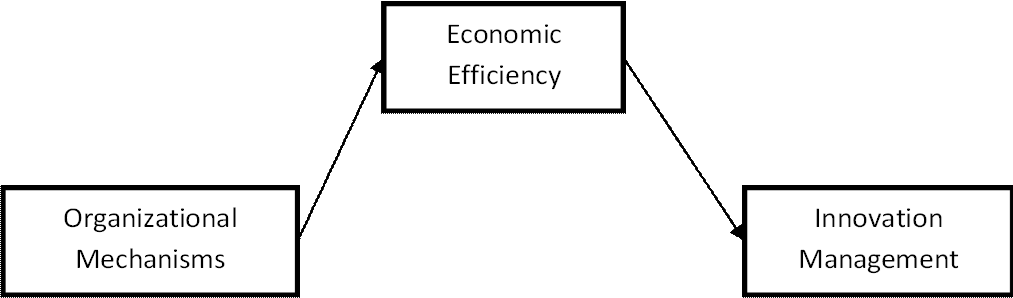
Figure 1 Conceptual framework linking organizational mechanisms, economic efficiency, and innovation management. Source: Developed by the authors (subject to author confirmation).
This figure illustrates the proposed conceptual model in which organizational mechanisms influence innovation management indirectly through the mediating role of economic efficiency, while economic mechanisms support and shape the efficiency of resource utilization.
Theoretical Background
Innovation management has evolved significantly over the past decades, moving from a narrow focus on technological invention toward a broader managerial and systemic perspective. Contemporary scholarship emphasizes that innovation is not merely the outcome of research and development activities but rather the result of coordinated organizational arrangements and economically efficient mechanisms [16]. Zawislak, et al. [17] explain that this evolution is particularly critical in energy-intensive industries such as oil and gas, where innovation processes are embedded in complex organizational structures and regulated economic environments.
Innovation Management as a Systemic Process
Early conceptualizations of innovation, particularly those inspired by Schumpeterian theory, framed innovation as a driver of economic development through new combinations of resources, technologies, and organizational forms. Over time, this view expanded to conceptualize innovation management as a continuous and structured process integrating strategic planning, organizational coordination, and economic decision-making [5]. As discussed in [16], sustainable innovation outcomes increasingly depend on an organization’s capacity to manage knowledge flows, institutional constraints, and internal processes rather than isolated technological breakthroughs.
In industrial sectors characterized by high capital intensity and long investment cycles, innovation management assumes a distinctly systemic character. Innovation initiatives must align with organizational hierarchies, regulatory frameworks, and financial planning mechanisms, making innovation inseparable from the broader organizational and economic architecture of the firm [13]. The alignment between organizational structures and broader economic conditions is essential for understanding how innovation performance evolves within oil and gas industry organizations. In capital-intensive energy sectors, innovation outcomes are shaped not only by technological capabilities but also by the interaction between managerial systems, market dynamics, and institutional frameworks that influence investment and strategic decision-making [15].
Organizational Mechanisms as Drivers of Innovation
Organizational mechanisms constitute the internal structural and behavioral arrangements through which organizations coordinate activities, allocate authority, and guide decision-making processes related to innovation. In the context of innovation management, these mechanisms shape how ideas are generated, evaluated, and transformed into implementable outcomes. As organizations operate as interconnected systems, innovation performance is inherently influenced by the degree of alignment between organizational structures, leadership practices, incentive systems, and cultural norms [16].
Organizational structure plays a foundational role in determining the effectiveness of innovation management. Highly centralized and rigid structures often restrict information flow, slow decision-making, and limit cross-functional collaboration, thereby constraining innovation capacity. By contrast, more flexible and adaptive structures facilitate horizontal communication, encourage knowledge sharing, and support experimentation across organizational units. As discussed in [17], structural flexibility enables organizations to respond more effectively to technological change and environmental uncertainty, particularly in complex industrial sectors such as oil and gas.
Leadership mechanisms further influence innovation management by shaping strategic orientation, risk tolerance, and employee engagement. Leadership that promotes participation, learning, and empowerment fosters an environment in which innovation is perceived as a shared organizational responsibility rather than a top-down directive. Tidd and Bessant [16] emphasize that leadership commitment to innovation is essential for translating strategic intent into operational practices, especially in energy-intensive industries characterized by high uncertainty and capital intensity.
Incentive and reward systems represent another critical organizational mechanism driving innovation behavior. When performance evaluation frameworks prioritize short-term operational efficiency or compliance over creativity and learning, innovation initiatives tend to remain symbolic or peripheral. Conversely, incentive systems that recognize experimentation, problem-solving, and knowledge creation reinforce innovation-oriented behavior and institutionalize innovation as a continuous managerial process.
Organizational culture also plays a decisive role in shaping innovation management effectiveness. Culture reflects shared values, norms, and assumptions that influence how employees perceive change, risk, and collaboration. In organizations where innovation is embedded within cultural norms, employees are more likely to engage in creative problem-solving and knowledge exchange. As discussed in [5], a supportive innovation culture reduces resistance to change and enhances the organization’s capacity to absorb and adapt new ideas.
In oil and gas industry organizations, the influence of organizational mechanisms on innovation management is particularly pronounced due to the sector’s scale, complexity, and regulatory environment. State dominance, hierarchical control, and bureaucratic routines often weaken organizational flexibility and discourage bottom-up innovation initiatives. As a result, improving organizational mechanisms becomes a prerequisite for strengthening innovation management capabilities in such contexts [13]. Without structural adaptability, leadership support, and aligned incentives, innovation efforts are unlikely to progress beyond isolated initiatives.
Taken together, organizational mechanisms function as primary drivers that create the internal conditions necessary for effective innovation management. However, while these mechanisms shape innovation potential, their impact on actual innovation outcomes depends on the organization’s ability to allocate and utilize resources efficiently. This observation highlights the importance of examining how organizational mechanisms interact with economic mechanisms and efficiency considerations, a relationship explored in the following section.
Economic Mechanisms and Efficiency Logic
Economic mechanisms represent the financial and operational systems through which organizations allocate resources, evaluate performance, and sustain innovation initiatives over time. Within innovation management, these mechanisms determine not only the availability of financial and material resources but also the efficiency with which such resources are transformed into innovative outcomes. In capital-intensive industries such as oil and gas, where innovation investments are costly and long-term in nature, economic mechanisms play a decisive role in shaping innovation trajectories and organizational sustainability [9].
Resource allocation efficiency constitutes a core economic mechanism influencing innovation management effectiveness. When financial, human, and technological resources are allocated primarily to short-term operational priorities, innovation initiatives often remain underfunded or fragmented. Conversely, strategic allocation of resources toward research and development, process improvement, and technological learning enhances an organization’s capacity to generate and implement innovative solutions. Efficient resource allocation plays a central role in sustaining organizational innovation, as firms must balance risk-taking with the efficient use of available resources in order to maintain long-term innovation performance under conditions of uncertainty [10, 16].
Cost–benefit management further reinforces the efficiency logic underlying innovation decisions. Innovation projects inherently involve uncertainty, making systematic evaluation of expected benefits relative to costs essential for sustaining organizational commitment. In oil and gas industry organizations, weak cost–benefit analysis frequently leads to delayed innovation adoption, reliance on external technologies, or premature termination of innovation initiatives. Tidd and Bessant [16] emphasize that integrating cost–benefit logic into innovation planning improves accountability and strengthens the economic justification for innovation investments.
Investment in research and development represents another critical economic mechanism supporting innovation management. R&D investment provides the foundation for technological advancement, knowledge creation, and absorptive capacity. However, in resource-dependent and state-dominated economies, R&D spending is often constrained by fiscal priorities and centralized budgetary control. As a result, innovation efforts rely heavily on imported technologies rather than internally developed capabilities. Sustained investment in research and development is particularly important in the Russian oil and gas sector, where technological dependence on foreign expertise and equipment has historically constrained the development of advanced extraction technologies. Strengthening domestic R&D capabilities is therefore considered essential for improving technological autonomy and enhancing innovation performance in the industry [8].
Economic efficiency serves as the integrative logic linking economic mechanisms to innovation management outcomes. Efficiency reflects the organization’s ability to convert inputs—such as capital, labor, and infrastructure—into valuable outputs with minimal waste and optimal productivity. When economic mechanisms are aligned with innovation objectives, efficiency functions as an enabling condition that transforms innovation potential into measurable performance improvements.
In oil and gas industry organizations, economic efficiency is often constrained by institutional rigidities, regulatory complexity, and centralized financial control. These constraints limit managerial discretion and weaken the responsiveness of economic mechanisms to innovation needs. As discussed in [13], institutional pressures shape how economic mechanisms are designed and implemented, thereby influencing innovation outcomes indirectly. Without sufficient flexibility in economic systems, innovation initiatives struggle to move beyond pilot stages.
The interaction between economic mechanisms and organizational arrangements is therefore central to understanding innovation management effectiveness. While organizational mechanisms create the internal conditions for innovation, economic mechanisms determine the feasibility, scale, and sustainability of innovation initiatives. Economic efficiency has been widely recognized as a critical mechanism linking organizational capabilities with innovation outcomes. In particular, firms with strong managerial and organizational capacities are better able to transform internal resources and knowledge into productive innovation activities that enhance operational and financial performance. This relationship is especially evident in capital-intensive and institutionally complex industries, where efficient resource allocation and coordination play a central role in converting organizational capabilities into tangible innovation outcomes [4].
In sum, economic mechanisms and efficiency logic form a critical dimension of innovation management in oil and gas industry organizations. Improving innovation performance requires not only organizational alignment but also economically efficient systems that support long-term investment, risk management, and resource optimization. This integrated perspective provides the basis for the conceptual framework proposed in the following section, which links organizational mechanisms, economic efficiency, and innovation management into a coherent analytical model.
Proposed Conceptual Framework
The proposed conceptual framework is developed to explain how innovation management in oil and gas industry organizations can be enhanced through the systematic alignment of organizational and economic mechanisms, with economic efficiency functioning as a mediating logic. Rather than treating innovation as an isolated technological outcome, the framework conceptualizes innovation management as a multidimensional managerial process embedded within broader organizational and economic systems. This perspective reflects the growing recognition that innovation emerges from the interaction of managerial structures, strategic decision-making, and economic resource allocation rather than from technological capability alone [4, 16]. Such an integrated view is particularly relevant in capital-intensive industries such as oil and gas, where innovation outcomes are shaped by both organizational governance and financial sustainability [5].
At the core of the framework lies the assumption that organizational mechanisms constitute the primary drivers of innovation capacity. Organizational structure, leadership practices, incentive systems, and innovation-oriented culture collectively shape how organizations generate ideas, coordinate activities, and respond to environmental change. Prior research emphasizes that organizational arrangements significantly influence firms’ ability to mobilize knowledge, support experimentation, and facilitate collaboration across functional boundaries [4]. When these mechanisms are strategically aligned, organizations become better positioned to foster learning processes, encourage experimentation, and support cross-functional integration, all of which are essential for sustaining innovation in complex industrial environments [16]. However, organizational readiness alone does not guarantee effective innovation management unless it is supported by economically efficient systems capable of sustaining innovation investments over time.
Economic mechanisms form the second foundational component of the framework. These mechanisms include resource allocation efficiency, cost–benefit management, and investment in research and development activities. In capital-intensive industries such as oil and gas, innovation initiatives often require substantial financial commitments and long development cycles, making economic coordination a critical factor in determining the feasibility of innovation strategies [15]. Effective economic mechanisms enable organizations to prioritize high-value projects, manage financial risk, and ensure that innovation investments remain aligned with long-term strategic objectives [5]. Conversely, economically inefficient systems characterized by rigid budgeting practices, weak evaluation processes, or limited R&D investment can constrain innovation capacity and reduce the likelihood that organizational potential will translate into measurable innovation outcomes.
Economic efficiency is positioned in the framework as a mediating construct linking organizational mechanisms to innovation management effectiveness. This mediating role reflects the logic that organizational arrangements influence innovation outcomes indirectly through their impact on how efficiently resources are utilized and managed. When organizational mechanisms promote coordination, accountability, and strategic alignment, they contribute to higher levels of economic efficiency by reducing operational inefficiencies and improving decision-making regarding resource allocation. In turn, improved economic efficiency enables organizations to sustain innovation activities, manage uncertainty, and enhance overall innovation performance [4, 16]. In capital-intensive sectors, this mediating dynamic becomes particularly important because innovation initiatives depend heavily on the effective deployment of financial and technological resources.
The proposed framework further acknowledges the institutional context within which oil and gas industry organizations operate. Institutional factors such as regulatory frameworks, state ownership structures, and centralized governance systems frequently shape both organizational arrangements and economic decision-making processes. Institutional theory suggests that such environmental constraints influence managerial autonomy, organizational behavior, and the capacity of firms to adopt innovative practices [13]. By incorporating economic efficiency as a mediating logic, the framework accounts for these structural constraints while emphasizing the importance of internal organizational alignment as a pathway toward improved innovation management. This perspective is especially relevant in resource-dependent and transitional economies, where institutional rigidity may limit organizational flexibility and slow the diffusion of innovation.
Importantly, the framework is conceptual rather than empirical in nature. It does not attempt to test causal relationships statistically but instead provides a theoretically grounded structure that integrates organizational and economic perspectives into a coherent explanatory model. Conceptual frameworks play an important role in advancing theory by organizing existing knowledge and identifying relationships that may guide future empirical research [4]. In this sense, the framework offers a foundation for subsequent empirical investigations that may operationalize its components and examine their interactions within specific organizational contexts in the oil and gas sector.
In summary, the proposed conceptual framework positions innovation management as the outcome of an interactive process in which organizational mechanisms shape innovation capacity, economic mechanisms determine feasibility and sustainability, and economic efficiency mediates the relationship between the two. By integrating these dimensions, the framework advances a holistic understanding of innovation management tailored to the structural and institutional realities of oil and gas industry organizations. This integrated perspective provides a theoretical basis for the discussion and implications presented in the following section.
Discussion and Implications
The proposed conceptual framework offers a structured perspective on how innovation management in oil and gas industry organizations can be strengthened through the alignment of organizational mechanisms and economic mechanisms, mediated by economic efficiency. This section discusses the theoretical and practical implications of the framework, highlighting its contribution to innovation management literature and its relevance for policy and managerial reform in energy-intensive industries.
From a theoretical standpoint, the framework advances innovation management research by integrating organizational and economic perspectives that have traditionally been examined in isolation. Previous studies have emphasized that innovation outcomes are shaped not only by technological capabilities but also by organizational structures and strategic resource allocation processes [4, 16]. By positioning economic efficiency as a mediating logic, the framework extends existing innovation management theory by emphasizing that innovation performance emerges from the interaction between organizational arrangements and the efficiency with which economic resources are utilized. This integrative perspective contributes to a more nuanced understanding of innovation processes in capital-intensive and institutionally constrained environments, where conventional innovation models often fail to capture contextual complexity [5].
The framework also addresses a critical gap in the literature concerning innovation management in state-dominated and resource-dependent economies. Many existing innovation theories assume decentralized decision-making structures and competitive market dynamics, assumptions that do not always correspond to the institutional realities of energy-sector organizations operating under strong government influence. Institutional theory suggests that regulatory frameworks, governance structures, and state ownership patterns significantly shape organizational behavior and managerial decision-making [13]. By incorporating institutional constraints implicitly through the mediating role of economic efficiency, the framework provides a conceptual lens that is more adaptable to transitional and developing economies. This contribution enhances the theoretical relevance of innovation management research beyond private-sector and advanced-economy contexts.
From a managerial perspective, the framework underscores the importance of coordinated reform rather than isolated interventions. Organizational mechanisms such as leadership practices, structural design, and incentive systems must be aligned with economic mechanisms governing resource allocation, cost–benefit evaluation, and investment planning. Research on innovation management indicates that misalignment between managerial structures and financial decision-making processes often limits the effectiveness of innovation initiatives in large industrial organizations [16]. Managers in oil and gas organizations can therefore utilize the framework as a diagnostic tool to identify structural and economic misalignments that hinder innovation performance. For instance, strong leadership commitment to innovation may produce limited results if it is constrained by rigid budgeting systems or inefficient investment evaluation processes.
Policy implications are equally significant, particularly for governments and regulatory authorities overseeing oil and gas industry organizations. In many resource-dependent economies, public policy plays a central role in shaping innovation capacity within the energy sector. Studies of energy-sector governance emphasize that regulatory frameworks, fiscal incentives, and institutional reforms can significantly influence technological development and innovation investment [15]. The framework highlights economic efficiency as a lever through which innovation management can be improved without necessarily increasing total expenditure. Policymakers can therefore design governance reforms aimed at improving financial transparency, strengthening accountability mechanisms, and encouraging innovation-oriented investment strategies. By aligning regulatory frameworks with innovation objectives, policy interventions may facilitate the gradual transformation of oil and gas organizations from production-oriented entities into innovation-capable institutions.
The framework also has important implications for future empirical research. As a conceptual model, it provides a theoretical structure for operationalizing the relationships between organizational mechanisms, economic mechanisms, and economic efficiency. Conceptual frameworks play a key role in organizing theoretical constructs and guiding empirical investigation within management research [4]. Future studies may use this framework to test mediating relationships, compare innovation management practices across different organizational contexts, or examine how institutional variables influence innovation outcomes in energy-intensive industries.
Despite its contributions, the framework has certain limitations. As a conceptual analysis, it does not provide empirical evidence to verify the proposed relationships, nor does it account for all external variables affecting innovation management, such as global energy market volatility, technological disruption, or geopolitical uncertainty. However, these limitations highlight opportunities for future research rather than weaknesses in the conceptual structure itself. Empirical studies that apply the framework in specific organizational contexts may help refine its components and enhance its explanatory power.
Conclusion and Future Research
This paper has advanced a conceptual perspective on innovation management in oil and gas industry organizations by emphasizing the integrated role of organizational mechanisms, economic mechanisms, and economic efficiency. Moving beyond fragmented approaches that treat organizational or economic factors in isolation, the paper has argued that effective innovation management emerges from the systematic alignment of internal organizational arrangements with economically efficient resource utilization. By positioning economic efficiency as a mediating logic, the proposed framework offers a coherent explanation of how innovation potential can be transformed into sustainable innovation outcomes in capital-intensive and institutionally constrained environments.
The primary contribution of this paper lies in its theoretical integration. By linking organizational mechanisms—such as structure, leadership, incentive systems, and innovation culture—with economic mechanisms governing resource allocation, cost–benefit management, and R&D investment, the framework enriches innovation management theory and extends its applicability to state-dominated and resource-dependent economies. This integrative logic addresses a notable gap in the literature, where dominant innovation models often fail to capture the institutional and economic realities of oil and gas industry organizations.
From a practical standpoint, the framework provides a strategic lens for managers and policymakers seeking to improve innovation management without relying solely on increased expenditure or technological imports. The emphasis on economic efficiency highlights the importance of optimizing existing resources, aligning organizational reforms with financial systems, and embedding innovation within routine managerial processes. Such an approach is particularly relevant for oil and gas organizations operating under fiscal constraints and regulatory complexity, where innovation must be justified through both organizational coherence and economic rationality.
Despite these contributions, the paper acknowledges certain limitations. As a conceptual analysis, the framework has not been empirically tested, and its explanatory relationships remain theoretically grounded rather than statistically validated. In addition, external factors such as global energy market volatility, geopolitical risk, and environmental regulation are not explicitly modeled, although they may influence innovation management outcomes indirectly.
Future research can build on this framework in several directions. Empirical studies may operationalize the proposed constructs and test the mediating role of economic efficiency using quantitative methods such as structural equation modeling or mixed-method approaches. Comparative research across different national or institutional contexts could further refine the framework by examining how variations in governance structures and regulatory environments shape innovation management. Additionally, longitudinal studies may explore how organizational and economic reforms influence innovation performance over time in oil and gas industry organizations.
Страница обновлена: 22.10.2026 в 11:12:54
Improving organizational and economic mechanisms for innovation management in oil and gas industry organizations: a conceptual perspective
AL-Tekreeti M., Kondratieva M.N.Journal paper
Leadership and Management
Volume 13, Number 11 (November 2026)