Комплексная государственная программа «Развитие физической культуры и спорта» как инструмент консолидации региональных ресурсов
Богомолов Г.В.1  , Прокопенкова Ю.М.1 , Смирницкий С.И.1
1 Федеральный научный центр физической культуры и спорта, Москва, Россия
Скачать PDF | Загрузок: 15
Статья в журнале
Экономика и управление в спорте (РИНЦ, ВАК)
опубликовать статью | оформить подписку
Том 6, Номер 2 (Апрель-июнь 2026)
Эта статья проиндексирована РИНЦ, см. https://elibrary.ru/item.asp?id=91882809 [91882809]
Аннотация:
Предметом исследования является региональная составляющая комплексной государственной программы Российской Федерации «Развитие физической культуры и спорта», которая представляет совокупность государственных программ по развитию сферы физической культуры и спорта, реализуемых на уровне субъектов Российской Федерации за счет субсидирования из федерального бюджета, собственных средств регионов и муниципальных образований, а также привлеченных частных инвестиций. С 2025 г. внедрен новый вид мониторинга, направленный на ежеквартальный контроль показателей хода выполнения государственных программ в регионах. Цель исследования (мониторинга) заключается в определении параметров финансового обеспечения государственных программ субъектов Российской Федерации, их распределении по типовым направлениям расходов, а также оценке уровня освоения запланированных объемов средств. По итогам мониторинга за 2025 г. комплексная государственная программа дополнена объемом финансирования около 0,5 трлн рублей, большая часть которых является средствами бюджетов субъектов Российской Федерации и муниципальных образований. Принимая во внимание неравномерное социально-экономическое положение и различные приоритеты регионального развития, субъекты вносят диспропорциональный вклад в общий объем. Установлено, что привлеченные внебюджетные источники отражены менее чем в трети программ. Сформирован рейтинг направлений расходов по ресурсоемкости. Авторы рассматривают мониторинг как дополнительный инструмент региональной политики.
Ключевые слова: физическая культура, спорт, государственная программа, мониторинг, финансирование, региональное развитие
Финансирование:
Исследование выполнено в рамках работы по научно-методическому обеспечению (001-25/6) по теме «Анализ развития физической культуры и спорта в Российской Федерации на основе статистического наблюдения» (государственное задание № 777-00021-26)
JEL-классификация: Z20, Z21, Z22, Z23, Z28
Введение
В 2025 г. во исполнение поручения Президента Российской Федерации [13] государственная программа Российской Федерации «Развитие физической культуры и спорта» (ГП ФКиС) получила статус комплексной (КГП ФКиС), что отражает межотраслевой и межведомственный характер решаемых в рамках программы задач, включая задачу из системы национальных целей развития Российской Федерации [19] по повышению к 2030 г. уровня удовлетворенности граждан условиями для занятий физической культурой и спортом (ФКиС). Комплексный формат ГП ФКиС предполагает консолидацию всех мероприятий, действующих в сфере ФКиС, и обеспечивающих их ресурсов [3] (Bogomolov et al., 2025).
В период 2013–2024 гг. ресурсное наполнение ГП ФКиС фактически состояло из расходов федерального бюджета, главным распорядителем бюджетных средств которых является Минспорт России [5] (Gurinovich et al., 2019). Документ состоял из подпрограмм и основных мероприятий (до 2021 г.), а также федеральных проектов, состоящих из результатов, и процессных мероприятий, объединенных в комплексы (с 2022 г.). Часть мероприятий и результатов (синонимичные понятия, используемые, соответственно, в процессной и проектной деятельности [10] (Marshova et al., 2022)), осуществлялись при участии соисполнителей, включая механизм выделения межбюджетных трансфертов на совершенствование спортивной инфраструктуры и иные виды государственной поддержки ФКиС в субъектах Российской Федерации.
Начиная с 2025 г. в составе КГП ФКиС аналитически учитываются также мероприятия и результаты иных ГП, ответственными исполнителями которых являются другие федеральные органы исполнительной власти – Минпросвещения России, Минобрнауки России, Минсельхоз России, Минэкономразвития России, Минтруд России, Минстрой России [16]. Указанные ведомства проводят мероприятия, направленные на создание комфортных физкультурно-спортивных условий для различных категорий граждан.
Кроме того, во исполнение поручения Президента Российской Федерации [12] Минспорт России получил право учитывать мероприятия (результаты) и объемы финансирования ГП по развитию ФКиС субъектов Российской Федерации. Сфера ФКиС относится к предметам совместного ведения Российской Федерации и регионов [20]. Документы программирования в сфере ФКиС действуют в субъектах Российской Федерации и являются инструментом увязки стратегических и бюджетных параметров [21] (Shokhin et al., 2022): на региональном уровне определяются приоритеты развития ФКиС, их достижение подтверждается целевыми показателями и обеспечивается реализацией конкретных мероприятий и результатов, под которые принята роспись расходов [8] (Kalashnikova et al., 2016). Расходы покрываются за счет межбюджетных трансфертов из федерального бюджета, собственных средств регионов и муниципальных образований [9] (Magomedov, 2018), а также внебюджетных источников (при наличии). Данные объемы средств могут отражаться в аналитической части КГП ФКиС.
Также факультативно в аналитическую часть КГП ФКиС включается информация о расходах в сфере ФКиС различных организаций, среди которых физкультурно-спортивные организации (общероссийские спортивные федерации и спортивные лиги), букмекерские, публично-правовые компании и хозяйственные общества с государственным участием, поддерживающие развитие профессионального, детско-юношеского и массового спорта [1] (Altushkin et al., 2025).
Сопоставление структур финансирования ГП в эволюции форматов представлено на рисунке 1. Подчеркнем, что в зарубежных исследованиях описываются сходные каналы финансирования ФКиС (поддержка из государственных, региональных и муниципальных бюджетов, средства спортивных организаций и ассоциаций [33, 22, 26] (Yuan et al., 2026; Berry et al., 2018; Lima et al., 2025), инвестиции от частных компаний [30, 31, 32] (Păuna et al., 2020; Viollet et al., 2023; Wang et al., 2022)).
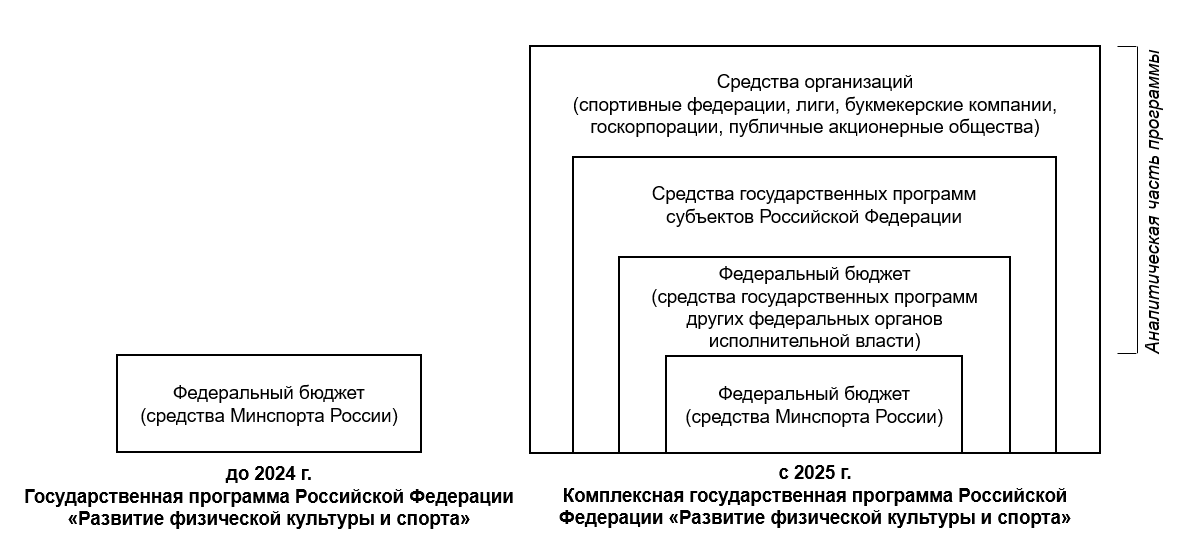
Рисунок 1. Структура финансирования государственных программ по развитию сферы физической культуры и спорта отраслевого и комплексного форматов в контексте учитываемых источников средств
Источник: составлено авторами.
В целях получения данных о региональной составляющей КГП ФКиС организован мониторинг реализации ГП субъектов Российской Федерации. Основанием для проведения мониторинга является вышеназванное поручение Президента Российской Федерации [12] о предоставлении исполнительными органами власти регионов сведений о мероприятиях и расходах государственных программ и их кассовом освоении. Информацию предписано направлять в Минспорт России на ежеквартальной основе.
В поручении сделан особый акцент на отражении в отчетах средств, поступающих из внебюджетных источников. Это отвечает стратегической задаче Российской Федерации по обеспечению роста инвестиционной привлекательности ФКиС [2, 14] (Bogomolov et al., 2024; Polyakova et al., 2024) и общемировым процессам по увеличению объемов внебюджетного финансирования ФКиС в условиях ограниченных государственных ресурсов [25, 27, 29] (Kolar et al., 2024; Mori et al., 2025; Nazarov et al., 2023).
С учетом поручения Президента Российской Федерации Минспорт России внес положение об отчетности в рамочное соглашение о взаимодействии в ходе реализации государственных программ в сфере ФКиС, заключенное с каждым из регионов [4] (Gubin, 2020).
Руководящая роль Президента Российской Федерации в запуске мониторинга подчеркивает его уникальный характер и нестандартизированный тип. В частности, подобная форма получения данных не предусмотрена положением о системе управления ГП Российской Федерации [15, 18] (Sokolov et al., 2025) и шаблоном рамочного соглашения с субъектами Российской Федерации.
Цель работы – определение параметров финансового обеспечения ГП субъектов Российской Федерации, в том числе из внебюджетных источников и в разрезе направлений расходов, и оценка уровня освоения запланированных объемов средств. Исследовательская и практическая значимость работы состоит в агрегировании данных о ресурсах, направляемых на развитие ФКиС из бюджетов всех уровней, формировании региональной части КГП ФКиС, применении инструмента контроля за ходом реализации ГП в регионах.
Материалами для проведения исследования выступили отчеты, представленные региональными органами власти в сфере ФКиС, за I-IV кварталы 2025 г. (340 единиц). Отчеты регионов включают перечень мероприятий и результатов ГП с указанием их принадлежности к тематической группе направлений расходов, фактические и плановые значения мероприятий [6] (Dobrolyubova, 2018), фактические и плановые объемы финансирования из федерального бюджета, консолидированного бюджета субъекта Российской Федерации и внебюджетных источников. Для свода, обработки отчетов и подготовки итоговых выводов использованы методы систематизации данных, описательного статистического анализа, план-фактного и компаративного анализа данных.
Основная часть
В рамках мониторинга в 2025 г. в числе отчитывающихся субъектов Российской Федерации были 85 регионов.
По итогам анализа данных мониторинга за I–IV кварталы 2025 г. установлено ежегодное увеличение плановых параметров финансирования, предусмотренных в ГП субъектов Российской Федерации по развитию ФКиС (I квартал – 449,0 млрд рублей, II квартал – 481,9 млрд рублей, III квартал – 486,0 млрд рублей, IV квартал – 509,8 млрд рублей), что представлено на рисунке 2. Это связано с тем, что в течение года программы подлежали корректировке. Региональные власти самостоятельно принимают решения об изменении ГП по мере необходимости. В том числе на протяжении 2025 г. во всей совокупности программ происходили процессы секвестирования расходов в связи с перераспределением на иные цели, корректировки объемов финансирования по фактической необходимости, переноса мероприятий и результатов на последующие годы, добавления новых мероприятий. Общее количество мероприятий и результатов в мониторинговом поле, включенных в программы регионов, увеличено с 1848 ед. в I квартале до 2152 ед. в IV квартале.
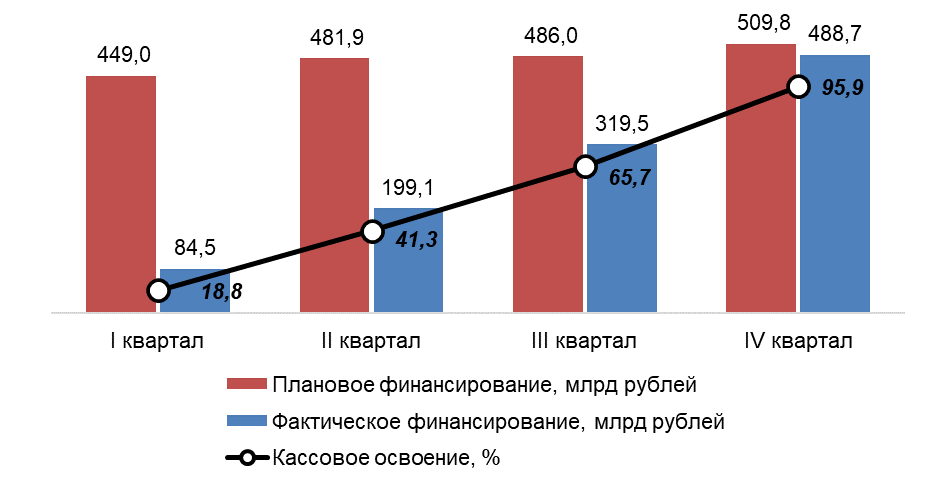
Рисунок 2. Финансовое обеспечение ГП субъектов Российской Федерации по развитию ФКиС в I-IV кварталах 2025 г.
Источник: составлено авторами.
Фактически израсходовано в 2025 г. на развитие ФКиС в рамках ГП субъектов Российской Федерации 488,7 млрд рублей (показатель увеличивался ежеквартально: I квартал – 84,5 млрд рублей, II квартал – 199,1 млрд рублей, III квартал – 319,5 млрд рублей). Кассовое исполнение на конец года достигло 95,9%. Темпы кассового освоения в течение года возрастали. В I квартале доля освоенных средств составила 18,8%, во II квартале – 41,3% (прирост +22,5 процентных пункта), в III квартале – 65,7% (прирост +24,4 процентных пункта), в IV квартале – 95,9% (прирост +30,2 процентных пункта).
Декомпозиция фактических расходов по источникам финансирования отражает зависимость от средств бюджетной системы [2] (Bogomolov et al., 2024). В рамках ГП субъектов Российской Федерации в 2025 г. освоено:
- из федерального бюджета – 19,7 млрд рублей, 4% от общего объема финансирования;
- из консолидированных бюджетов субъектов Российской Федерации (суммарный объем средств бюджетов субъектов Российской Федерации и бюджетов муниципальных образований) – 433,7 млрд рублей, 89% от общего объема;
- из внебюджетных источников – 35,3 млрд рублей, 7% от общего объема, что приведено на рисунке 3.
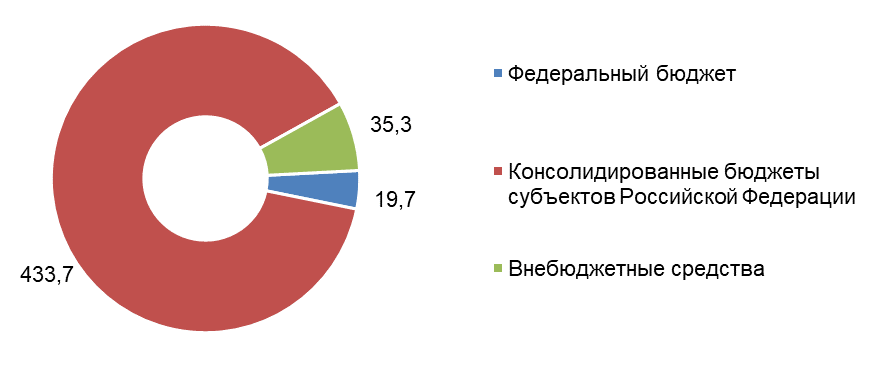
Рисунок 3. Структура фактического финансового обеспечения ГП субъектов Российской Федерации по развитию ФКиС по итогам 2025 г. (млрд рублей) Источник: составлено авторами.
Средства федерального бюджета освоены на 99%, консолидированных бюджетов субъектов Российской Федерации – на 96,8%, внебюджетные поступления – на 83,9%.
В разрезе регионов средства, израсходованные на развитие ФКиС в рамках ГП субъектов Российской Федерации (из всех источников), распределены следующим образом: 35,2% (171,5 млрд рублей) концентрирует государственная программа г. Москвы, 6,4% (31,1 млрд рублей) – г. Санкт-Петербурга, 3,6% (17,8 млрд рублей) – Московской области, 3,2% (15,6 млрд рублей) – Республики Татарстан, 3,0% (14,6 млрд рублей) – Нижегородской области. Суммарно эти пять субъектов Российской Федерации обобщают 51,4% от средств всех ГП регионов. Таким образом, результаты мониторинга подтверждают региональное неравенство в области финансирования ФКиС [17] (Rezepin et al., 2024).
Среди субъектов Российской Федерации уровень освоения общего объема финансирования составил:
- менее 90% в 7 регионах;
- от 90 до 95% в 18 регионах;
- от 96 до 99% в 34 регионах;
- 100% в 22 регионах.
Визуализация приведена на рисунке 4.
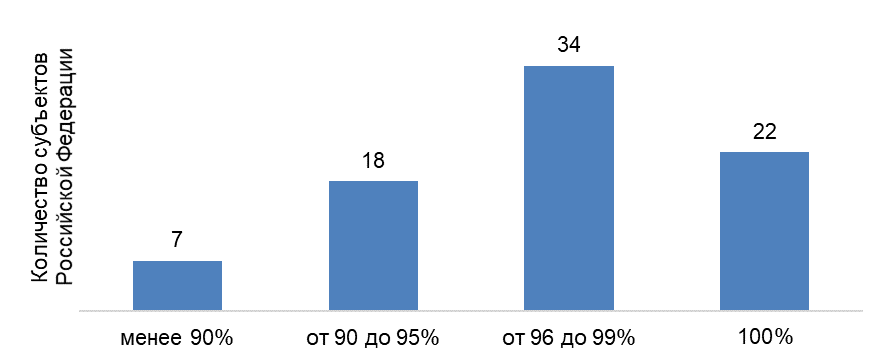
Рисунок 4. Уровень кассового освоения финансового обеспечения (все виды источников) ГП субъектов Российской Федерации по развитию ФКиС по итогам 2025 г.
Источник: составлено авторами.
Форма отчетности позволяет классифицировать мероприятия и результаты по тематическим группам и таким образом ранжировать направления расходов по объему затрачиваемых средств:
1) 94,7 млрд рублей (30% от общего объема финансирования) – создание (строительство, реконструкция) и ремонт капитальных объектов спортивной инфраструктуры государственной собственности субъектов Российской Федерации (муниципальной собственности), включая проекты, реализуемые в рамках государственно-частного, муниципально-частного партнерства и концессионных соглашений, а также приобретение (выкуп) объектов;
2) 68,6 млрд рублей (22% от общего объема финансирования) – осуществление деятельности организаций, реализующих дополнительные образовательные программы спортивной подготовки, к числу которых относятся спортивные школы, спортивные школы олимпийского резерва, училища олимпийского резерва, включая государственную поддержку в целях соответствия федеральным стандартам спортивной подготовки и мероприятия по модернизации материально-технической базы организаций;
3) 43,9 млрд рублей (14% от общего объема финансирования) – обеспечение государственных заданий в целях выполнения работ и предоставления услуг организациями ФКиС, подведомственных органам исполнительной власти субъектов Российской Федерации;
4) 41,1 млрд рублей (13% от общего объема финансирования) – предоставление субсидий и грантов некоммерческим организациям в сфере ФКиС на осуществление уставной деятельности и реализацию проектов, в том числе социально-ориентированным организациям, спортивным федерациям, региональным фондам, дирекциям;
5) 14,6 млрд рублей (5% от общего объема финансирования) – создание некапитальных спортивных сооружений для занятий ФКиС, работы по закупке, поставке и монтажу спортивно-технологического оборудования для спортивных площадок с тренажерами и комплектных модульных сооружений;
6) 14,6 млрд рублей (5% от общего объема финансирования) – проведение физкультурных и спортивных мероприятий для всех категорий и групп граждан, перечень которых содержит Единый календарный план межрегиональных, всероссийских и международных физкультурных мероприятий и спортивных мероприятий и аналогичные календарные планы уровня субъектов Российской Федерации, подготовка и выполнение гражданами нормативов Всероссийского физкультурно-спортивного комплекса «Готов к труду и обороне» (ГТО)»;
7) 13,2 млрд рублей (4% от общего объема финансирования) – финансирование профессионального спорта, спортивных команд и клубов, обеспечение их участия в соревнованиях;
8) 6,0 млрд рублей (2% от общего объема финансирования) – содержание и эксплуатация спортивных сооружений, обеспечение их функционирования и доступности для всех категорий и групп населения;
9) 4,7 млрд рублей (1% от общего объема финансирования) – текущая деятельность органов государственной власти, централизованных бухгалтерий, реализация государственных функций, содержание аппаратов, организационно-техническое сопровождение государственных программ;
10) 4,6 млрд рублей (1% от общего объема финансирования) – социально-экономическая поддержка и материальное стимулирование физических лиц (специалисты физической культуры и спорта, тренеры, тренеры-преподаватели, спортсмены, спортивно одаренные дети, дети-сироты), в том числе по итогам выступления на соревнованиях и за выдающиеся достижения, награждение победителей смотров-конкурсов, иные вознаграждения и формы поощрений, стипендии, выплаты для решения жилищных и бытовых вопросов, обеспечение бесплатного проезда отдельных категорий граждан, компенсация расходов;
11) 9,5 млрд рублей (3% от общего объема финансирования) – иные виды расходов, в том числе проведение информационно-коммуникационных кампаний по продвижению физической культуры, спорта и здорового образа жизни, мероприятия по усилению кадрового потенциала, проект «Земский тренер».
Стоит отметить, что по направлениям расходов распределены 315,7 млрд рублей, то есть объем финансирования без учета средств ГП г. Москвы. Поскольку положения о мониторинге являются не стандартизированными для системы управления ГП, между Минспортом России и Департаментом спорта г. Москвы по решению сторон заключено рамочное соглашение с формой отчетности, включающей лишь обобщенные данные без детализации до мероприятий.
По итогам 2025 г. по большинству направлений расходов отмечается кассовое освоение на уровне 98–99%. Мероприятия и результаты по созданию объектов капитального строительства и некапитальных объектов на конец года имеют показатели освоения 83,6% и 93,6% соответственно. Названные мероприятия являются наиболее рисковыми, их реализация зачастую сопровождается трудностями при проведении конкурсных процедур для определения подрядчика, проблемами с поставками материалов и оборудования, потребностями в пересмотре проектной документации, некачественными строительно-монтажными работами, зависимостью периода строительных работ от климатических условий, а также чрезвычайными происшествиями. Учитывая изложенное, формируется отставание от установленных сроков реализации [7] (Ermakova, 2025). А режим постоплаты (средства переводятся подрядчикам частично после завершения отдельных этапов работ) приводит к тому, что финансирование осваивается не в полном объеме [11]. Итоги мониторинга за 2025 г. показали, что в ряде регионов незавершенные мероприятия по созданию спортивной инфраструктуры перенесены на последующие годы, что отразилось также на уровне их исполнения.
Доля внебюджетных средств в общем объеме фактического финансирования ГП субъектов Российской Федерации, в 2025 г. составила 7% (35,3 млрд рублей). Согласно представленным отчетам, в течение года состав регионов, отразивших в ГП внебюджетные источники, менялся. По состоянию на 31 декабря 2025 г. внебюджетные средства включены в ГП 23 регионов.
Фактически освоили внебюджетные средства по итогам года 22 региона (перечень приведен в таблице 1). Во Владимирской области планово были предусмотрены внебюджетные средства на цели создания спортивного сооружения, однако в рамках проекта в 2025 г. частный партнер использовал остатки средств, предусмотренных в ГП на 2024 г., соответственно средства текущего года не раскассированы.
Таблица 1 Информация о фактических расходах за счет внебюджетных средств в рамках ГП субъектов Российской Федерации по развитию физической культуры и спорта по итогам 2025 г.
|
№ п/п
|
Субъект
Российской Федерации
|
Израсходовано
внебюджетных средств (факт), млн рублей
|
|
1.
|
Белгородская
область
|
35,0
|
|
2.
|
Брянская
область
|
99,6
|
|
3.
|
Владимирская
область
|
-
|
|
4.
|
г.
Москва
|
28 969,1
|
|
5.
|
Кировская
область
|
62,5
|
|
6.
|
Красноярский
край
|
3,6
|
|
7.
|
Пермский
край
|
3 475,0
|
|
8.
|
Республика
Башкортостан
|
51,8
|
|
9.
|
Республика
Калмыкия
|
21,4
|
|
10.
|
Республика
Мордовия
|
96,5
|
|
11.
|
Республика
Саха (Якутия)
|
367,8
|
|
12.
|
Республика
Тыва
|
23,8
|
|
13.
|
Ростовская
область
|
75,9
|
|
14.
|
Самарская
область
|
764,8
|
|
15.
|
Сахалинская
область
|
7,8
|
|
16.
|
Свердловская
область
|
9,0
|
|
17.
|
Смоленская
область
|
237,3
|
|
18.
|
Ставропольский
край
|
8,8
|
|
19.
|
Тамбовская
область
|
140,8
|
|
20.
|
Ханты-Мансийский
автономный округ – Югра
|
226,2
|
|
21.
|
Чеченская
Республика
|
154,0
|
|
22.
|
Чувашская
Республика
|
204,9
|
|
23.
|
Ярославская
область
|
308,0
|
Подчеркнем, что в рассматриваемом объеме внебюджетных источников финансирования доля средств, утвержденных в ГП г. Москвы, имеет подавляющую роль (29,0 млрд рублей из 35,3 млрд рублей, что составляет 82%). При этом сумма приведена в отчете г. Москвы обобщенно, без распределения по направлениям расходов, что объяснено выше.
Средства внебюджетных источников (6,4 млрд рублей без учета средств ГП г. Москвы) расходуются преимущественно на цели создания спортивной инфраструктуры. По данному направлению в ГП 7 регионов (Кировская область, Пермский край, Республика Башкортостан, Республика Мордовия, Ростовская область, Смоленская область, Чеченская Республика) запланировано 4,2 млрд рублей, что составляет 65,6% от всех распределенных внебюджетных расходов. Пермский край в рамках крупного инфраструктурного проекта отчитался о 3,5 млрд рублей фактически привлеченных внебюджетных средств. Реализация мероприятий по созданию объектов спорта в рамках государственно-частного партнерства и аналогичных механизмов софинансирования расходов со стороны юридических лиц является международным трендом [23, 24, 28] (Gidon et al., 2021; Guo, 2022; Moslehi et al., 2024).
Также внебюджетные средства направляются на поддержку деятельности физкультурно-спортивных организаций, в том числе государственных учреждений, спортивных школ, спортивных команд и клубов, в объеме 2,2 млрд рублей (34,4%).
Анализ практики отражения внебюджетных средств в ГП субъектов Российской Федерации показал следующие ситуации, связанные с крайне низким, либо чрезвычайно высоким уровнем кассового освоения, что нехарактерно для средств бюджетной системы.
В отдельных регионах в программы включен значительный плановый объем частных инвестиций, который на конец года израсходован частично, что понизило общий уровень кассового освоения. В частности, в Пермском крае при плане 9,9 млрд рублей освоено 3,5 млрд рублей, кассовое освоение по внебюджетным источникам – 35,1%, общее кассовое освоение 59,4%. В Республике Башкортостан при плане 277,9 млн рублей освоено 51,8 млн рублей, кассовое освоение по внебюджетным источникам 18,6%, общее кассовое освоение 92,8%.
В ряде субъектов Российской Федерации частные инвесторы по собственной инициативе фактически затратили на мероприятия больший объем средств, чем было изначально планово предусмотрено. Соответствующее превышение плана отмечено в Республике Саха (Якутия) (план 339,5 млн рублей, факт 367,8 млн рублей, кассовое освоение по внебюджетным источникам 108,3%), Сахалинской области (план 7,2 млн рублей, факт 7,8 млн рублей, кассовое освоение по внебюджетным источникам 107,6%), Свердловской области (план 3,9 млн рублей, факт 8,9 млн рублей, кассовое освоение по внебюджетным источникам 224,7%), Тамбовской области (план 135,3 млн рублей, факт 140,8 млн рублей, кассовое освоение по внебюджетным источникам 104,1%).
Средний сквозной уровень исполнения мероприятий и результатов по ГП регионов, рассчитанный как среднее арифметическое от уровня исполнения по каждому мероприятию, по итогам 2025 г. составил 93,7%. Ежеквартально уровень исполнения мероприятий был ниже, чем показатель кассового освоения. Характер прироста уровня исполнения мероприятий отличается неравномерностью в отличие от кассового освоения. Если темпы кассового освоения возрастали от квартала к кварталу, то уровень исполнения мероприятий в I квартале составил 19,3%, во II квартале – 34,6% (прирост +15,3 п.п.), в III квартале – 49,1% (прирост +14,5 п.п., что ниже, чем во II квартале), в IV квартале – 93,7% (+44,6 п.п.). Следовательно, основной прирост пришелся на IV квартал 2025 г. Данная ситуация объясняется тем, что плановый срок завершения реализации по большинству мероприятий и результатов установлен на конец года (как правило, на последние числа декабря).
В разрезе субъектов Российской Федерации данный показатель составил:
- менее 80% в 4 регионах;
- от 80 до 89% в 13 регионах;
- от 90 до 95% в 19 регионах;
- от 96 до 99% в 22 регионах;
- 100% в 23 регионах.
Уровень исполнения мероприятий и результатов по регионам приведен на рисунке 5.
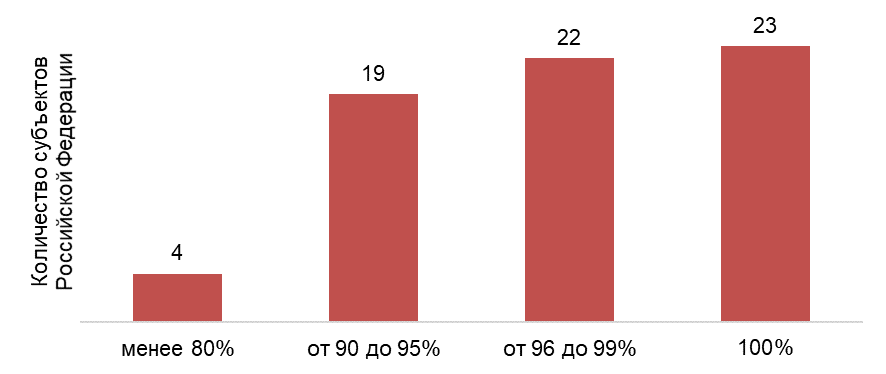
Рисунок 5. Уровень исполнения мероприятий и результатов ГП субъектов Российской Федерации по развитию ФКиС по итогам 2025 г.
Источник: составлено авторами.
Заключение
Утверждение комплексного формата государственной программы Российской Федерации «Развитие физической культуры и спорта» актуализирует вопросы взаимодействия между органами управления сферы ФКиС в рамках иерархии соответствующих государственных программ (от федерального до регионального уровня). В связи с этим институционально оформлено проведение начиная с 2025 г. мониторинга реализации ГП субъектов Российской Федерации по развитию ФКиС.
Результаты представленного исследования позволили установить объемы финансирования ФКиС, заложенные в документах стратегического программирования субъектов Российской Федерации, и отразить данную информацию в КГП ФКиС.
Региональная составляющая КГП ФКиС по итогам 2025 г. составила 509,8 млрд рублей (плановый объем), из которых фактически освоено 488,7 млрд рублей. Ведущим источником выступают консолидированные бюджеты субъектов Российской Федерации (89%). При этом вклад внебюджетных средств – 7%, субсидий из федерального бюджета – 4%.
Оценка распространенности привлечения частных средств, будучи одной из прямых задач мониторинга, показала, что такие инвестиции включены в государственные программы только 23 регионов.
Мониторинг подтвердил наличие регионального неравенства. Компаративный анализ финансового обеспечения программ продемонстрировал, что основной объем расходов на ФКиС (51,4%) сосредоточен в пяти регионах: г. Москва, г. Санкт-Петербург, Московская область, Республика Татарстан, Нижегородская область.
Наиболее ресурсоемким направлением расходов ГП регионов является создание спортивной инфраструктуры, а именно строительство, реконструкция, ремонт физкультурно-оздоровительных комплексов, крытых катков, бассейнов, универсальных спортивных залов и т.д. В данном направлении учтены в том числе проекты государственно(муниципально)-частного партнерства и концессионных соглашений. Внебюджетные средства более всего востребованы именно в инфраструктурных проектах.
Мониторинг выступает одним из инструментов региональной политики и позволяет осуществлять текущий контроль хода реализации мероприятий ГП субъектов Российской Федерации. В 2025 г. от квартала к кварталу увеличивались уровни кассового освоения и достижения установленных значений мероприятий, причем наиболее существенный прирост пришелся на последний квартал. Большинство регионов завершили год с результативностью свыше 96%.
Таким образом в рамках исследования впервые агрегированы сведения о реализации ГП субъектов Российской Федерации и внедрен механизм регулярного получения информации о состоянии дел на местах. Мониторинг также поставляет данные для рассмотрения на заседаниях Правительственной комиссии по реализации КГП ФКиС, принятия решений по недопущению срыва мероприятий ГП и повышению их эффективности.
Поручение Президента Российской Федерации, связанное с предоставлением исполнительными органами власти регионов отчетных сведений, сохраняет активный статус, в связи с чем проведение мониторинга продолжено в 2026 году.
Источники:
2.Богомолов Г.В., Орлов К.А., Прокопенкова Ю.М. Анализ финансового обеспечения сферы физической культуры и спорта на основе данных федерального статистического наблюдения // Экономика и управление в спорте. 2024. Т. 4, № 1. – С. 11-26. DOI 10.18334/sport.4.1.120487. URL: https://www.elibrary.ru/item.asp?id=63546528.
3.Богомолов Г.В., Прокопенкова Ю.М., Орлов К.А. Сравнительный анализ структуры и содержания комплексной и отраслевой государственной программы развития физической культуры и спорта // Вестник спортивной науки. 2025. № 6. С. 49-54. URL: https://www.elibrary.ru/item.asp?id=86105792.
4.Губин Е.П. Правовая основа национальных проектов в Российской Федерации // Государство и право. 2020. № 8. С. 104-109. DOI 10.31857/S102694520011030-4. URL: https://www.elibrary.ru/item.asp?id=43939578.
5.Гуринович А.Г., Петрова Г.В. Ключевые приоритеты правового регулирования бюджетного финансирования физической культуры и спорта в Российской Федерации в современный период // Теория и практика физической культуры. 2019. № 4. С. 99-101. URL: https://www.elibrary.ru/item.asp?id=37257723.
6.Добролюбова Е.И. Государственное управление по результатам в эпоху цифровой трансформации: обзор зарубежного опыта и перспективы для России // Вопросы государственного и муниципального управления. 2018. № 4. С. 70-93. URL: https://www.elibrary.ru/item.asp?id=36609957.
7.Ермакова Ю.С. Особенности реализации государственных программ на региональном и муниципальном уровне // Вестник Академии знаний. 2025. № 4(69). С. 642-646. URL: https://www.elibrary.ru/item.asp?id=82824620.
8.Калашникова Т.В., Краковецкая И.В., Данилова Н.Е. Управление развитием физической культуры и спорта: финансовый аспект // Теория и практика физической культуры. 2016. № 2. С. 100-103. URL: https://www.elibrary.ru/item.asp?id=25610947.
9.Магомедов Р.Ш. Программно-целевое бюджетирование в Российской Федерации: региональный аспект // Региональные проблемы преобразования экономики. 2018. № 11(97). С. 323-330. DOI 10.26726/1812-7096-2018-11-323-330. URL: https://www.elibrary.ru/item.asp?id=37253241.
10.Маршова Т.Н., Кириченко И.А. О критериях качества государственных проектов // Вопросы государственного и муниципального управления. 2022. № 4. С. 61-96. DOI 10.17323/1999-5431-2022-0-4-61-96. URL: https://www.elibrary.ru/item.asp?id=50042289.
11.Отчет Счетной палаты Российской Федерации о результатах контрольного мероприятия «Проверка эффективности расходования бюджетных средств, направленных в 2023-2025 гг. на развитие спортивной инфраструктуры, разработку и содержание государственных информационных ресурсов в сфере физической культуры и спорта». URL: https://ach.gov.ru/upload/iblock/111/d1tpyw9xt1epghzkhnfmin07h0l43qrl/Otchet-sportinfrastruktura.pdf (дата обращения: 06.04.2026).
12.Перечень поручений Президента Российской Федерации от 29 ноября 2024 г. № Пр-2500, пункт 6. URL: http://www.kremlin.ru/acts/assignments/orders/75738 (дата обращения: 01.04.2026).
13.Перечень поручений Президента Российской Федерации от 4 августа 2024 г. № Пр-1533, пункт 11. URL: http://www.kremlin.ru/acts/assignments/orders/74712 (дата обращения: 01.04.2026).
14.Полякова Е.Ю., Львова М.И., Набойченко Е.С., Юзвович Л.И. Перспективы финансовой поддержки физической культуры и спорта в Свердловской области // Теория и практика физической культуры. 2024. № 6. С. 34-36. URL: https://www.elibrary.ru/item.asp?id=67249674.
15.Постановление Правительства Российской Федерации от 26 мая 2021 г. № 786 «О системе управления государственными программами Российской Федерации». URL: https://docs.cntd.ru/document/603677013 (дата обращения: 08.04.2026).
16.Распоряжение Правительства Российской Федерации от 21 декабря 2021 г. №3734-р «О перечне государственных программ Российской Федерации, в состав которых включены направления деятельности федеральных государственных органов и (или) иных главных распорядителей средств федерального бюджета и бюджетов государственных внебюджетных фондов Российской Федерации». URL: https://docs.cntd.ru/document/727648570 (дата обращения: 08.04.2026).
17.Резепин А.В., Данилова И.В., Карпушкина А.В., Правдина Н.В. Оценка «ударопрочности» экономики спорта регионов России в условиях международных ограничений // Человек. Спорт. Медицина. 2024. Т. 24, № S1. С. 97-107. DOI 10.14529/hsm24s113. URL: https://www.elibrary.ru/item.asp?id=67218474.
18.Соколов И.А., Золотарева А.Б. Место обзоров бюджетных расходов среди инструментов анализа эффективности // Экономическая политика. 2025. Т. 20, № 2. С. 82-105. DOI 10.18288/1994-5124-2025-2-82-105. URL: https://www.elibrary.ru/item.asp?id=82130917.
19.Указ Президента Российской Федерации от 7 мая 2024 г. № 309 «О национальных целях развития Российской Федерации на период до 2030 года и на перспективу до 2036 года». URL: http://www.kremlin.ru/acts/bank/50542 (дата обращения: 01.04.2026).
20.Федеральный закон от 4 декабря 2007 г. № 329-ФЗ «О физической культуре и спорте в Российской Федерации». URL: https://docs.cntd.ru/document/902075039 (дата обращения: 23.04.2026).
21.Шохин С.О., Кудряшова Е.В. Документы стратегического планирования как источники финансового права // Государство и право. 2022. № 1. С. 158-167. DOI 10.31857/S102694520018442-7. URL: https://www.elibrary.ru/item.asp?id=48101259.
22.Berry R., Manoli A.E. Alternative revenue streams for centrally funded sport governing bodies // International Journal of Sport Policy and Politics. 2018. Vol. 10(3). P. 429-450. DOI: 10.1080/19406940.2017.1387587. URL: https://www.tandfonline.com/doi/full/10.1080/19406940.2017.1387587.
23.Gidon S.J., Eran R., Gillad R. Local government going offside? The gap between planning and implementation of sport development projects // Land Use Policy. 2021. Vol. 103 (105311). DOI: 10.1016/j.landusepol.2021.105311. URL: https://www.sciencedirect.com/science/article/abs/pii/S026483772100034X.
24.Guo D. Sports Facilities Investment Based on Multi-objective Optimization and Attribute Decision-Making // Mathematical Problems in Engineering. 2022. Vol. 2022. P. 1-12. DOI: 10.1155/2022/9051076. URL: https://onlinelibrary.wiley.com/doi/10.1155/2022/9051076.
25.Kolar E., Mammadov E., Gayibov F., Vasileva M., Biloslavo R., Pišot R. How to create a national sport strategy: A substantive and methodological perspective // Annales Kinesiologiae. 2024. Vol. 15. P. 61-94. DOI: 10.35469/ak.2024.439. URL: https://ojs.zrs-kp.si/index.php/AK/article/view/439.
26.Lima J., Munoz Strale C., Giakoni Ramírez F., Yañez-Sepúlveda R., Duclos-Bastías D., Olivares-Arancibia J., Cortés G., Valdivia-Moral P. Chile's strategic sports funding: a 18-year retrospective (2006-2024) // Retos. 2025. Vol. 63. P. 472-481. DOI: 10.47197/retos.v63.110277. URL: https://dialnet.unirioja.es/servlet/articulo?codigo=9922825.
27.Mori K., Morgan H., Parker A., Lindsey I. Placing community at the heart of community sport development: introducing the community sport development framework (CSDF) // Sport in Society. 2025. Vol. 28(3). P. 433-451. DOI: 10.1080/17430437.2024.2355647. URL: https://www.tandfonline.com/doi/full/10.1080/17430437.2024.2355647.
28.Moslehi L., Labbaf A.H. Designing an Investment Attraction Model in Sports Projects // Archives in Sport Management and Leadership. 2024. Vol. 2, no. 1. P. 1-13. DOI: 10.22108/jhs.2023.136865.1009. URL: https://asml.ui.ac.ir/article_28206.html.
29.Nazarov V., Kalantarly N., Hajiyev J., Hasanova G., Hashimova A. Influence of general government expenditure on the development of sports entrepreneurship: The case of some OECD countries // Problems and Perspectives in Management. 2023. Vol. 21(2). P. 336-346. DOI: 10.21511/ppm.21(2).2023.33. URL: https://www.academia.edu/102175120/Influence_of_general_government_expenditure_on_the_development_of_sports_entrepreneurship_The_case_of_some_OECD_countries.
30.Păuna R., Pintea A., Paul Sorin L., Maiar D. The Effects of Financing Sports Activities on International Sports Performance and on the Population’s Health // International Journal of Academic Research in Business and Social Sciences. 2020. Vol. 10. DOI: 10.6007/IJARBSS/v10-i10/7910. URL: https://kwpublications.com/papers_submitted/16472/the-effects-of-financing-sports-activities-on-international-sports-performance-and-on-the-populations-health.pdf.
31.Viollet B., Scelles N., Peng Q. From Sport Policy to National Federation Sport Policy: An Integrative Literature Review and Conceptualisation Attempt // Sustainability. 2023. Vol.15(2949). DOI: 10.3390/su15042949. URL: https://www.mdpi.com/2071-1050/15/4/2949.
32.Wang D., Zhang E., Qiu P., Hong X. Does increasing public expenditure on sports promote regional sustainable development: Evidence from China // Frontiers in Public Health. 2022. Vol. 10. DOI: 10.3389/fpubh.2022.976188. URL: https://www.frontiersin.org/journals/public-health/articles/10.3389/fpubh.2022.976188/full.
33.Yuan J., Liu Y., Luo X. The dynamic interactions of policy instruments in China's community sports governance: a tripartite evolutionary game analysis // Frontiers in Public Health. 2026. Vol. 14. DOI: 10.3389/fpubh.2026.1801525. URL: https://www.frontiersin.org/journals/public-health/articles/10.3389/fpubh.2026.1801525/full
Страница обновлена: 22.10.2026 в 06:06:16
Download PDF | Downloads: 15
State program of the Russian Federation “Development of Physical Culture and Sports” as a tool for consolidating regional resources
Bogomolov G.V., Prokopenkova Y.M., Smirnitskiy S.I.Journal paper
Economics and management in sports
Volume 6, Number 2 (April-June 2026)
Abstract:
The subject of the study is the regional component of the state program of the Russian Federation “Development of Physical Culture and Sports”, which represents a set of state programs for the development of physical culture and sports, implemented at the level of constituent entities of the Russian Federation through subsidies from the federal budget, own funds of regions and municipalities, as well as attracted private investment. Since 2025, a new type of monitoring, aimed at quarterly monitoring of the progress of state programs in the regions, has been introduced. The article aims to determine the parameters of financial support for state programs of the constituent entities of the Russian Federation and their distribution by typical expenditure areas, as well as to assess the level of disbursement of planned amounts of funds. According to the monitoring results for 2025, the comprehensive state program has been supplemented with about 0.5 trillion rubles in funding, most of which is from the budgets of the constituent entities of the Russian Federation and municipalities. Taking into account the uneven socio-economic situation and the different priorities of regional development, the constituent entities make a disproportionate contribution to the total volume. It was found that the attracted extra-budgetary sources are reflected in less than a third of the programs. A ranking of expenditure directions by resource intensity has been formed. The authors consider monitoring as an additional tool of regional policy.
Keywords: physical education, sports, state program, monitoring, financing, regional development
Funding:
The study was carried out as part of the work on scientific and methodological support (001-25/6) on the topic «Analysis of the Development of Physical Culture and Sports in the Russian Federation Based on Statistical Observations» (State Assignment No. 777-00021-26)
JEL-classification: Z20, Z21, Z22, Z23, Z28
References:
Altushkin T.I., Naboychenko E.S., Knyazeva E.G. (2025). Enhancing the Framework for Financial Assistance in the Field of Physical Education and Sports Through the Collaboration of Public and Private Sectors. Theory and Practice of Physical Culture. (2). 114-116.
Berry R., Manoli A.E. (2018). Alternative revenue streams for centrally funded sport governing bodies International Journal of Sport Policy. 10 (3). 429-450. doi: 10.1080/19406940.2017.1387587.
Bogomolov G.V., Orlov K.A., Prokopenkova Yu.M. (2024). Analysis of financial support for physical education and sports based on federal statistical monitoring. Economics and management in sports. 4 (1). 11-26. doi: 10.18334/sport.4.1.120487.
Bogomolov G.V., Prokopenkova Yu.M., Orlov K.A. (2025). Comparative Analysis of the Structure and Content of Comprehensive and Sectoral State Programs for Development of Physical Culture and Sports. Vestnik sportivnoy nauki. (6). 49-54.
Dobrolyubova E.I. (2018). Performance management in public administration in the digital era: review of international practices and prospects for Russia. Public administration issues. (4). 70-93.
Ermakova Yu.S. (2025). Features of the Implementation of State Programs at Regional and Municipal Level. Petri, P.A. East Asia Decouples from the United States: Trade War, COVID-19, and East Asia’s New Trade Blocs / P.A. Petri, M.G. Plummer // PIIE Working Paper 20-9, 2020. – 34 p. – ISBN otsutstvuet. – Tekst : elektronnyy. – DOI otsutstvuet. – URL: https://www.piie.com/sites/default/files/documents/wp20-9.pdf (data obrascheniya: 15.02.2026).. (4). 642-646.
Gidon S.J., Eran R., Gillad R. (2021). Local government going offside? The gap between planning and implementation of sport development projects Land Use Policy. 103 105311. doi: 10.1016/j.landusepol.2021.105311.
Gubin E.P. (2020). Legal Basis of National Projects in the Russian Federation. State and law. (8). 104-109. doi: 10.31857/S102694520011030-4.
Guo D. (2022). Sports Facilities Investment Based on Multi-objective Optimization and Attribute Decision-Making Mathematical Problems in Engineering. 2022 1-12. doi: 10.1155/2022/9051076.
Gurinovich A.G., Petrova G.V. (2019). Key Priorities of Physical Education and Sport Sector Budgeting Laws and Regulations in the Russian Federation. Theory and Practice of Physical Culture. (4). 99-101.
Kalashnikova T.V., Krakovetskaya I.V., Danilova N.E. (2016). Physical Culture and Sport Industry Development Management: Financial Perspective. Theory and Practice of Physical Culture. (2). 100-103.
Kolar E., Mammadov E., Gayibov F., Vasileva M., Biloslavo R., Pišot R. (2024). How to create a national sport strategy: A substantive and methodological perspective Annales Kinesiologiae. 15 61-94. doi: 10.35469/ak.2024.439.
Lima J., Munoz Strale C., Giakoni Ramírez F., Yañez-Sepúlveda R., Duclos-Bastías D., Olivares-Arancibia J., Cortés G., Valdivia-Moral P. (2025). Chile's strategic sports funding: a 18-year retrospective (2006-2024) Retos. 63 472-481. doi: 10.47197/retos.v63.110277.
Magomedov R.Sh. (2018). Programming-Targeted Budgeting in the Russian Federation: The Regional Aspect. Regional problems of transforming the economy. (11). 323-330. doi: 10.26726/1812-7096-2018-11-323-330.
Marshova T. N. Kirichenko I. A. (2022). On quality criteria for state projects. Public administration issues. (4). 61-96. doi: 10.17323/1999-5431-2022-0-4-61-96.
Mori K., Morgan H., Parker A., Lindsey I. (2025). Placing community at the heart of community sport development: introducing the community sport development framework (CSDF) Sport in Society. 28 (3). 433-451. doi: 10.1080/17430437.2024.2355647.
Moslehi L., Labbaf A.H. (2024). Designing an Investment Attraction Model in Sports Projects Archives in Sport Management and Leadership. 2 (1). 1-13. doi: 10.22108/jhs.2023.136865.1009.
Nazarov V., Kalantarly N., Hajiyev J., Hasanova G., Hashimova A. (2023). Influence of general government expenditure on the development of sports entrepreneurship: The case of some OECD countries Problems and Perspectives in Management. 21 (2). 336-346. doi: 10.21511/ppm.21(2).2023.33.
Polyakova E.Yu., Lvova M.I., Naboychenko E.S., Yuzvovich L.I. (2024). Prospects for Financial Support for Physical Culture and Sports in the Sverdlovsk Region. Theory and Practice of Physical Culture. (6). 34-36.
Păuna R., Pintea A., Paul Sorin L., Maiar D. (2020). The Effects of Financing Sports Activities on International Sports Performance and on the Population’s Health International Journal of Academic Research in Business and Social Sciences. 10 doi: 10.6007/IJARBSS/v10-i10/7910.
Rezepin A.V., Danilova I.V., Karpushkina A.V., Pravdina N.V. (2024). Assessment of the Impact Resistance of the Sports Economy in Russian Regions Confronting International Constraints. Chelovek. Sport. Meditsina. 24 97-107. doi: 10.14529/hsm24s113.
Shokhin S.O., Kudryashova E.V. (2022). Strategic Planning Documents as Sources of Financial Law. State and law. (1). 158-167. doi: 10.31857/S102694520018442-7.
Sokolov I.A., Zolotareva A.B. (2025). The Place of Spending Reviews among Performance Analysis Tools. “Economic Policy” Journal. 20 (2). 82-105. doi: 10.18288/1994-5124-2025-2-82-105.
Viollet B., Scelles N., Peng Q. (2023). From Sport Policy to National Federation Sport Policy: An Integrative Literature Review and Conceptualisation Attempt Sustainability. 15 2949. doi: 10.3390/su15042949.
Wang D., Zhang E., Qiu P., Hong X. (2022). Does increasing public expenditure on sports promote regional sustainable development: Evidence from China Frontiers in Public Health. 10 doi: 10.3389/fpubh.2022.976188.
Yuan J., Liu Y., Luo X. (2026). The dynamic interactions of policy instruments in China's community sports governance: a tripartite evolutionary game analysis Frontiers in Public Health. 14 doi: 10.3389/fpubh.2026.1801525.