
Раскапывая будущее: бизнес-археология и память индустриальной современности
Пулявина Н.С.1 
1 Российский экономический университет им. Г.В. Плеханова, Москва, Россия
Скачать PDF | Загрузок: 7
Статья в журнале
Экономика, предпринимательство и право (РИНЦ, ВАК)
опубликовать статью | оформить подписку
Том 16, Номер 3 (Март 2026)
Эта статья проиндексирована РИНЦ, см. https://elibrary.ru/item.asp?id=89188462 [89188462]
Аннотация:
Данная статья посвящена теоретическому и практическому осмыслению индустриального наследия через призму бизнес-археологии - междисциплинарного подхода, рассматривающего организации, территории и инфраструктуры как многослойные экономические, технологические и культурные системы, формирующиеся во времени. В центре внимания находится город Ткуарчал (Ткварчели) на Южном Кавказе - уникальный пример индустриального и промышленного ландшафта, где до сих пор сохраняются архитектурные, инженерные и символические следы угольной промышленности, определившей социальную структуру, повседневность и коллективную память территории. На основе работ по бизнес-археологии, исследований индустриального и промышленного наследия, а также анализа постиндустриальных трансформаций показано, что подобные пространства могут интерпретироваться не только как зоны упадка, но и как ресурс для стратегического переосмысления будущего развития. Ткуарчал рассматривается как живая лаборатория инновационных экосистем, где материальные артефакты, инфраструктура бывшей промышленности и организационная память становятся основой для проектирования новых форм предпринимательства, образования и технологического развития, соединяющих индустриальное прошлое с практиками устойчивых экономик будущего, а также для апробации междисциплинарных методик анализа и проектирования территориально ориентированных моделей социально-экономической трансформации
Ключевые слова: индустриальное наследие, промышленность, проектирование, инновации, трансформация, культурный код, бизнес-археология
JEL-классификация: O14, O18, O31
Введение
В XXI веке индустриальное наследие становится предметом растущего интереса в гуманитарных и социальных науках. Ряд исследований подчеркивает, что промышленные руины обладают уникальной способностью фиксировать культурные, технологические и социальные процессы, прошедшие через территорию [7] (High, 2003), [10] (Olsen et al., 2012), [11], [13] (Storm, 2014), [15] (Xie, 2015). В европейской практике индустриальное наследие удалось превратить в основу культурных и инновационных кластеров: от Рурской области до Манчестера, где бывшие промышленные зоны становятся драйверами экономического обновления и развития. В постсоветском пространстве многие города, возникшие как индустриальные центры, пережили разрушительные трансформации. Моногорода, описанные в российских исследованиях Зубаревич Н.В. и Лотмана Ю.М. [1] (Zubarevich, 2017), [2] (Lotman, 2000), оказались в состоянии глубокого социально-экономического сжатия, утраты производственной базы и оттока населения. В результате индустриальные территории чаще воспринимаются как пространства упадка и избыточной инфраструктуры, а не как потенциал развития. При этом некоторые из них сохранили уникальную материально-культурную структуру, позволяющую сегодня анализировать прошлое не по документам, а по самой материализации индустриального модерна. Ткуарчал (Ткварчели) представляет собой именно такой случай. Его инфраструктура, здания, инженерные конструкции и артефакты сохранились в высокой степени аутентичности, формируя пространство, которое можно рассматривать как почти нетронутую стратиграфию индустриальной эпохи.
Отсутствие методологических инструментов и проектных подходов не позволяет системно анализировать материальное наследие промышленности, выявлять его скрытые культурные и организационные ресурсы и интегрировать такие территории в современные стратегии инновационного развития. Данный разрыв между потенциалом индустриального наследия и практиками его использования задает исследовательскую проблему настоящей работы.
Бизнес-археология, разработанная М. Шэнкс, В. Таратухиным и Н.Пулявиной [3] (Pulyavina, 2025), [11], [12] (Hariyati et al., 2025), предлагает инструменты анализа таких территорий, рассматривая индустриальные зоны как культурные системы, наполненные смыслами, ценностями и скрытым потенциалом. Работа Лотмана Ю.М. [2] (Lotman, 2000) демонстрирует, что любая культура обладает собственной семиосферой, и индустриальный город не является исключением: его архитектура, символы, руины и инженерные структуры формируют знаковое пространство.
Используя концепцию культурной памяти А. Ассман [4] (Assmann, 2011), мы можем рассматривать индустриальные объекты как носителей коллективного опыта. В свою очередь, международные исследования индустриального наследия [7] (High, 2003), [10] (Olsen et al., 2012), [11], [13] (Storm, 2014), [15] (Xie, 2015) показывают, что такие территории могут стать платформами для новых моделей устойчивого развития.
Цель данной статьи – показать, что Ткуарчал является уникальной лабораторией для бизнес-археологии, позволяющей изучать взаимодействие материального наследия, культурных кодов и постиндустриальных трансформаций.
Концептуальные основы бизнес-археологии
Бизнес-археология формируется как методология, изучающая артефакты организаций и городов не только как следы прошлого, но как активные элементы формирования будущего. В работах Зубаревич Н.В. и Лотмана Ю.М. [1] (Zubarevich, 2017), [2] (Lotman, 2000) подчеркивается, что материальные структуры фиксируют управленческие практики, социальные роли, технологические циклы, эстетику труда и организационные ценности. Эти слои образуют культурный код, влияющий на современность и будущие сценарии развития.
Семиотическая основа бизнес-археологии опирается на Лотмана Ю.М. [2] (Lotman, 2000), который рассматривает культуру как пространство, наполненное знаками и текстами. Индустриальный город – это текст, наполненный символами модернизации, труда, прогресса и риска. Его можно «читать», реконструировать и интерпретировать.
В основе бизнес-археологии лежит процесс культурной диагностики, направленный на поиск решения для будущего, основываясь на глубоком и всестороннем анализе исторического опыта. Он предполагает анализ людей и событий, восстановление материального и нематериального наследия компании, а также реконструкцию прошлых бизнес-сценариев, включая экспериментальные методы. Процесс культурной диагностики приведен на рисунке 1.
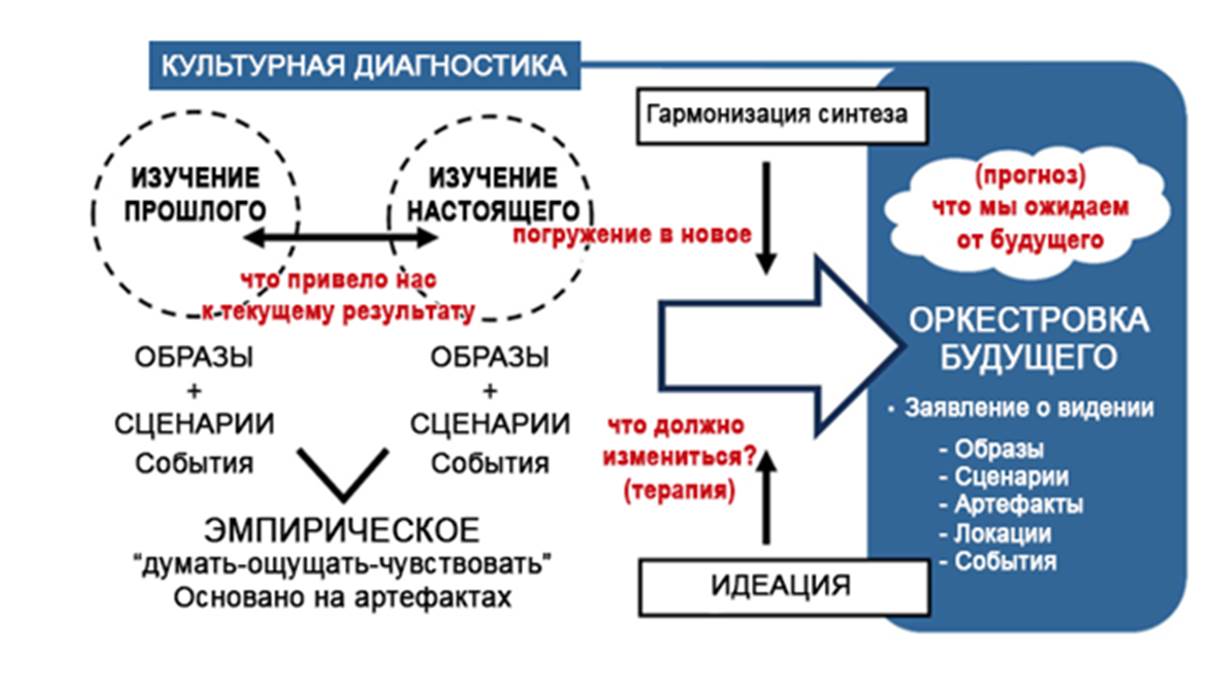 Рисунок 1.
Процесс бизнес-археологии. Культурная диагностика
Рисунок 1.
Процесс бизнес-археологии. Культурная диагностика
Источник: [3] (Pulyavina, 2025).
Бизнес-археология объединяет методы культурного анализа, исследования артефактов, историю техники, организационную теорию и стратегическое развитие.
Работы по культурной памяти [4] (Assmann, 2011) позволяют объяснить, каким образом индустриальные руины продолжают существовать как участники коллективной памяти даже после утраты первоначальных функций. Руины шахт, фабрик и инфраструктуры сохраняют следы труда и экономических практик, формируя особую форму «материальной памяти».
Исследования индустриального наследия в Европе, такие как работы Хосперс Г.Дж. [8] (Hospers, 2002), [9] (Hospers, 2014), Сторм А. [13] (Storm, 2014), Ксай П. [15] (Xie, 2015), а также исследования Хай С. [7] (High, 2003), Коуч К. и Фоулс С. [6] (Couch et al., 2008) демонстрируют, что индустриальные территории могут стать основой новейших культурных, образовательных и инновационных экосистем.
Российские исследования моногородов [1] (Zubarevich, 2017), [2] (Lotman, 2000) показывают, что значительная часть трудовой идентичности сохраняется даже в условиях деиндустриализации. Это подчеркивает важность анализа территорий как культурно-исторических систем. Модель STOCHEM [14] (Taratukhin, 2023) предлагает аналитическую рамку, позволяющую рассматривать наследие как компонент инновационных экосистем, включающий мультивременность, культурные коды, системы связности и элементы устойчивости. В этой модели индустриальное наследие не является чем-то статичным, а представляет собой динамический ресурс.
Методология исследования
Методология настоящего исследования сочетает несколько взаимодополняющих подходов. Историко-документальный анализ применяется для реконструкции контекста развития Ткуарчал (Ткварчели), определения его роли в энергетической и промышленной системе региона. Работы Хай С. [7] (High, 2003), исследующие индустриальные зоны Северной Америки, показывают, что историческая реконструкция является обязательной частью анализа постиндустриальных территорий.
Визуальное обследование городской среды использует методы, примененные в работах Коуч К., Фоулс С. [6] (Couch et al., 2008) и Сторм А. [13] (Storm, 2014), которые фиксируют материальные следы индустриализации, включая здания, инженерные конструкции, инфраструктурные узлы. Исследователь не только наблюдает, но и интерпретирует физические структуры как элементы культурного текста.
Семиотический анализ основывается на лотмановской теории [2] (Lotman, 2000) и позволяет выявить прочтения символов, надписей, архитектурных доминант. Например, шахтные здания не только служат инженерной функции, но и фиксируют символический образ опасного труда. Нарративный форсайт используется для моделирования будущих сценариев развития, опираясь на идеи международных исследований ревитализации индустриального наследия [8] (Hospers, 2002), [10] (Olsen et al., 2012), [15] (Xie, 2015). Он помогает увидеть индустриальный город как площадку для будущих инновационных практик.
Дополнительно применяется сравнительный анализ с европейскими (Рур, Манчестер, Лодзь) и российскими (моногорода Урала и Сибири) территориями, что позволяет увидеть общие закономерности индустриального развития и постиндустриальных преобразований.
Эта методологическая рамка позволяет рассматривать Ткуарчал (Ткварчели) как многослойную культурную систему, в которой прошлое, настоящее и возможные будущие состояния тесно переплетены.
Ткуарчал как индустриальный город: структура, археология пространства и визуальная семиосфера
Ткуарчал возник как ключевой центр угольной промышленности в регионе, и его пространственно-архитектурная организация представляет собой характерный пример советского индустриального градостроительства середины XX века. Формирование городской среды осуществлялось в рамках плановой экономической модели, в которой производственный комплекс выступал не просто экономической основой, но первичным структурообразующим фактором.
Архитектурная морфология города определялась логикой функционального зонирования, характерного для индустриальных городов социалистической модернизации. Производственные объекты – шахты, обогатительные фабрики, вентиляционные стволы, транспортные артерии и связанные с ними энергетические мощности – формировали центральный каркас городской системы. Их пространственное размещение задавало направления роста, конфигурацию улично-дорожной сети и локализацию инженерной инфраструктуры. Таким образом, город развивался не вокруг исторического ядра или рыночной площади, а вокруг технологически обусловленного индустриального узла.
Жилая застройка, встраивалась в эту структуру на основе принципов нормативного советского градостроительства, ориентированного на обеспечение производственных потребностей. Кварталы рабочих, дома инженерно-технического персонала и поселки административного состава формировались как элементы единой социально-производственной системы. Планировочные решения обеспечивали рациональную пространственную связанность: минимизацию времени передвижения между местом проживания и местом труда, доступность объектов социальной инфраструктуры – образовательных учреждений, медицинских пунктов, культурно-досуговых центров. Вся система была нацелена на устойчивое воспроизводство рабочей силы и поддержание социальных функций города.
Энергетическая инфраструктура, включая ГРЭС, играла определяющую роль в поддержании технологической стабильности. Электростанция выступала системным центром, обеспечивающим энергетическую автономность производственного комплекса и жилого сектора. Ее роль в городском организме может быть охарактеризована как центральная «жизненно обеспечивающая подсистема», обеспечивающая непрерывность промышленного цикла.
Социальная инфраструктура города – дворцы культуры, стадионы, поликлиники, общеобразовательные учреждения – имела двойственную функцию. С одной стороны, она обеспечивала удовлетворение потребностей населения, а с другой – формировала идеологическое и символическое пространство индустриального города. Эти объекты не только повышали уровень социального комфорта, но и служили материальными маркерами советской модели модернизации, транслируя культурные и политические ценности эпохи.
Таким образом, Ткуарчал представляет собой классический пример индустриального города советского типа, где архитектурно-планировочная структура отражает тесную взаимосвязь между производственным комплексом, жилой средой и системой социальной инфраструктуры. Его пространственная организация демонстрирует интегративный характер советского градостроительства, в котором город мыслился как единый функциональный организм, подчиненный логике промышленного развития.
В отличие от многих других моногородов, Ткуарчал практически не пережил перестройки под новые экономические функции. Это делает город пространственным «архивом», сохранившим материальные слои эпохи.
Материальная целостность Ткуарчал делает его важным примером «индустриальной археологии настоящего времени». Город сохраняет социальные и производственные структуры, которые работают как культурные коды, фиксирующие способы взаимодействия людей с технологической средой.
Ткуарчал как лаборатория
С точки зрения бизнес-археологии, Ткуарчал является уникальным объектом, в котором материальные, символические и социальные слои находятся в высокой степени сохранности. Город функционирует как многослойная модель индустриальной модернизации, позволяющая исследовать, каким образом производственные практики и ценности фиксируются в городской среде.
Очевидно, что индустриальные руины можно рассматривать как ресурс для эстетического осмысления и культурного производства. В Ткуарчал подобная эстетика присутствует в форме разрушенных фасадов, заросших зданий, сохранившихся инженерных систем. Ткуарчал может служить площадкой для образовательных программ, исследовательских экспедиций, арт-резиденций, культурных проектов и форсайт-лабораторий.
Очевидно, что процессы деиндустриализации не сводятся лишь к экономическому спаду или сокращению занятости. Они порождают комплексное социальное давление, затрагивающее демографию, идентичность, структуру повседневной жизни и способы коллективного взаимодействия.
Для моногородов характерен «идентификационный разрыв»: исчезновение прежнего промышленного ядра разрушает социальные ориентиры и систему ценностей, построенную вокруг труда, производственной дисциплины и коллективной идентичности рабочего класса. В этой ситуации значимость приобретают символические ресурсы – память о прошлом, материальные следы индустриального наследия, локальная мифология и визуальная культура города. Российские исследователи отмечают, что именно эти ресурсы могут стать основой для формирования новой социальной солидарности, особенно в условиях отсутствия крупных экономических инвестиций. Городское пространство начинает восприниматься как «архив» идентичности, а индустриальные артефакты – как ключевые элементы ее реконструкции.
В случае Ткуарчал эта логика проявляется особенно отчетливо. С одной стороны, город пережил глубокий структурный кризис, вызванный утратой шахтной промышленности и резким сокращением населения. Это привело к обострению социальных рисков, дефициту рабочих мест и деградации городской среды. С другой стороны, уникальный характер индустриального и постиндустриального ландшафта Ткуарчал создает предпосылки для культурной мобилизации нового типа. Заброшенные шахты, производственные корпуса, жилые кварталы сталинской эпохи, ГРЭС, инфраструктурные остатки становятся не только свидетельством прошлого, но и материалом для осмысления будущего.
Культурная мобилизация в Ткуарчал может развиваться через переосмысление индустриальных артефактов как объектов культурного наследия, через развитие индустриального, исторического и «патримониального» туризма, через создание локальных инициатив, направленных на документирование и интерпретацию городского пространства, через включение города в более широкие гуманитарные и научные дискуссии о постиндустриальных территориях, утраченных городах и новых моделях развития. Существенную роль может сыграть и развитие креативных практик – арт-резиденций, образовательных экспедиций, исследовательских студий, которые превращают город в лабораторию будущего.
Таким образом, деиндустриализация в Ткуарчал не является окончательной точкой, а скорее представляет собой переходный режим, открывающий возможность формирования нового культурного слоя. Город, утративший промышленную функцию, может стать пространством памяти, символической реконструкции и инновационного развития. В этом смысле Ткуарчал становится не только примером кризиса моногорода, но и потенциальным образцом того, как индустриальное наследие может стать основой для формирования новой социально-культурной идентичности и стратегий будущего.
Сочетание визуальных структур, материальных артефактов и коллективной памяти превращает Ткуарчал в идеальную площадку для анализа взаимодействия прошлого и будущего.
Заключение
Ткуарчал представляет собой уникальный индустриальный город, который, несмотря на деиндустриализацию, сохранил материальные и символические следы угольной эпохи. Его современная структура демонстрирует не только прекращение производственного цикла, но и устойчивость архитектурных, инфраструктурных и культурных слоев, которые продолжают формировать городскую идентичность. Анализ Ткуарчал через призму бизнес-археологии позволяет выйти за рамки привычной логики упадка и рассматривать город не как территорию утраты, а как пространство возможностей и точку роста новых форм развития.
Бизнес-археология трактует индустриальное наследие не как мертвый архив или музейный объект, а как живую систему культурных и организационных следов, способных взаимодействовать с современными инновационными процессами. Индустриальное наследие Ткуарчал показывает, что разрушение и сохранение могут сосуществовать, формируя новое культурное поле. Заброшенные шахты, корпуса заводов, кварталы сталинской архитектуры, энергообъекты и элементы инфраструктурной логики создают условия для переосмысления роли материального следа в формировании идентичности. В рамках бизнес-археологии такие артефакты рассматриваются как носители знаний и практик: они позволяют анализировать организационные модели прошлого, выявлять скрытые механизмы функционирования производственных систем, изучать соотношение труда, пространства и культуры.
Города этого типа способны становиться платформами будущего именно потому, что в них происходит столкновение старых и новых моделей смыслообразования. Они создают возможность экспериментального проектирования – не разрушения наследия, а его включения в современные культурные, образовательные и экономические процессы. Бизнес-археология объединяет эти подходы, позволяя рассматривать Ткуарчал как часть более широкого контекста изучения индустриального наследия, структурных трансформаций и постиндустриального развития.
Бизнес-археология утверждает, что будущее инноваций строится не на бесконечном ускорении, а на способности раскапывать, интерпретировать и преобразовывать уже существующее. Взаимодействие с материальными остатками индустриальной эпохи возвращает инновационному мышлению глубину и осмысленность. Пример Ткуарчал показывает: даже самые молчаливые руины способны говорить о системном интеллекте и устойчивости. Но это знание хрупко – с утратой материального наследия исчезает и возможность понять саму логику человеческого прогресса.
Раскапывать – значит проектировать. Вспоминать – значит воображать. Бизнес-археология учит видеть в сохранении и развитии не противоположности, а взаимодополняющие силы. В мире, где скорость и абстракция стали нормой, именно внимательное чтение того, что остается, становится отправной точкой для подлинно устойчивого будущего.
В этом смысле бизнес-археология предлагает не только исследовательские инструменты, но и практическую стратегию, которая позволяет формировать новые сценарии развития территорий через работу с их культурными, материальными и символическими слоями.
Источники:
2. Лотман Ю. М. Вселенная ума: Семиотика культуры и понятие семиосферы. - СПб.: Искусство-СПБ, 2000. – 704 c.
3. Пулявина Н.С. Бизнес-археология и инновации: корпоративная память, артефакты и развитие предприятий // Инновации и инвестиции. – 2025. – № 12. – c. 53-55.
4. Assmann A. Cultural Memory and Western Civilization: Functions, Media, Archives. - Cambridge: Cambridge University Press, 2011. – 411 p.
5. Bjerck H. B., Olsen B. Persistent memories: Pyramiden - a Soviet mining town in the High Arctic. - Trondheim: Tapir Academic Press, 2010. – 216 p.
6. Couch C., Fowles S. Industrial Heritage and Urban Regeneration // Planning Practice and Research. – 2008. – № 2. – p. 397-404.
7. High S. Industrial Sunset: The Making of North America’s Rust Belt, 1969-1984. - Toronto: University of Toronto Press, 2003. – 288 p.
8. Hospers G.-J. Industrial Heritage Tourism and Regional Restructuring in Europe // European Planning Studies. – 2002. – № 3. – p. 397-404.
9. Hospers G.-J. Policy Responses to Urban Shrinkage: From Growth Thinking to Civic Engagement // European Planning Studies. – 2014. – № 7. – p. 1507-1523.
10. Olsen B., Shanks M., Webmoor T., Witmore C. Archaeology: The Discipline of Things. / Minneapolis: University of Minnesota Press., 2012. – 264 p.
11. Pulyavina, N., Taratukhin, V., Kim, S., Kim, S. Accumulated Practical Experience of the Past for Building the Future of Design Innovations: Janus Project and Next-Gen Design Thinking Game // In: Taratukhin V., Levchenko A., Kupriyanov Yu. (eds.) Information Systems and Design. ICID 2022. Communications in Computer and Information Science
12. Analysis of the Relationship between Intellectual Capital and Performance of Incorporated University Based on Mediation of Good University Governance Shanks, M., Taratukhin, V., Pulyavina, N. Our Manifesto: Next-Gen Design Thinking, Business Archaeology, and Future of Corporate Innovation [Электронный ресурс]. – SSRN Electronic Journal, 2023. – DOI: http://dx.doi.org/10.2139/ssrn.4618019
13. Storm A. Post-Industrial Landscape Scars. - Basingstoke: Palgrave Macmillan, 2014. – 230 p.
14. Taratukhin V. V. // SSRN Electronic Journal. – 2023. – № 4624065. – url: https://ssrn.com/abstract=4624065.
15. Xie P. Industrial Heritage Tourism. - Bristol: Channel View Publications, 2015. – 260 p.
Страница обновлена: 04.10.2026 в 17:49:40
Download PDF | Downloads: 7
Digging the future: business archaeology and the memory of industrial modernity
Pulyavina N.S.Journal paper
Journal of Economics, Entrepreneurship and Law
Volume 16, Number 3 (March 2026)
Abstract:
The article offers a theoretical and practical interpretation of industrial heritage and industry through the lens of business archaeology - an interdisciplinary approach that conceptualizes organizations, territories, and infrastructures as multilayered economic, industrial, technological, and cultural systems evolving over time. The study focuses on the city of Tkvarcheli in the South Caucasus, a unique example of an industrial and post-industrial landscape where architectural, engineering, and symbolic traces of the coal industry are still preserved, having shaped the social structure, everyday life, and collective memory of the territory. Drawing on research in business archaeology, studies of industrial and industrial-heritage contexts, and analyses of post-industrial transformations, the article demonstrates that such spaces should be interpreted not only as zones of decline but also as strategic resources for future development. Tkvarcheli is viewed as a living laboratory for emerging innovation ecosystems, where material artifacts, former industrial infrastructure, and organizational memory provide the foundation for designing new forms of entrepreneurship, education, and technological advancement, linking the industrial past with sustainable economies of the future, while also enabling the testing of interdisciplinary analytical methods and place-based models of socio-economic transformation.
Keywords: industry, industrial heritage, design, innovation, transformation, cultural code, business archeology
JEL-classification: O14, O18, O31
References:
Assmann A. (2011). Cultural Memory and Western Civilization: Functions, Media, Archives
Bjerck H. B., Olsen B. (2010). Persistent memories: Pyramiden - a Soviet mining town in the High Arctic
Couch C., Fowles S. (2008). Industrial Heritage and Urban Regeneration Planning Practice and Research. 23 (2). 397-404.
High S. (2003). Industrial Sunset: The Making of North America’s Rust Belt, 1969-1984
Hospers G.-J. (2002). Industrial Heritage Tourism and Regional Restructuring in Europe European Planning Studies. 10 (3). 397-404.
Hospers G.-J. (2014). Policy Responses to Urban Shrinkage: From Growth Thinking to Civic Engagement European Planning Studies. 22 (7). 1507-1523.
Lotman Yu. M. (2000). The Universe of the Mind: The Semiotics of Culture and the Concept of the Semiosphere
Olsen B., Shanks M., Webmoor T., Witmore C. (2012). Archaeology: The Discipline of Things
Pulyavina N.S. (2025). Business Archaeology and Innovation: Corporate Memory, Artifacts, and Company Development. Innovatsii i investitsii. (12). 53-55.
Pulyavina, N., Taratukhin, V., Kim, S., Kim, S. Accumulated Practical Experience of the Past for Building the Future of Design Innovations: Janus Project and Next-Gen Design Thinking Game // In: Taratukhin V., Levchenko A., Kupriyanov Yu. (eds.) Information Systems and Design. ICID 2022. Communications in Computer and Information Science
Shanks, M., Taratukhin, V., Pulyavina, N. Our Manifesto: Next-Gen Design Thinking, Business Archaeology, and Future of Corporate Innovation [Elektronnyy resurs]. – SSRN Electronic Journal, 2023. – DOI: http://dx.doi.org/10.2139/ssrn.4618019
Storm A. (2014). Post-Industrial Landscape Scars
Taratukhin V. V. (2023). Sculpting the Future of Enterprise: The STOCHEM Model Blueprint SSRN Electronic Journal. (4624065).
Xie P. (2015). Industrial Heritage Tourism
Zubarevich N. V. (2017). Transformation of Labor Markets in Russia's Single-Industry Cities. Moscow University Bulletin:series 5 geography. (4). 38-44.