
Assessing the progress and challenges of China's Made in China 2025 strategy
Решетникова М.С.1  , Кочергин И.А.1
1 Российский университет дружбы народов им. Патриса Лумумбы, Москва, Россия
Скачать PDF | Загрузок: 33 | Цитирований: 1
Статья в журнале
Вопросы инновационной экономики (РИНЦ, ВАК)
опубликовать статью | оформить подписку
Том 16, Номер 1 (Январь-март 2026)
Эта статья проиндексирована РИНЦ, см. https://elibrary.ru/item.asp?id=89188126 [89188126]
Цитирований: 1
Аннотация:
Программа «Сделано в Китае 2025» (MIC 2025), запущенная в 2015 году, представляет собой ключевую национальную стратегию, направленную на трансформацию Китая из «мировой фабрики» в лидера в области высокотехнологичного производства. В данной статье проводится комплексная оценка эффективности реализации программы в ее ключевых отраслях. Анализ основан на многокритериальной оценке данных за период с 2010 по 2025 год, сравнивая периоды до и после начала реализации. В исследовании рассматриваются динамика инвестиций, рост производства и изменения долей на внутреннем и международном рынках в десяти стратегических отраслях промышленности. Проводится сравнительный анализ с аналогичными программами в ЕС, США и Индии для оценки прогресса Китая. Основу оценки составляет детальный SWOT-анализ, который синтезирует выводы для определения внутренних сильных и слабых сторон программы, а также внешних возможностей и угроз. Результаты показывают, что MIC 2025 была высокоэффективна в стимулировании роста приоритетных секторов, таких как энергосберегающие технологии, робототехника и медицинское оборудование, значительно увеличив долю Китая на мировом рынке. Однако такие проблемы, как региональное неравенство, технологическая зависимость в критически важных областях, в первую очередь, полупроводниках, и растущая геополитическая напряженность, создают серьезные риски для ее долгосрочного успеха.
Ключевые слова: сделано в Китае 2025, промышленная политика, высокотехнологичное производство, SWOT-анализ, стратегия инноваций, Китай
Финансирование:
Статья подготовлена благодаря финансовой поддержи Экономического факультета РУДН, проект № 060330-0-000.
JEL-классификация: R11, O11, O43
Introduction
The rapid rise of China as a global economic power and its ambitious plans for technological modernization have positioned the "Made in China 2025" (MIC 2025) program as a critical subject of academic and policy research [16, с. 10] (Zenglein & Holzmann, P.10); [12, c. 70-71] (Li, P.70-71); [11] (Li & Branstetter, 2024). Launched in 2015, this comprehensive national strategy is designed to execute a fundamental transition of the Chinese economy from its role as the "world's factory," characterized by low-cost labor and assembly, to a global leader in high-tech, innovation-driven manufacturing. The profound relevance of this transformative agenda is underscored by pivotal global economic trends [27] (Zhang, 2024). According to World Bank data [29], China's share of global GDP surged from a mere 4.5% in 2000 to 17.4% in 2021, highlighting its escalating influence on worldwide economic processes and its central role in global value chains [8, c. 35] (Ju & Yu, P. 35). The MIC 2025 program is the cornerstone of China's strategy to consolidate this position and escape the "middle-income trap" by moving up the value chain [28, c. 110-113] (Zhou & Hu, P. 110-113).
The program's foundation is built upon a demonstrated capacity for innovation. In 2019, China surpassed the United States as the top filer of international patent applications under the Patent Cooperation Treaty (PCT), signaling a watershed moment in the nation's innovative development and its shift from technological imitation to creation [19, c. 458-459] (Reshetnikova, P.458-459). This growing prowess is already yielding tangible results, with the country achieving global leadership in several future-oriented sectors, most notably in the production of electric vehicles and solar panels - advancements directly linked to the strategic focus and subsidies of the MIC 2025 policy framework [21, c. 265] (Salitskii & Salitskaya, P. 265). The program's geopolitical dimension cannot be overstated; its relevance is further amplified by increasing technological competition and tensions between China and Western nations, exemplified by U.S. restrictions on the export of critical technologies, such as advanced semiconductors, which have directly impacted the program's implementation and forced strategic adaptations [20, c. 216], (Reshetnikova & Turkia, P. 216); [3, c. 220] (Fajgelbaum & Khandelwal, P. 220).
Initial assessments of the program's status reveal a story of significant, yet uneven, progress. Reports suggest that over 86% of the 260 specific targets outlined in the program document have been met, a testament to the high level of state-coordinated planning and interagency cooperation [10, c. 10] (Levine, P.10). Notably, goals in several strategic fields, including robotics, agricultural machinery, biopharmaceuticals, and marine engineering equipment, were reportedly achieved ahead of the 2025 schedule [23, c. 6337-6338] (Wen & Zhao, P. 6337-6338). However, significant challenges persist. The "new materials" sector has been identified as a particular area of concern, with a low level of completion forming a new bottleneck for advanced manufacturing [1, c. 1](Atkinson & Atkinson, P.1). Furthermore, pronounced regional disparities highlight the program's uneven implementation; technologically advanced provinces and megacities like Jiangsu, Guangdong, and Shanghai have demonstrated high performance due to existing infrastructure and talent pools, while less developed inland provinces face critical deficits in financial resources and intellectual capital [4, c. 50-51] (Fan et al., P.50-51); [25, c.8] (Yuan et al., P.8); [5, c. 400-401] (Gao et al., P.400-401).
The primary objective of this research is, therefore, to conduct a systematic and multidimensional assessment of the effectiveness of the "Made in China 2025" program within its key industrial sectors. To achieve this, the study is guided by and will test several core hypotheses:
· The hypothesis of prioritized development of high-tech sectors, presuming that MIC 2025 investments are allocated unevenly, favoring industries like robotics and new IT.
· The hypothesis of reduced short-term investment returns, assuming that the return on investment (ROI) during the program's initial and main phase (2015–2025) would be lower than in the preceding period (2010–2015) due to the long-term nature of foundational technology investments.
· The hypothesis of increased technological self-sufficiency, positing that the program's implementation has led to a significant increase in the market share of Chinese products in key sectors within the domestic market.
· The hypothesis of the superiority of the Chinese development model, suggesting that MIC 2025 demonstrates higher overall efficacy compared to analogous industrial programs in other major economies, such as Germany's "Industrie 4.0" or the United States' "Advanced Manufacturing Partnership" (Table 1).
Table 1
Comparative analysis of the Chinese and analogous industrial programs
|
Criterion
|
Made
in China 2025 (China)
|
Manufacturing
Innovation 3.0 (South Korea)
|
Industrie
4.0 (Germany)
|
Advanced
Manufacturing Partnership (USA)4
|
|
Strategic
goal
|
Transforming China into a leading global
manufacturing power by 2049
|
Establishing 10,000 smart manufacturing factories by
2020, increasing exports to $1.1 trillion by 2024
|
Maintaining Germany's industrial leadership in the
context of digitalization
|
Strengthening the competitiveness of American
industry
|
|
Technology
focus
|
Smart manufacturing, AI, robotics, green
technologies
|
Unmanned systems, smart cars, robotics, intelligent
medicine
|
Internet of Things (IoT), cyber-physical systems,
big data
|
Advanced robotics, AI, Industrial Internet of Things
(IIoT)
|
|
Implementation
approach
|
Top-down strategy with a leading role for the state
|
Combination of state regulation and private
initiatives
|
Bottom-up strategy with initiatives from enterprises
|
Public-private
partnership
|
|
Key
industries
|
Electric vehicles, AI, robotics, aerospace,
biomedicine
|
Automotive, electronics, shipbuilding, chemical
industry
|
Automotive industry, mechanical engineering,
electronics
|
Aerospace,
defense, energy
|
|
Role
of the state
|
Direct funding and intensive regulation
|
Creating a favorable business environment and
removing barriers
|
Developing standards and creating infrastructure
|
Coordination and funding through specialized
institutions
|
|
Funding
|
State subsidies, preferential loans, tax incentives
|
Attracting private capital, state support for SMEs
|
Funding for research and pilot projects
|
Grant funding, venture capital investments
|
|
International
strategy
|
Reducing dependence on foreign technology,
dominating global markets
|
Enhancing export potential, becoming 4th in the
world for competitiveness
|
Decentralized smart manufacturing, developing global
standards
|
Strengthening domestic production, global
cooperation
|
By investigating these hypotheses through a robust methodological framework, this research aims to provide a nuanced and evidence-based evaluation of one of the most ambitious industrial policy initiatives of the 21st century and its impact on reshaping the global technological and economic order.
Methods
This research employs a mixed-methods approach, combining quantitative economic analysis with multicriteria decision-making (MCDM) techniques to provide a holistic evaluation of the MIC 2025 program.
Data Collection and Preliminary Analysis
The study is based on an analysis of official documents from the Chinese government, legislative acts on innovation and industrial policy, international agreements, and a wide array of secondary sources, including reports from international organizations such as World Bank, WIPO, European Parliament and academic publications. Data on investment volumes, production output, and market shares for ten key MIC 2025 sectors were compiled for the periods of 2010-2015 (pre-program) and 2015-2025 (program implementation).
The sectors analyzed are: New Information Technologies; Robotics; Aviation and Aerospace; Marine Engineering Equipment; Railway Equipment; Energy-Saving Technologies and New Energy Vehicles; Energy Equipment; New Materials; Medical Equipment and Biopharmaceuticals; and Agricultural Machinery.
Analytical Framework
The core of the methodological framework consists of two primary tools.
1. Compound Annual Growth Rate (CAGR). This metric was used to measure the mean annual growth rate of investments and production volume over the specified periods. It provides a smoothed rate of growth, eliminating the volatility of year-on-year figures. The formula is:
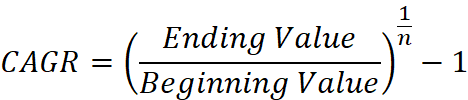
Where Ending Value is the value in 2025, Beginning Value is the value in 2015, and n is the number of years (10).
2. Comparative and SWOT Analysis. A comparative analysis was conducted against similar industrial programs: the European Union's "Industry 4.0," the United States' "Manufacturing USA," and India's "Make in India." This comparison was based on aggregate CAGR of production and global market share. Finally, a SWOT (Strengths, Weaknesses, Opportunities, Threats) analysis was synthesized from the research findings to provide a strategic overview of the program's position. This comparison was based on metrics such as production growth CAGR and global market share.
3. The core of the qualitative assessment is the SWOT analysis. This framework was used to systematically organize the findings from the data analysis and literature review into four categories:
Results
Investment and Production Dynamics
The analysis of investment data reveals a substantial and targeted increase in capital inflows into all strategic sectors following the launch of MIC 2025, underscoring the program's role as a massive state-driven industrial policy. As detailed in Table 2, the total investment across all ten sectors is projected to more than triple, growing from $374.6 billion in 2015 to $1,151.4 billion in 2025. This represents a monumental financial commitment to technological upgrading [9, c.1] (Kuo, P.1).
Table 2
Investment Volume in Key MIC 2025 Sectors (USD billions)
|
Sector
|
2010
|
2015
|
2020
|
2025 (projected)
|
CAGR 2010-2015
|
CAGR 2015-2025
|
|
New Information Technologies
|
42.7
|
87.3
|
157.6
|
284.8
|
0.15
|
0.13
|
|
Robotics
|
5.8
|
12.5
|
29.4
|
58.7
|
0.17
|
0.17
|
|
Energy-Saving & NEVs
|
21.5
|
48.6
|
102.3
|
195.2
|
0.18
|
0.15
|
|
Medical Equipment & Biopharma
|
16.8
|
38.4
|
75.2
|
134.8
|
0.18
|
0.13
|
|
New Materials
|
23.9
|
42.1
|
72.6
|
117.9
|
0.12
|
0.11
|
|
Aviation & Aerospace
|
18.3
|
34.2
|
52.8
|
89.7
|
0.13
|
0.10
|
|
Marine Engineering Equipment
|
7.6
|
13.1
|
21.4
|
38.5
|
0.12
|
0.11
|
|
Energy Equipment
|
31.4
|
57.8
|
89.5
|
134.6
|
0.13
|
0.09
|
|
Railway Equipment
|
14.2
|
25.7
|
39.6
|
61.4
|
0.13
|
0.09
|
|
Agricultural Machinery
|
8.2
|
14.9
|
23.7
|
35.8
|
0.13
|
0.09
|
|
Total
|
190.4
|
374.6
|
664.1
|
1,151.4
|
1.43
|
1.17
|
A closer examination of the Compound Annual Growth Rates (CAGR) for investments reveals clear strategic priorities. The highest CAGRs for the 2015-2025 period are observed in Robotics (16.7%), Energy-Saving Technologies and New Energy Vehicles (NEVs) (14.9%), and Medical Equipment and Biopharmaceuticals (13.4%). This indicates a conscious shift of resources towards sectors associated with the Fourth Industrial Revolution. (Fig. 1)

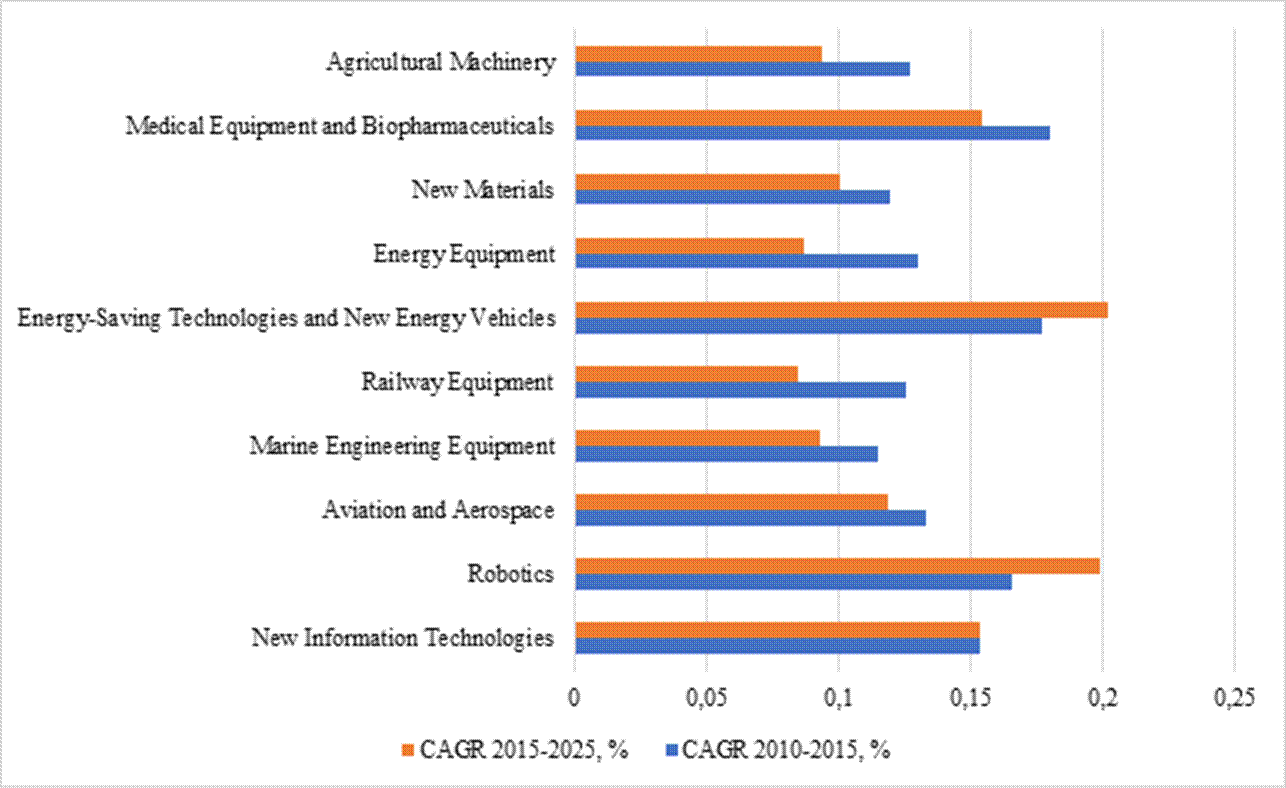
Fig. 1 Compound Annual Growth Rate (CAGR) of investments in the "Made in China 2025" initiative.
Source: compiled by the authors, data source: CEIC Data [34]
This targeted investment focus is directly reflected in the production output dynamics, detailed in Table 3.
Table 3
Production volume in the key sectors of the "Made in China 2025" initiative, USD billions
|
Sector
|
2010
|
2015
|
2020
|
2025 (proj.)
|
CAGR 2010-2015
|
CAGR 2015-2025
|
|
New Information
Technologies
|
217.5
|
426.8
|
892.5
|
1,785.3
|
0.14
|
0.15
|
|
Robotics
|
12.6
|
38.7
|
95.8
|
237.2
|
0.25
|
0.20
|
|
Energy-Saving &
NEVs
|
43.2
|
82.5
|
145.6
|
254.3
|
0.14
|
0.12
|
|
Medical Equipment
& Biopharma
|
29.4
|
48.6
|
74.3
|
118.5
|
0.11
|
0.09
|
|
New Materials
|
58.6
|
97.4
|
145.2
|
219.8
|
0.11
|
0.08
|
|
Aviation &
Aerospace
|
47.3
|
156.2
|
423.7
|
983.6
|
0.27
|
0.20
|
|
Marine Engineering
Equipment
|
145.8
|
238.5
|
368.2
|
549.7
|
0.10
|
0.09
|
|
Energy Equipment
|
86.4
|
159.5
|
258.4
|
415.7
|
0.13
|
0.10
|
|
Railway Equipment
|
72.9
|
162.7
|
342.5
|
683.9
|
0.17
|
0.15
|
|
Agricultural
Machinery
|
32.8
|
59.6
|
94.3
|
146.5
|
0.13
|
0.09
|
|
Total
|
746.5
|
1,470.5
|
2,840.5
|
5,394.5
|
1.55
|
1.29
|
The sector of Energy-Saving Technologies and NEVs shows the most dramatic production growth, with a CAGR of 20.2%, followed closely by Robotics (19.8%) and Medical Equipment and Biopharmaceuticals (15.5%). The visual representation in Fig. 2 effectively contrasts this boom with the more modest pre-2015 growth, demonstrating the program's tangible impact on scaling up high-tech manufacturing. The synergy between investment and output growth is particularly evident in these leading sectors.
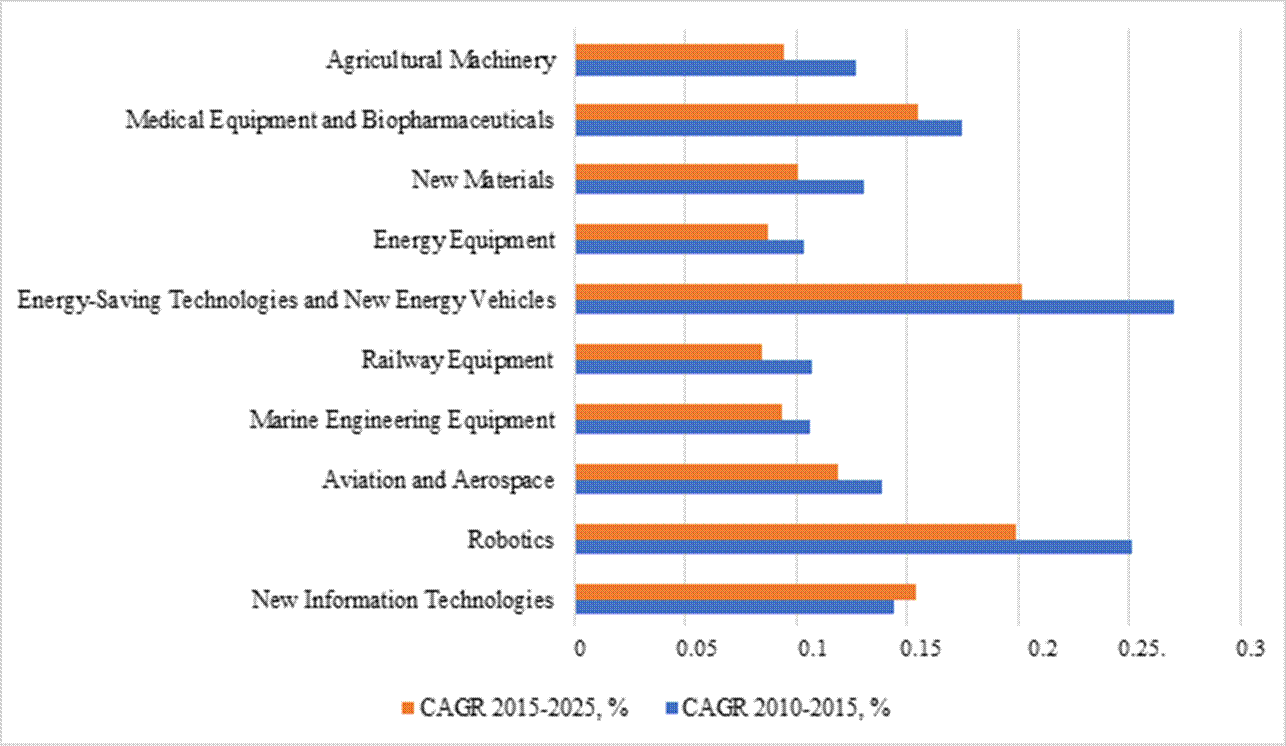
Figure 2. Compound Annual Growth Rate (CAGR) of production in the "Made in China 2025" initiative
Source: compiled by the authors, data source: CEIC Data [34]
Efficiency and Market Share
Beyond the sheer scale of inputs and outputs, the efficiency of these investments, measured by the Return on Investment (ROI) metric, increased significantly during the program period, as shown in Table 4. The average ROI across all sectors rose dramatically from 7.29 in the 2010-2015 period to 13.17 in the 2015-2025 period.
Table 4
Return on Investment (ROI) indicator in the key sectors of the "Made in China 2025" program
|
Sector
|
ROI, 2010–2015
|
ROI, 2015–2025
|
|
New Information Technologies
|
10.00
|
20.45
|
|
Robotics
|
6.67
|
18.98
|
|
Energy-Saving & NEVs
|
4.51
|
7.44
|
|
Medical Equipment & Biopharma
|
6.39
|
9.05
|
|
New Materials
|
6.86
|
8.55
|
|
Aviation & Aerospace
|
7.27
|
20.24
|
|
Marine Engineering Equipment
|
7.60
|
9.51
|
|
Energy Equipment
|
6.67
|
9.87
|
|
Railway Equipment
|
9.68
|
17.81
|
|
Agricultural Machinery
|
7.27
|
9.83
|
|
Average
|
7.29
|
13.17
|
This effectively disproves the hypothesis of a short-term decrease in returns, suggesting instead that the focused investments quickly generated substantial output. The most substantial growth in ROI (Fig.3) was seen in the same leading sectors: Robotics (a 2.85x increase), Energy-Saving Technologies and NEVs (a 2.78x increase), and New Information Technologies (a 2.05x increase).
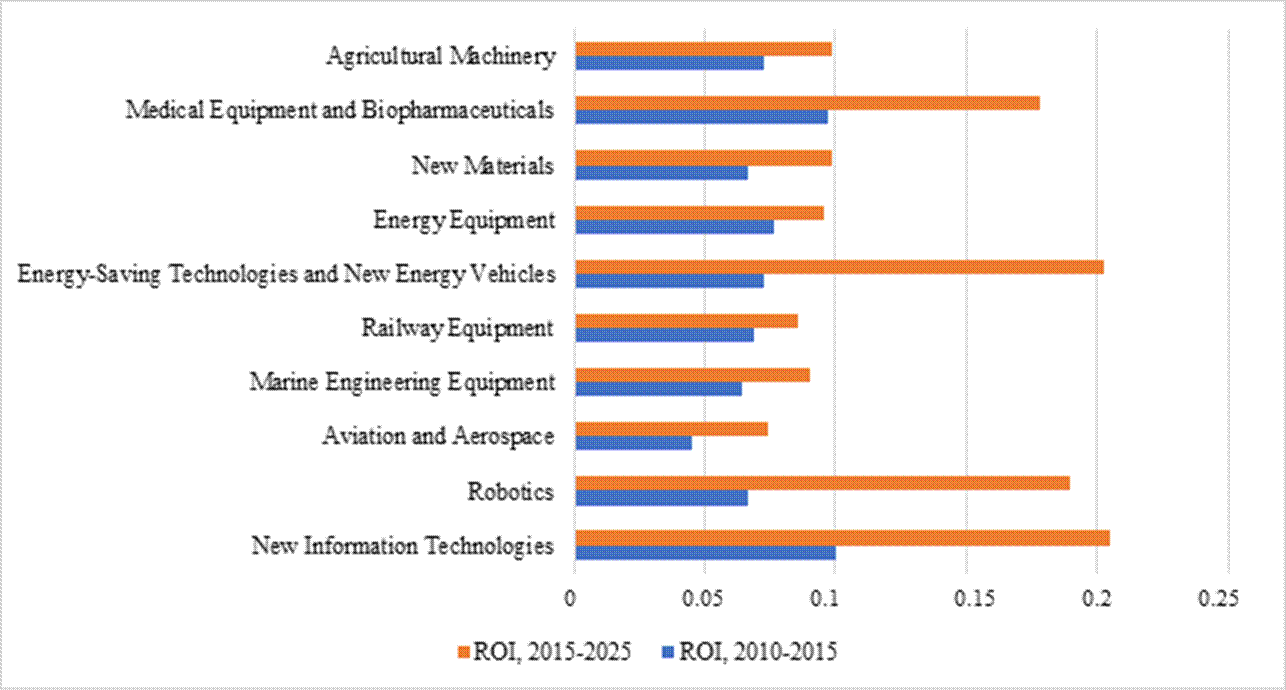
Figure 3. Return on investment (ROI) indicator in the key sectors of the "Made in China 2025" program.
Source: compiled by the authors, data source: CEIC Data [34]
Concurrently, the program's objective of import substitution and strengthening domestic capacity saw remarkable success. The share of Chinese products in the domestic market saw a remarkable increase. The average growth in domestic market share during the MIC 2025 period was 28.3%, more than double the 12.4% growth in the preceding five-year period. Robotics (a 40.3 percentage-point increase), Energy-Saving Technologies and NEVs (37.9%), and New Information Technologies (32.9%) led this trend, demonstrating a successful reduction in dependency on foreign technology in these critical areas. A similar, though less pronounced, trend was observed on the international stage, where the average share of Chinese high-tech products in the global market is projected to rise from 15.4% in 2015 to 31.9% in 2025, signaling a growing global competitiveness.
Comparative International Analysis
For an objective assessment of the effectiveness of the "Made in China 2025" program, a comparative analysis was conducted with similar initiatives launched by competitor countries: the European Union (programs "Industry 4.0" and "Horizon 2020"), the United States ("Manufacturing USA"), and India ("Make in India"). The analysis focused on the comparative dynamics of key high-tech industries in China and these competitor nations during the 2015–2025 period (Table 6).
Table 6
Compound Annual Growth Rate (CAGR) of Production Volume in Key Industries, %, 2015–2025
|
Industry
|
China
|
EU
|
USA
|
India
|
|
New Information Technologies
|
15.4
|
8.3
|
9.7
|
12.8
|
|
Robotics
|
19.8
|
12.1
|
11.5
|
15.7
|
|
Aviation and Aerospace Industry
|
11.9
|
5.2
|
4.8
|
7.6
|
|
Ocean Engineering Equipment
|
9.3
|
4.1
|
3.7
|
6.2
|
|
Railway Equipment
|
8.5
|
3.8
|
2.5
|
7.4
|
|
Energy-Saving Tech and New Energy
Vehicles
|
20.2
|
10.7
|
12.3
|
17.5
|
|
Energy Equipment
|
8.7
|
3.9
|
3.2
|
7.8
|
|
New Materials
|
10.0
|
6.4
|
7.2
|
9.3
|
|
Medical Equipment and Biopharmaceuticals
|
15.5
|
8.9
|
10.2
|
12.6
|
|
Agricultural Machinery
|
9.4
|
3.2
|
2.8
|
8.5
|
|
Average Value
|
12.9
|
6.7
|
6.8
|
10.5
|
The data from Table 6 clearly demonstrates that China outperforms its competitor countries in the CAGR of production volume across all key industries. China's average CAGR (12.9%) significantly exceeds that of the EU (6.7%), the USA (6.8%), and India (10.5%). China's most substantial lead is observed in sectors such as Energy-Saving Technologies and New Energy Vehicles, Robotics, and the Aviation and Aerospace industry. This indicates that the concentrated state support and targeted investments under MIC 2025 have successfully accelerated industrial growth at a pace unmatched by other major economies, which often rely on more decentralized, market-driven approaches.
The analysis shows that as a result of MIC 2025, China is projected to occupy leading positions on the world market in most key industries by 2025 (Table 7). China is set to dominate sectors such as Energy-Saving Technologies and New Energy Vehicles (47.5%), Ocean Engineering Equipment (41.7%), Railway Equipment (37.2%), and New Information Technologies (35.8%). While the EU and USA maintain strongholds in complex, established sectors like Aerospace (where the USA and EU lead) and certain niches of robotics and new materials, China's aggressive strategy has allowed it to capture and dominate high-growth, future-oriented markets. This shift underscores a significant realignment of global industrial leadership, moving beyond China's traditional role as a low-cost assembler to a powerhouse in advanced manufacturing and green technology.
Table 7
Share on the World Market in Key Industries, %, 2025 (forecast)
|
|
China
|
EU
|
USA
|
Japan
|
South Korea
|
Other
|
|
New
Information Technologies
|
35.8
|
15.7
|
21.3
|
8.4
|
5.6
|
13.2
|
|
Robotics
|
22.9
|
24.3
|
19.5
|
15.8
|
10.3
|
7.2
|
|
Aviation
and Aerospace Industry
|
14.8
|
32.6
|
38.7
|
4.3
|
1.8
|
7.8
|
|
Ocean
Engineering Equipment
|
41.7
|
23.5
|
18.6
|
8.2
|
4.5
|
3.5
|
|
Railway
Equipment
|
37.2
|
32.4
|
8.5
|
6.3
|
2.1
|
13.5
|
|
Energy-Saving Tech and New Energy Vehicles
|
47.5
|
18.3
|
14.7
|
10.2
|
6.8
|
2.5
|
|
Energy
Equipment
|
32.8
|
24.6
|
19.3
|
7.5
|
5.2
|
10.6
|
|
New
Materials
|
27.6
|
23.2
|
25.7
|
9.1
|
6.3
|
8.1
|
|
Medical
Equipment and Biopharmaceuticals
|
26.9
|
22.4
|
31.8
|
7.6
|
3.5
|
7.8
|
|
Agricultural
Machinery
|
31.5
|
29.7
|
22.3
|
5.4
|
2.8
|
8.3
|
|
Average
Value
|
31.9
|
24.7
|
22.0
|
8.3
|
4.9
|
8.3
|
SWOT Analysis of the "Made in China 2025" Program
Based on the comprehensive analysis of quantitative data and strategic context, a detailed SWOT analysis was performed to systematize the findings on the "Made in China 2025" program (Table 8).
Table 8
SWOT Analysis of the "Made in China 2025" Program
|
Strengths (S)
|
Weakness (W)
|
|
S1. Powerful State Support and Massive
Investments.
The Chinese government provides unparalleled financial backing, with over $1.1 trillion invested in priority sectors during 2015-2025. This enables rapid scaling and de-risks long-term, capital-intensive projects that private actors might avoid. |
W1. Uneven Regional and Sectoral
Development.
Development is heavily concentrated in coastal provinces like Jiangsu and Guangdong. Less developed inland regions face a deficit of financial resources, infrastructure, and intellectual capital, leading to imbalanced growth. |
|
S2. Clear Strategic Focus and
Prioritization.
The program identifies ten specific strategic industries, allowing for a concentrated effort and efficient allocation of resources rather than a diluted, broad-based approach. |
W2. Dependency on Import of Key
Components and Technologies.
Despite progress, China remains critically dependent on foreign technology, especially for high-end semiconductors, advanced precision machinery, and specific software, creating a strategic vulnerability. |
|
S3. Comprehensive, Ecosystem-Based
Approach.
MIC 2025 integrates industrial policy with development in science, R&D, and education. This synergy fosters a holistic innovation environment, from fundamental research to commercial application. |
W3. Insufficient Level of Intellectual
Property Protection.
Weak IP rights enforcement discourages high-end innovation domestically and creates friction with international partners, hindering technology transfer and collaboration. |
|
S4. High Implementation Efficiency in
Priority Sectors.
As evidenced by the soaring Return on Investment (ROI) and production growth rates in sectors like robotics and new energy vehicles, the program delivers tangible results where it focuses its efforts. |
W4. Deficit of Qualified Personnel in
High-Tech Sectors.
There is a significant gap between the growing demand for highly skilled engineers, data scientists, and R&D specialists and the current supply, potentially capping innovation potential. |
|
S5. Significant Growth in Domestic and
International Market Share.
The program has successfully driven import substitution and expanded China's global footprint, increasing the average domestic market share by 28.3% and global share by 16.4% during its implementation. |
W5. Environmental Challenges.
The intensive industrial development model has historically contributed to severe pollution. While "green development" is a stated goal, reconciling rapid industrial growth with environmental sustainability remains a major challenge. |
|
Opportunities (O)
|
Threats (T)
|
|
O1. Capturing a Larger Share of the
Global High-Tech Market.
As global demand for green tech, AI, and advanced electronics grows, China's established manufacturing base and cost advantages position it to seize a dominant market share. |
T1. Escalating Trade Restrictions and
Technological Sanctions.
The US and EU, perceiving MIC 2025 as a threat, are implementing sanctions, export controls (e.g., on chip-making equipment), and investment screens to slow China's technological ascent. |
|
O2. Developing Indigenous Technologies
and Reducing Import Dependency.
Geopolitical pressure acts as a catalyst, motivating China to double down on R&D to achieve self-sufficiency in critical technologies like semiconductors, thereby turning a weakness into a strength. |
T2. Intensifying Global Competition.
China faces competition not only from established leaders (US, EU, Japan) but also from ambitious developing nations like India and Vietnam in manufacturing and technology. |
|
O3. Strengthening Positions in Global
Value Chains.
The program allows Chinese companies to move up the value chain from being suppliers of components to becoming providers of complex systems, branded products, and international standards. |
T3. Risks of Overproduction and Excess
Capacity.
State-led investment can lead to misallocation of capital, creating massive overcapacity in sectors like steel, solar panels, and potentially EVs, which can distort global markets and trigger trade disputes. |
|
O4. Creating High-Quality Employment
and Improving Living Standards.
The shift to high-tech manufacturing creates better-paid, higher-skilled jobs, which can boost domestic consumption and help China escape the "middle-income trap." |
T4. Political and Geopolitical Risks.
A deterioration in international relations or a shift in the global political landscape could further isolate China technologically and economically, hindering access to markets and knowledge. |
|
O5. Shaping International Standards in
Emerging Technologies.
By being an early and massive adopter and innovator in areas like 5G, EVs, and AI, China has the opportunity to set global technical standards, giving its firms a perpetual competitive advantage. |
T5. Global Economic Downturn.
A prolonged slowdown in the global economy could depress demand for China's exports, undermining the export-oriented growth model that underpins parts of the MIC 2025 strategy. |
Discussion
The results of this multi-criteria assessment demonstrate that the "Made in China 2025" program has acted as a powerful catalyst for industrial transformation, fundamentally reshaping the landscape of Chinese manufacturing. However, this transformation is not without its profound contradictions and vulnerabilities. The discussion interprets these findings through the lens of the SWOT framework, revealing a complex interplay between the program's formidable strengths and its equally significant challenges.
The program's most conspicuous achievement lies in validating the efficiency of a centralized, state-led development model for rapid industrial catch-up [2, c.1] (Che, P.1). The state's ability to mobilize vast financial and administrative resources (S1) and channel them with laser-focused precision into pre-selected sectors (S2) has yielded undeniable results. The dramatic increases in production CAGR, particularly in sectors like new energy vehicles (20.2%) and robotics (19.8%), alongside the soaring Return on Investment (S4), are direct outcomes of this approach. This "forced march" modernization has allowed China to achieve in a decade what might have taken decades under a more organic, market-driven model [24, c. 1] (Xiong et al., P.1).
The comprehensive, ecosystem-based strategy (S3), which synergizes industrial policy with advancements in R&D and education, has been crucial (Song, 2023). Unlike narrower initiatives in other countries, MIC 2025 understands that technological leadership is not merely about building factories but about creating a holistic innovation environment. This is evident in the parallel growth of patent activity and the push to develop human capital, albeit with limitations [14, c. 1] (Li et al., P.1).
However, this very strength breeds its own set of weaknesses and external threats. The top-down model, while efficient for scaling established technologies and meeting quantitative targets, may be inherently less conducive to fostering the kind of grassroots, disruptive innovation that thrives in more decentralized and risk-tolerant ecosystems like those of the United States. This weakness is compounded by the deficit of high-quality human capital (W4) and a persistently weak regime of intellectual property protection (W3). Without a strong culture of fundamental research and guaranteed rewards for groundbreaking inventions, China may excel at incremental innovation and commercialization but struggle to produce the paradigm-shifting technologies that define long-term global leadership [7, c. 760-762] (Hong et al., P. 760-762).
Perhaps the most critical vulnerability exposed by the analysis is China's continued dependence on foreign core technologies, especially in semiconductors (W2). This weakness is no longer just an economic issue; it has become a strategic point, directly targeted by the escalating technological decoupling and sanctions from Western nations (T1). The U.S. export controls on advanced chip-making equipment are a quintessential example of a threat directly exploiting a core weakness [15, c. 132-134] (Li, P. 132-134); [17, c. 1] (Peng, P.1); [13, c. 1] (Li et al., P.1). This dynamic creates a vicious cycle: the more China advances and threatens Western technological dominance, the more aggressively its competitors will act to deny it critical technologies, thereby reinforcing its dependency and potentially stalling progress in flagship sectors like AI and supercomputing that rely on advanced semiconductors [19, c.141-142] (Reshetnikova & Mikhaylov, P. 141-142).
Furthermore, the state-led model has exacerbated regional disparities (W1). The concentration of success in high-tech hubs like Shanghai, Shenzhen, and Guangdong creates internal economic fissures. If left unaddressed, this disparity could limit the program's nationwide benefits, foster social discontent, and create a dual-track economy where a highly advanced coastal region coexists with a struggling hinterland, ultimately undermining the domestic market's cohesion and growth potential.
The program's remarkable success in sectors like electric vehicles and renewables highlights its ability to capitalize on global trends towards green technology (O1, O5). By aligning its industrial policy with the global imperative for decarbonization, China has positioned itself as a future leader. However, this success carries within it the seeds of a major threat: the risk of creating massive overcapacity (T3) [6, c.151-153] (Guo et al., P. 151-153).
The same mechanisms of state subsidies and directive lending that enable rapid scale-up can lead to misallocation of capital and investment in capacity that far exceeds global demand. This is already visible in sectors like solar panels and is emerging in EVs and batteries. The consequence is not merely economic inefficiency but also severe global trade frictions. The flooding of international markets with subsidized Chinese goods threatens industries in other countries, prompting retaliatory tariffs and accusations of unfair competition, thereby reinforcing threat T1 and jeopardizing China's opportunity to strengthen its position in global value chains (O3).
Finally, the program's ambition to create high-quality jobs (O4) through automation and high-tech industries is fraught with tension. The initial phase of this transformation inevitably involves the displacement of workers in traditional, labor-intensive manufacturing sectors. The social friction caused by this transition necessitates robust, large-scale retraining programs - a monumental task that tests the state's capacity for social management [16, c. 1] (Liang et al., P.1). The ultimate success of MIC 2025 will therefore be measured not only by its export figures but also by its ability to manage this domestic social contract and ensure that the benefits of technological upgrading are widely shared.
The "Made in China 2025" program stands at a crossroads. Its strengths have propelled it to a position of undeniable global significance in advanced manufacturing. Yet, its future trajectory will be determined by how effectively it can address its deep-seated weaknesses - particularly technological dependency and regional inequality - while navigating an external environment increasingly defined by geopolitical hostility and the self-created risks of its own economic model. The shift towards a "dual circulation" strategy, emphasizing the domestic market, is a clear acknowledgment of these challenges. The ultimate test will be whether the top-down model that enabled this rapid ascent can now cultivate the flexibility, innovation, and resilience needed to secure its long-term leadership.
Conclusion
The "Made in China 2025" initiative stands as one of the most ambitious and impactful industrial policy programs of the 21st century, fundamentally reshaping the trajectory of China's economic development. This multi-criteria assessment, encompassing investment analysis, production growth, market share dynamics, and strategic SWOT evaluation, confirms the program's profound effectiveness in achieving its primary objective: propelling China into the upper echelons of global high-tech manufacturing. The evidence demonstrates that MIC 2025 has successfully catalyzed explosive growth in pivotal sectors such as new energy vehicles, robotics, and medical equipment, significantly increasing China's global market share and laying a substantial foundation for reducing technological dependence in several key areas.
The program's success is undeniably rooted in its core strengths - the formidable capacity of the Chinese state to mobilize vast financial resources and its comprehensive, top-down strategic approach. This state-led model has proven exceptionally effective in executing a rapid, large-scale industrial transformation, allowing China to overcome initial barriers to entry and achieve economies of scale at an unprecedented pace. The synergy created by integrating industrial policy with national R&D and educational goals has been a critical enabler of this progress.
Nevertheless, the path forward is fraught with formidable challenges that threaten to undermine the sustainability of these gains. Internally, the program grapples with significant weaknesses, including deep-seated regional inequalities that risk creating a bifurcated economy and a persistent dependency on foreign core technologies, most critically in the semiconductor sector. Externally, the landscape is increasingly hostile, defined by escalating geopolitical tensions, proactive technological containment from Western nations, and the self-generated risk of overcapacity that provokes global trade frictions.
Therefore, the ultimate success and long-term legacy of "Made in China 2025" will depend not merely on continued capital investment, but on the Chinese leadership's strategic agility in navigating a more complex and competitive global environment. The next phase requires a critical evolution from a model focused on quantitative scaling and catch-up to one that fosters a genuinely innovative, sustainable, and resilient industrial ecosystem. This entails:
· Prioritizing qualitative development by strengthening intellectual property rights, cultivating top-tier human capital, and encouraging bottom-up, disruptive innovation.
· Addressing internal imbalances through policies that promote equitable regional development and ensure social stability during the transition to a high-tech economy.
· Navigating external pressures by diversifying international partnerships, mitigating overcapacity risks, and adapting to a fragmented global technological landscape, as seen in the strategic pivot towards "dual circulation."
In essence, "Made in China 2025" has irrevocably established China as a high-tech superpower in the making. However, its final report card will be written in the coming decades. The program has proven that China can force its way to the forefront of existing technologies. The enduring question is whether it can now build an ecosystem that creates the technologies of the future. The ability to adapt to these formidable challenges will ultimately determine whether MIC 2025 is remembered as the catalyst for China's sustainable technological leadership or a massive, yet ultimately incomplete, industrial endeavor.
Источники:
2. Che, L. (2019). China’s State-Directed Economy and the International Order. Springer Singapore. https://doi.org/10.1007/978-981-13-5838-8
3. Fajgelbaum, P. D., & Khandelwal, A. K. (2022). The Economic Impacts of the US–China Trade War. Annual Review of Economics, 14(1), 205–228. https://doi.org/10.1146/annurev-economics-051420-110410 EDN: IPTZQH
4. Fan, S., Kanbur, R., & Zhang, X. (2011). China’s regional disparities: Experience and policy. Review of Development Finance, 1(1), 47–56. https://doi.org/10.1016/j.rdf.2010.10.001
5. Gao, J., Liu, Y., Chen, J., & Cai, Y. (2022). Demystifying the geography of income inequality in rural China: A transitional framework. Journal of Rural Studies, 93, 398–407. https://doi.org/10.1016/j.jrurstud.2019.01.010 EDN: LRSPKU
6. Guo, K., Zhu, H., Yu, F., & Zhang, J. (2025). It’s not Overcapacity, but a Matter of Global Imbalances. China & World Economy, 33(2), 138–170. https://doi.org/10.1111/cwe.12582 EDN: FOHLWJ
7. Hong, J., Edler, J., & Massini, S. (2022). Evolution of the Chinese Intellectual Property Rights System: IPR Law Revisions and Enforcement. Management and Organization Review, 18(4), 755–787. https://doi.org/10.1017/mor.2021.72 EDN: UMRWQD
8. Ju, J., & Yu, X. (2015). Productivity, profitability, production and export structures along the value chain in China. Journal of Comparative Economics, 43(1), 33-54. DOI: 10.1016/j.jce.2014.11.008
9. Kuo, K. (2025). Made in China 2.0: The future of global manufacturing. In World Economic Forum (Vol. 26).
10. Levine, D. A. (2020). Made in China 2025: China’s Strategy for Becoming a Global High-Tech Superpower and its Implications for the U.S. Economy, National Security, and Free Trade. Journal of Strategic Security, 13(3), 1–16. https://www.jstor.org/stable/26936543 EDN: VNEZOV
11. Li, G., & Branstetter, L. G. (2024). Does “Made in China 2025” work for China? Evidence from Chinese listed firms. Research Policy, 53(6), 105009.
12. Li, L. (2018). China's manufacturing locus in 2025: With a comparison of “Made-in-China 2025” and “Industry 4.0”. Technological forecasting and social change, 135, 66-74.
13. Li, L., Wang, H., Li, Z., & Hu, S. (2025). Analysis of the structure and robustness of the global semiconductor trade network. PLOS ONE, 20(1), e0313162. https://doi.org/10.1371/journal.pone.0313162 EDN: CGHHVF
14. Li, W., Peng, Y., Yang, J., & Sazzad Hossain, M. (2024). Human Capital Structure and Innovation Efficiency Under Technological Progress: Evidence from China. Sage Open, 14(3), 21582440241277165. https://doi.org/10.1177/21582440241277165 EDN: WFWEUX
15. Li, Y. (2021). The Semiconductor Industry: A Strategic Look at China’s Supply Chain. In F. Spigarelli & J. R. McIntyre (Eds.), The New Chinese Dream (pp. 121–136). Springer International Publishing. https://doi.org/10.1007/978-3-030-69812-6_8
16. Liang, H., Fan, J., & Wang, Y. (2025). Artificial Intelligence, Technological Innovation, and Employment Transformation for Sustainable Development: Evidence from China. Sustainability, 17(9), 3842. https://doi.org/10.3390/su17093842
17. Peng, Y. (2025). Can U.S. Sanctions Truly Hinder the Rise of China’s Semiconductor Industry? An Analysis from the Perspective of “Creative Insecurity.” Chinese Political Science Review. https://doi.org/10.1007/s41111-025-00282-6 EDN: VBZDUY
18. Reshetnikova, M. S. (2021). Future china: Ai leader in 2030? In The International Research & Innovation Forum (pp. 455-463). Cham: Springer International Publishing. DOI: 10.1007/978-3-030-84311-3_42 EDN: INPCWH
19. Reshetnikova, M. S., & Mikhaylov, I. A. (2023). Artificial Intelligence Development: Implications for China. Montenegrin Journal of Economics, 19(1). https://doi.org/10.14254/1800-5845/2023.19-1.12 EDN: VIXKPO
20. Reshetnikova, M. S., & Turkia, A. (2025). Digital Divides: The China-USA Trade War in the Age of Technological Inequality. In E. G. Popkova (Ed.), Management of Digital Technologies in the Innovative Economy (pp. 213–217). Springer Nature Switzerland. https://doi.org/10.1007/978-3-031-83331-1_35
21. Salitskii, A. I., & Salitskaya, E. A. (2022). China on the Way to Global Technology Leadership. Herald of the Russian Academy of Sciences, 92(3), 262–267. https://doi.org/10.1134/S1019331622030042 EDN: IHRDAK
22. Song, Y. (2023). How do Chinese SMEs enhance technological innovation capability? From the perspective of innovation ecosystem. European Journal of Innovation Management, 26(5), 1235–1254. https://doi.org/10.1108/EJIM-01-2022-0016 EDN: OTZJHZ
23. Wen, H., & Zhao, Z. (2021). How does China’s industrial policy affect firms’ R&D investment? Evidence from ‘Made in China 2025.’ Applied Economics, 53(55), 6333–6347. https://doi.org/10.1080/00036846.2020.1717429 EDN: EJEBOT
24. Xiong, M., Zhang, F., Zhang, H., & Wang, H. (2023). Digital economy, credit expansion, and modernization of industrial structure in China. Finance Research Letters, 58, 104500. https://doi.org/10.1016/j.frl.2023.104500 EDN: YMHWVK
25. Yuan, L., Cao, J., Wang, D., Yu, D., Liu, G., & Qian, Z. (2023). Regional disparities and influencing factors of high quality medical resources distribution in China. International Journal for Equity in Health, 22(1), 8. https://doi.org/10.1186/s12939-023-01825-6 EDN: VPUIFH
26. Zenglein, M. J., & Holzmann, A. (2019). Evolving made in China 2025. MERICS papers on China, 8, 78.
27. Zhang, K. H. (2024). Geoeconomics of US-China tech rivalry and industrial policy. Asia and the Global Economy, 4(2), 100098. DOI: 10.1016/j.aglobe.2024.100098 EDN: RJVBJL
28. Zhou, S., & Hu, A. (2021). China: Surpassing the “Middle Income Trap” (p. 218). Springer Nature.
29. World Bank. GDP growth annual (%), China. Retrieved from https://data.worldbank.org/indicator/NY.GDP.MKTP.KD.ZG?locations=CN (date of access 09.08.2025)
30. People's Republic of China State Council (2015-05-08). «Made in China 2025 (English translation)» Retrieved from Center for Security and Emerging Technology https://cset.georgetown.edu/publication/notice-of-the-state-council-on-the-publication-of-made-in-china-2025/ (date of access 09.10.2025)
31. Smart Manufacturing Innovation Support Program. Retrieved from https://www.mss.go.kr/site/eng/ex/bbs/View.do?cbIdx=244&bcIdx=1062921 (date of access 19.09.2025)
32. Industrie 4.0. Retrieved from Federal ministry of Economic Affairs https://www.plattform-i40.de/IP/Redaktion/EN/Standardartikel/vision.html (date of access 19.09.2025)
33. Advanced Manufacturing Partnership. Retrieved from The World Economic Forum https://www.weforum.org/stories/2022/05/advanced-manufacturing-3-priorities-for-industry-and-government-leaders/ (date of access 19.09.2025)
34. China Industrial Production Index Growth. CEIC Data. Retrieved from: https://www.ceicdata.com/en/indicator/china/industrial-production-index-growth (date of access 15.07.2025)
35. China's Economic and Financial Look-Out. European Parliament. Retrieved from https://www.europarl.europa.eu/RegData/etudes/IDAN/2015/549063/EXPO_IDA(2015)549063_EN.pdf (date of access 5.06.2025)
Страница обновлена: 17.10.2026 в 11:57:05
Download PDF | Downloads: 33 | Citations: 1
Assessing the progress and challenges of China's Made in China 2025 strategy
Reshetnikova M.S., Kochergin I.A.Journal paper
Russian Journal of Innovation Economics
Volume 16, Number 1 (January-March 2026)
Abstract:
Launched in 2015, the «Made in China 2025» (MIC 2025) initiative represents a pivotal national strategy aimed at transforming China from the «world's factory» into a global leader in high-tech manufacturing. This article conducts a comprehensive assessment of the program´s effectiveness in its key sectors. The analysis is based on a multi-criteria evaluation of data from 2010 to 2025, comparing pre- and post-implementation periods. The study examines investment dynamics, production growth, and shifts in domestic and international market shares across ten strategic industries. A comparative analysis with analogous programs in the EU, USA, and India is conducted to contextualize China´s progress. The core of the evaluation is a detailed SWOT analysis, which synthesizes the findings to identify the program's internal strengths and weaknesses, as well as external opportunities and threats. The results indicate that MIC 2025 has been highly effective in driving growth in priority sectors such as energy-saving technologies, robotics, and medical equipment, significantly increasing China´s global market share. However, challenges such as regional disparities, technological dependencies in critical areas like semiconductors, and rising geopolitical tensions pose significant risks to its long-term success.
Keywords: made in China 2025, industrial policy, high-tech manufacturing, SWOT analysis, innovation strategy, China
Funding:
This paper has been supported by the RUDN University Strategic Academic Leadership Program and Economic Faculty, project No. 060330-0-000.
JEL-classification: R11, O11, O43
References:
Advanced Manufacturing PartnershipRetrieved from The World Economic Forum. Retrieved September 19, 2025, from https://www.weforum.org/stories/2022/05/advanced-manufacturing-3-priorities-for-industry-and-government-leaders/
Atkinson R.D., Atkinson R.D. China is rapidly becoming a leading innovator in advanced industriesInformation Technology and Innovation Foundation. Retrieved from https://itif.org/publications/2024/09/16/china-is-rapidly-becoming-a-leading-innovator-in-advanced-industries/
Che L. (2019). China’s State-Directed Economy and the International Order Singapore: Springer.
China Industrial Production Index GrowthCEIC Data. Retrieved July 15, 2025, from https://www.ceicdata.com/en/indicator/china/industrial-production-index-growth
China´s Economic and Financial Look-OutEuropean Parliament. Retrieved June 05, 2025, from https://www.europarl.europa.eu/RegData/etudes/IDAN/2015/549063/EXPO_IDA(2015)549063_EN.pdf
Fajgelbaum P.D., Khandelwal A.K. (2022). The Economic Impacts of the US–China Trade War Annual Review of Economics. 14 (1). 205-228. doi: 10.1146/annurev-economics-051420-110410.
Fan S., Kanbur R., Zhang X. (2011). China’s regional disparities: Experience and policy Review of Development Finance. 1 (1). 47-57. doi: 10.1016/j.rdf.2010.10.001.
GDP growth annual (%), ChinaWorld Bank. Retrieved August 09, 2025, from https://data.worldbank.org/indicator/NY.GDP.MKTP.KD.ZG?locations=CN
Gao J., Liu Ya., Chen J., Cai Yu. (2022). Demystifying the geography of income inequality in rural China: A transitional framework Journal of Rural Studies. 93 398-407. doi: 10.1016/j.jrurstud.2019.01.010.
Guo K., Zhu H., Yu F., Zhang J. (2025). It’s not Overcapacity, but a Matter of Global Imbalances China & World Economy. 33 (2). doi: 10.1111/cwe.12582.
Hong J., Edler Ja., Massini S. (2022). Evolution of the Chinese Intellectual Property Rights System: IPR Law Revisions and Enforcement Management and Organization Review. 18 (4). 755-787. doi: 10.1017/mor.2021.72.
Industrie 4.0. Retrieved from Federal ministry of Economic Affairsplattform-i40.de. Retrieved September 19, 2025, from https://www.plattform-i40.de/IP/Redaktion/EN/Standardartikel/vision.html
Ju J., Yu X. (2015). Productivity, profitability, production and export structures along the value chain in China Journal of Comparative Economics. 43 (1). 33-54. doi: 10.1016/j.jce.2014.11.008.
Kuo K. (2025). Made in China 2.0: The future of global manufacturing World Economic Forum. 26
Levine D.A. (2020). Made in China 2025: China’s Strategy for Becoming a Global High-Tech Superpower and its Implications for the U.S. Economy, National Security, and Free Trade Journal of Strategic Security. 13 (3). 1-16. doi: 10.5038/1944-0472.13.3.1833.
Li G., Branstetter L.G. (2024). Does “Made in China 2025” work for China? Evidence from Chinese listed firms Research Policy. 53 (6). 105009. doi: 10.1016/j.respol.2024.105009.
Li L. (2018). China´s manufacturing locus in 2025: With a comparison of “Made-in-China 2025” and “Industry 4.0” Technological forecasting and social change. 135 66-74. doi: 10.1016/j.techfore.2017.05.028.
Li L., Wang H., Li Zh., Hu Sh. (2025). Analysis of the structure and robustness of the global semiconductor trade network PLOS ONE. 20 (1). e0313162. doi: 10.1371/journal.pone.0313162.
Li W., Peng Yu., Yang J., Sazzad Hossain Md. (2024). Human Capital Structure and Innovation Efficiency Under Technological Progress: Evidence from China Sage Open. 14 (3). doi: 10.1177/21582440241277165.
Li Y. (2021). The Semiconductor Industry: A Strategic Look at China’s Supply Chain Cham: Springer International Publishing.
Liang H., Fan J., Wang Yu. (2025). Artificial Intelligence, Technological Innovation, and Employment Transformation for Sustainable Development: Evidence from China Sustainability. 17 (9). 3842. doi: 10.3390/su17093842.
Peng Y. (2025). Sanctions Truly Hinder the Rise of China’s Semiconductor Industry? An Analysis from the Perspective of “Creative Insecurity.” Chinese Political Science Review. doi: 10.1007/s41111-025-00282-6.
People´s Republic of China State Council (2015-05-08). «Made in China 2025 (English translation)»Retrieved from Center for Security and Emerging Technology. Retrieved October 09, 2025, from https://cset.georgetown.edu/publication/notice-of-the-state-council-on-the-publication-of-made-in-china-2025/
Reshetnikova M.S. (2021). Future china: Ai leader in 2030? Research & Innovation Forum. 455-563. doi: 10.1007/978-3-030-84311-3_42.
Reshetnikova M.S., Mikhaylov I.A. (2023). Artificial Intelligence Development: Implications for China Montenegrin Journal of Economics. 19 (1). doi: 10.14254/1800-5845/2023.19-1.12.
Reshetnikova M.S., Turkia A. (2025). Digital Divides: The China-USA Trade War in the Age of Technological Inequality Cham: Springer.
Salitskii A.I., Salitskaya E.A. (2022). China on the Way to Global Technology Leadership Herald of the Russian Academy of Sciences. 92 (3). 262-267. doi: 10.1134/S1019331622030042.
Smart Manufacturing Innovation Support Programmss.go.kr. Retrieved September 19, 2025, from https://www.mss.go.kr/site/eng/ex/bbs/View.do?cbIdx=244&bcIdx=1062921
Song Y. (2022). How do Chinese SMEs enhance technological innovation capability? From the perspective of innovation ecosystem European Journal of Innovation Management. doi: 10.1108/EJIM-01-2022-0016.
Wen H., Zhao Zh. (2021). How does China’s industrial policy affect firms’ R&D investment? Evidence from ‘Made in China 2025.’ Applied Economics. 53 (55). 6333-6347. doi: 10.1080/00036846.2020.1717429.
Xiong M., Zhang F., Zhang H., Wang H. (2023). Digital economy, credit expansion, and modernization of industrial structure in China Finance Research Letters. 58 104500. doi: 10.1016/j.frl.2023.104500.
Yuan L., Cao J., Wang D., Yu D., Liu Ge., Qian Zh. (2023). Regional disparities and influencing factors of high quality medical resources distribution in China International Journal for Equity in Health. 22 (1). 8. doi: 10.1186/s12939-023-01825-6.
Zenglein M.J., Holzmann A. Evolving made in China 2025. - MERICS papers on China. - 2019. - 8,78
Zhang K.H. (2024). Geoeconomics of US-China tech rivalry and industrial policy Asia and the Global Economy. 4 (2). 100098. doi: 10.1016/j.aglobe.2024.100098.
Zhou S., Hu A. (2021). China: Surpassing the “Middle Income Trap” Singapore: Palgrave Macmillan.