
Assessing Artificial intelligence Readiness of Financial Institutions in Uzbekistan
Скачать PDF | Загрузок: 51
Статья в журнале
Экономика Центральной Азии (РИНЦ, ВАК)
опубликовать статью | оформить подписку
Том 9, Номер 3 (Июль-сентябрь 2025)
Эта статья проиндексирована РИНЦ, см. https://elibrary.ru/item.asp?id=83104442 [83104442]
INTRODUCTION
Artificial intelligence (AI) is the simulation of human intelligence [6]. Today, AI has become a dominant topic in the business world. By the end of 2024, the use of generative AI (GenAI) in organizations has grown to 75% [14]. Fifty percent of organizations allocate 10–30% of their budgets to AI solutions, and forty percent of organizations plan to increase their investments. Additionally, fifty-nine percent of the organizations believe that the impact of AI on their business will exceed expectations over the next 5 years [11].
The highest level of AI adoption is observed in the technology sector, followed by financial institutions [14]. AI has become a critical tool for navigating financial activities [20] and is rapidly transforming the industry landscape [25]. The key areas of AI application in banking are personal financial assistants, process automation, risk management, and anti-fraud/AML systems [1,14,16]. Banks are increasingly adopting these solutions to remain competitive in the digital era [5]. However, as organizations deepen their understanding of AI capabilities and begin implementation, many are becoming aware of their insufficient preparation [9].
Organizational AI readiness refers to a company’s ability to implement AI technologies [16]. It is a critical diagnostic tool that helps organizations identify strengths and weaknesses, prioritize investments, and develop targeted AI strategies [11]. Successful AI adoption requires a coordinated effort across the organization and ensuring AI readiness from the start [19].
AI readiness depends on technical capabilities, financial resources, employee preparedness, strategic direction, and organizational environment [4, 19, 16]. This is a dynamic, ongoing issue, not a one-time consideration. Organizations looking to integrate AI into their services must carefully assess their readiness before launching such projects and prepare effectively to ensure successful implementation [8]. Continuous assessment of readiness allows organizations to build on their assets, capabilities, and strategic commitments over time [19].
AI is a multidimensional approach that requires alignment with organizational capabilities [15]. AI adoption presents challenges and opportunities that differ from those of previous technology shifts. While many executives recognize AI’s positive impact on productivity, they often remain unsure about how to effectively implement it to create business value [16]. Research on organizational AI readiness remains in its early stages. In particular, despite the financial sector being the second largest user of AI [14, 9], research on the organizational AI readiness of financial institutions is limited.
Research on organizational AI readiness in Uzbekistan is notably scant. Existing studies focus on other developing countries, such as the Pakistan [1], Zimbabwe [8], Indonesia [13], and the Nigeria [18], while organizations in Central Asia remain understudied. AI adoption in financial institutions represents a transformative shift for emerging economies such as Uzbekistan and offers opportunities to increase operational efficiency, improve risk management, and foster financial inclusion [21].
Uzbekistan, a developing country in Central Asia, is experiencing rapid economic growth owing to modernization across sectors. With the increasing digitalization of financial services, the demand for AI solutions is growing [7]. In the Government AI readiness index, Uzbekistan ranked 70th with a score of 53.45, indicating growing momentum and laying the foundation for broader progress [23]. The country has a national AI strategy, which sets out a clear vision and goals about increasing the export of IT services and developing big data storage [22].
In financial institutions, AI improves fraud detection, data management, regulatory compliance, and the quality and timeliness of financial services. However, AI integration also raises serious concerns about ethical implications, privacy, data security, and decision-making. As AI takes over routine tasks, employees have to shift to more complex tasks, strategic analysis, and complex decision-making [21].
The Technology-Organization-Environment (TOE) model has not yet been adapted to reflect the unique characteristics of AI solutions across industries. As no current research is examining the AI readiness of financial institutions, an exploratory approach is needed. This study aims to extend the TOE framework to cover specific challenges and opportunities associated with AI adoption in organizations.
This study primarily aims to assess the AI readiness of financial institutions in Uzbekistan. To achieve this goal, we apply the TOE and the AI readiness index (AIRI) frameworks [2] and explore the state of AI readiness of financial institutions in Uzbekistan. We assess the technological infrastructure, management support, resource availability, employee capabilities, and organizational culture and collect data through a survey of bank employees.
This study contributes to the literature in several ways. First, it addresses the understudied issue of AI readiness in the Uzbek banking sector. Second, it provides a new framework for assessing organizational AI readiness by combining the TOE and the AIRI approaches. Third, by integrating this framework with real-world data, it identifies barriers and opportunities specific to emerging markets. Finally, it offers actionable insights for policymakers and bank managers. The findings of this study can be applied to other service sectors and emerging economies with similar characteristics.
The rest of the content is structured as follows: the next section reviews the relevant literature and presents the theoretical background focused on the TOE framework. The third section presents the description methodology. The fifth section presents findings. The final section concludes with a discussion, a summary of the main results, and suggestions for future research.
Literature Review
AI adoption is a complex process. It involves changes in decision-making processes and management. Thus, AI adoption can present significant challenges to organizations [15]. AI adoption and readiness have become active areas of research in engineering, social sciences, and business. The topic attracted the attention of practitioners, consultants, and scholars.
The Technology Acceptance Model, the Theory of Reasoned Action, the Theory of Planned Behavior, the Unified Theory of Acceptance and Use of Technology, and the Task-Technology Fit model are primarily used for individual-level analysis of AI adoption [18, 6]. In contrast, the Diffusion of Innovations, TOE, and the Technology Readiness Index are widely used in studies focusing on organizational-level analysis [4, 17, 12].
The TOE framework is a theory for analyzing the adoption of digital technologies in organizations. According to this framework, the decision to adopt digital technologies is shaped by three dimensions: technology, organizational characteristics, and business environment [3, 6]. Technology refers to the characteristics of the technology, while organization characteristics include internal structures, processes, and resource availability. The environment encompasses industry dynamics, competitors, government regulations, and supplier networks [24]. While these dimensions can be analyzed individually or jointly [16], successful AI adoption requires aligning all of them and fostering an innovative organizational climate [15]. Although the TOE framework has been widely used for technologies such as cloud computing, it requires adaptation for AI-specific contexts and, thus, should be expanded to include new factors related to data availability, quality, security, and regulatory concerns.
The AIRI framework, developed by AI Singapore (AISG), is an industry-wide framework for assessing AI readiness. It has five core dimensions: infrastructure readiness, data readiness, organizational readiness, business value readiness, and ethics and governance readiness [2].
IT infrastructure reflects an organization’s ability to adopt new technologies, including existing and emerging technologies [12]. The first decisive factor in infrastructure readiness is access to high-speed Internet. The second factor is the availability of software and hardware that support working with AI [4, 15]. Data readiness refers to the availability, quality, and management of data [4]. Data quality affects the reliability of knowledge obtained by AI and, ultimately, the accuracy of decisions [12]. Poor data can lead to flawed strategies and significant financial losses [3]. Thus, successful AI adoption depends on the integration of IT infrastructure with data and collaboration between technical and business teams [27].
Organizational readiness refers to the availability of resources, management support, employee readiness, and a culture of innovation [15]. Resources include financial expenses for software licenses and hardware, training, and experiments [6]. Although AI can provide cost savings through automation, it also requires significant investments in hardware, computing resources, and skills development [10]. A sufficient budget creates financial freedom and helps create an experimental culture. However, it also creates commitment and threatens the successful deployment of AI [24]. Management support, programs, and processes for financing AI initiatives are among the important factors for AI adoption [12].
Senior management plays a critical role in initiating and supporting AI initiatives, allocating resources, and mitigating internal resistance. Management must actively communicate the benefits of AI while addressing employee concerns about job losses. Moreover, they must invest in training and provide employees with upskilling and reskilling to ensure long-term engagement and trust [12]. Strong leadership commitment, management support, patience, and faith in AI outcomes are prerequisites for successful transformation [10]. Unfortunately, trust in AI-driven decision-making remains low among senior managers. Only 10% of senior managers are willing to delegate decision-making to AI [9]. Building trust, especially among line managers and executives, is critical at this stage.
People’s readiness and a collaborative culture are key components of organizational AI [17]. Low AI readiness is often because of skill gaps, inadequate training, and poor communication strategies [4]. Many company employees believe that AI-powered automation of jobs could lead to job losses and unemployment [27]. However, the demand for AI talent is outpacing the supply [14]. In this case, sustainable HR strategies facilitate organizations to adapt to the changing AI labor market [6]. Organizations must focus on developing and reskilling their internal talent through continuous learning, cross-functional collaboration, and cultivating a learning-oriented culture [9]. Maintaining an environment that encourages knowledge-sharing and an experimental culture within an organization is crucial for obtaining sustainable human capital [8, 17].
Within the TOE framework, the environment refers to external factors: market pressure, customer expectations, and regulations [15]. However, for AI, AI governance can serve as an environmental factor. AI governance provides a fundamental framework for structured decision-making processes and regulatory mechanisms. It coordinates policies and strategies addressing the challenges and opportunities presented by AI [26]. Moreover, it regulates the ethical, transparent, and responsible use of AI by defining AI policies, ethical standards, and compliance requirements [8]. AI policies address legal aspects of data collecting, processing, user consent, and algorithmic transparency. Effective policies provide direction, clarify strategies and vision, and promote responsible use of AI [8, 24].
After reviewing the scientific literature, we propose a new framework (Table 1) for assessing an organization’s AI readiness by integrating the TOE and the AIRI frameworks. The proposed framework contains seven initial categories.
Table 1. Research framework (Compiled by author).
|
Technology
|
Infrastructure
readiness
|
Internet, hardware/software
|
|
|
Data readiness
|
Availability,
accessibility, and quality
|
|
Organization
|
Management support
|
|
|
|
Financial resources
|
|
|
|
Cultural readiness
|
Knowledge-sharing and
innovative climate
|
|
|
Employees’ readiness
|
Attitudes toward AI,
skills, and reskilling
|
|
Environment
|
AI governance
|
Strategy, regulations,
and ethical oversight
|
|
|
|
Responsible AI body
|
|
|
|
Assessment of the
trustworthiness of AI
|
Methodology
We used a case study method. The decision to use this method is driven by the need to understand the complexities of AI adoption. We combine qualitative and quantitative approaches as recommended by previous studies [8, 10, 24, 27]. This mixed-methods approach allows us to capture a holistic picture of the factors influencing AI integration and to highlight the unique features of the financial sector.
We used a survey to collect data. A questionnaire was developed to assess banks’ readiness to implement AI. The respondents were asked about their attitude toward the statement using a 5-point Likert scale measuring attitude or opinions ranging from “Strongly Disagree” to “Strongly Agree.” The questionnaire was developed using Google Forms in the Uzbek language. In the first stage, we conducted pilot testing by sending the survey to 30 bank employees. We asked them to answer questions, and provide suggestions and recommendations for further improvements. Based on their feedback, the questionnaire was revised and prepared for the second step.
In the second stage, we published a link to the survey on a Telegram channel named @bankirlaruchun. The channel has approximately 20,000 subscribers, all of whom are bank employees. The post included a brief introduction, explaining the purpose of the study. In a single week, we received 113 responses. We used descriptive statistics for analyzing various documents, reports, policies, and strategies to provide additional context and support for the findings.
Results
Participant Demographics
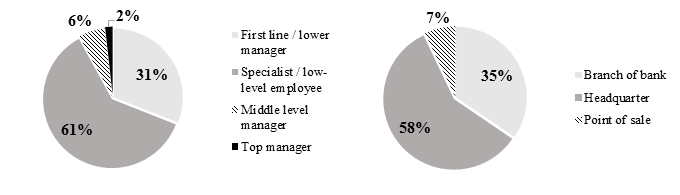
The differences in age, job role, and workplace reflect the different levels of experience with AI among the respondents. The age of the participants ranged from 23 to 50 and this distribution reflects the overall age profile of bank employees. Fig. 1 shows the demographics of the participants. Regarding hierarchy levels, 61% of the participants are specialists or entry-level employees, 31% are first-level managers, 6% are middle managers, and 2% are senior executives. Regarding workplaces, 7% of the respondents work at points of sale, 35% in branches, and 58% in head offices.
a)
 b)
c)
b)
c)
Fig. 1. Demographics of the respondents by (a) age, (b) level, and (c) workplace (Compiled by author).
To ensure a broad representation of different financial institutions, we asked the respondents to indicate which bank they worked for. The dataset showed that no bank was overrepresented, and employees from different banks participated equally. Such diversity of respondents helps us to avoid the “tunnel vision” that occurs when using only one group of employees.
Infrastructure Readiness
The respondents were asked questions about the availability of high-speed Internet in their organizations and the compatibility of their computers with AI technologies. We asked them to rate their agreement with these statements on a 5-point Likert scale and provide comments to support their answers. About Internet accessibility, only 16% of the employees strongly agreed that they had access to high-speed Internet. In contrast, 24% strongly disagreed, explaining that their banks prohibited the use of the Internet. Moreover, 29.2% disagreed, stating that only a limited number of websites were accessible because of security restrictions. 26.5% of the respondents were neutral about this statement, citing low Internet speed and limited access to certain resources. Furthermore, 5% agreed, stating that Internet speed was average and that they did not experience access restrictions.When asked about the compatibility of their computers with AI technologies, only 14.2% of the respondents strongly agreed, stating that their devices could develop AI models and run related tools. Subsequently, 4.4% agreed, mentioning access to AI plugins in certain applications, such as Microsoft Excel or Figma. Moreover, 28.3% responded neutrally, noting that while their computers could support AI, they did not have the appropriate software installed. In addition, 22.1% disagreed, saying they could only access tools such as ChatGPT or DeepSeek. Next, 31% strongly disagreed, indicating that their computers could not run AI tools at all. Table 2 presents the overall results of infrastructure readiness score.
Table 2. Infrastructure readiness (Compiled by author).
|
Statement
|
Weighed mean
score
|
|
The bank provides a
secure and high-speed Internet connection
|
2.59
|
|
My computer supports AI
model training and deployment
|
2.49
|
|
Weighted
average score
|
2.54
|
Data Readiness
The respondents were asked to rate the availability, accessibility, and quality of data needed for their work. In terms of data availability and quality, we received a weighted average score of 3.65, indicating that the employees generally had a positive perception of the comprehensiveness and historical depth of the data available (Table 3).|
Statement
|
Weighed mean
score
|
|
I can find all the data
I need for my work in high quality and for long periods
|
3.65
|
|
I can access all the
data I need for my work from the data warehouse and repositories
|
3.30
|
|
The bank uses a
centralized data infrastructure and repository, and I have all the
documentation for working with the data
|
2.76
|
|
Weighted average score
|
3.24
|
Regarding data availability, the statement received a weighted average score of 3.30. The respondents noted in their comments that access was relatively adequate, but there were limitations or inefficiencies in data extraction processes. The third statement received a weighted average score of 2.8. The participants’ comments highlighted potential gaps in data organization, documentation, and support tools for using the data. Overall, data readiness received a weighted average score of 3.24, indicating limited readiness of data processes to support AI technologies.
Management Support
The respondents were asked to rate their management’s support for AI initiatives. The statement received a weighted average score of 2.81 (Table 4), suggesting that management support for AI initiatives is relatively limited.|
Statement
|
Weighed mean
score
|
|
My organization
allocates resources for AI initiatives
|
2.81
|
Of all participants, 39.8% strongly disagreed, with comments indicating that their managers were unaware of AI solutions being developed or that employees were pursuing such initiatives without informing their managers. Moreover, 3.5% disagreed, noting that their managers explicitly prohibited such efforts. In addition, 11.5% of the respondents were neutral, stating that their managers neither supported nor prohibited employee AI initiatives. Furthermore, 26.5% of the respondents agreed, and 18.6% strongly agreed, reporting that their managers actively supported AI projects and provided practical guidance on their development.
Financial Resources
The respondents were asked to rate the financial resources provided by their organizations to obtain AI solutions and education. The first statement received a weighted average score of 2.88, while 30.1% of the respondents strongly disagreed, 4.4% disagreed, and 29.2% were neutral (Table 5). Many commenters noted that they solely relied on free AI tools or personally obtained licenses. 19.5% agreed, acknowledging that a bank can purchase licenses, but the procurement process is slow and bureaucratic. Only 16.8% strongly agreed, stating that their organization provides all the necessary software and licenses.Table 5. Financial resources (Compiled by author).
|
Statement
|
Weighed mean
score
|
|
The bank provided tools
and licenses for the use of AI solutions
|
2.88
|
|
The bank regularly
(monthly or quarterly) organizes and finances AI seminars and training
|
2.58
|
|
Weighted average score
|
2.73
|
Cultural Readiness
The respondents were asked to rate their organizations’ corporate cultures focused on knowledge-sharing and innovation. Next, 6.2% of the respondents strongly disagreed, while 68.2% disagreed, noting that they learned about new technologies and services from external sources rather than through internal organizational communications.Moreover, 2.4% remained neutral, stating that, although there were no formal knowledge-sharing mechanisms, they occasionally learned from colleagues through informal discussions. Only 1.8% agreed, while 16.8% strongly agreed, stating that the bank supported experimentation and knowledge-sharing through regular meetings and leadership programs.
Table 6. Organizational cultural readiness (Compiled by author).
|
Statement
|
Weighed mean
score
|
|
The Bank has a
knowledge-sharing and experimentation culture
|
2.60
|
Employees’ Readiness
Regarding the first statement about employee trust in AI, 43.4% of the respondents strongly agreed, while 19.5% agreed, noting that they believed AI-based solutions could improve employee productivity and process efficiency. Next, 9.7% strongly disagreed, while 23% disagreed, expressing concern that AI could reduce employee competence and lead to job losses because of automation.Moreover, 4.4% were neutral, noting the potential value of AI in areas such as risk management and fraud detection. Regarding AI consumption, 60.2% of the respondents strongly agreed and 24.8% agreed, stating that they considered themselves advanced AI consumers. In response to the third statement about the ability to develop, deploy, and maintain AI models, 9.7% strongly agreed and 27.4% agreed. Many respondents noted that they had already started learning AI through online or offline courses. In addition, 24.8% were neutral, while 28% (10.6% disagreed, 27.4% strongly disagreed) reported limited knowledge and willingness to pursue further education in AI.
|
Statement
|
Weighed mean
score
|
|
I trust in AI-based
solutions
|
3.64
|
|
I am an experienced consumer
of AI-based solutions
|
3.63
|
|
I can develop,
implement, and support AI models
|
3.19
|
|
Weighted average score
|
3.48
|
Overall, the responses indicate a high level of employee readiness to adopt AI (Table 7), with a weighted average score of 3.86. This result reflects strong trust in AI and a clear commitment to skill development.
AI Governance
Regarding the existence of an AI body, 26.5% of the respondents strongly agreed, stating in their comments that the bank had a well-structured and integrated department responsible for AI. Next, 23% strongly disagreed, 14.2% disagreed, and 28.3% were neutral. Many respondents noted that they were not aware of the existence of any dedicated unit or had only observed individual initiatives.Another 8% agreed, mentioning an AI department existed, which, however, operated in isolation, without wider integration. Responses regarding the existence of an AI strategy and policies were more critical. Of all the respondents, 32.7% strongly disagreed, and 38.1% disagreed, with comments pointing to a lack of formal documentation or policies. Many noted that existing recommendations, if any, were only verbal or informal. Only 6.2% agreed, and 15.9% strongly agreed, reporting the existence of written regulations. Regarding the standardized assessment of AI trustworthiness and fairness, 42.5% of the respondents strongly disagreed, and 19.5% disagreed, highlighting the lack of formal assessment procedures. Next, 23% strongly agreed, while 9.7% agreed, stating that their organizations followed national or international standards for evaluating AI-based solutions. Moreover, 5.3% were neutral.
Table 8. AI governance (Compiled by author).
|
Statement
|
Weighed mean
score
|
|
My organization (bank)
has a responsible body for the development and implementation of AI
solutions, integrated with other departments
|
3.01
|
|
The bank has a
strategy, regulations, rules, and guidelines in the field of AI
|
2.35
|
|
The bank has
standardized processes for assessing the reliability, fairness, and quality
of AI solutions
|
2.51
|
|
Weighted average score
|
2.62
|
 After summing up the
results across the seven dimensions, the overall AI readiness score of
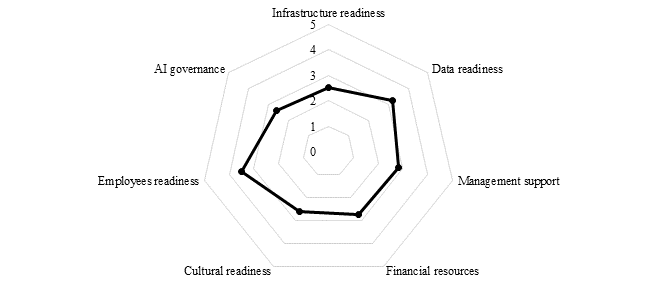
Uzbekistan’s financial institutions was 2.86 (Fig. 2). In the next section, we
provide tailored recommendations for organizations at this level of AI
readiness.
After summing up the
results across the seven dimensions, the overall AI readiness score of
Uzbekistan’s financial institutions was 2.86 (Fig. 2). In the next section, we
provide tailored recommendations for organizations at this level of AI
readiness.
Fig. 2. AI readiness of financial institutions (Compiled by author).
Discussion
Organization with the AIRI equal to 2.86 can be categorized as “AI aware” [20]. Organizations in this stage are aware of AI solutions, understand their potential use cases, actively seek AI solutions to address business needs, and often adopt ready-made solutions. However, they still face challenges in several key areas: infrastructure, management support, financial resources, organizational culture, and AI governance.
Infrastructure readiness received the lowest score of all dimensions, consistent with the situation of many organizations in developing countries [13]. Many organizations in developing countries lack robust IT systems and a stable platform for implementing and integrating AI solutions [17]. Financial institutions should begin investing in scalable solutions and technologies that can meet both current and future computing needs, and simultaneously, ensure the safety and security of data collection and processing.
Data is a critical factor for any successful AI initiative. The results show that financial institutions have all the necessary data for AI projects. However, they lack centralized data infrastructure and repositories, and employees often face difficulties because of insufficient data documentation. Problems with data quality and the development of centralized repositories consistent with the situation of many organizations in both developed and developing countries [27]. At this stage, organizations should prioritize two key areas: data quality and data management. First, institutions must implement robust data structures to ensure quality, consistency and accessibility, and establish clear roles and responsibilities for data. Second, organizations should implement comprehensive governance structures to manage data flows across departments [9].
The results revealed limited management support, insufficient financial resources, and a weak corporate culture to support innovation. These findings are consistent with the finding of [16,12]. Key recommendations at this stage are:
• Establishing programs to support AI initiatives and to address management resistance;
• Acquiring appropriate software (licenses) for the use and development of AI;
• Promoting a culture of continuous learning and adaptation;
• Creating an open and transparent environment to keep employees informed about new AI initiatives and progress, thereby reducing uncertainty and facilitating knowledge-sharing.
Employee readiness received the highest rating. This contrasts with the findings of [1], which reported greater employee anxiety in financial institutions in Pakistan because of fears of job losses. However, in financial institutions in Uzbekistan employees understand AI, have a positive attitude toward AI solutions, and have already begun to acquire relevant skills. To develop this strength and increase employee readiness, organizations are encouraged to build employee confidence and competence in using AI solutions through ongoing training and reskilling programs and reinforce their value and role in the AI-enhanced workplace.
AI governance remains underdeveloped. Most financial institutions lack formal policies or frameworks to regulate the use of AI. There is a pressing need for governance structures that are consistent, forward-looking, and adaptable to emerging technologies. This challenge is not unique to Uzbekistan; similar conditions are observed worldwide [8, 26]. Effective AI governance is critical for the ethical and responsible development and deployment of AI. To improve governance, financial institutions should:
• Facilitate collaboration between government and industry stakeholders;
• Develop and implement standardized best practices for trustworthy AI;
• Share resources and ideas to support smoother transitions in the sector.
Conclusion
The study aimed to assess the AI readiness of financial institutions in Uzbekistan. To assess organizational AI readiness and develop a strategic roadmap, we combine the TOE and the AIRI frameworks. We collected data by surveying bank employees at various hierarchical levels and reviewing relevant documentation. The literature review shows that the TOE framework can serve as a basis for research on AI adoption. However, some of its categories require adaptation to reflect the specific characteristics of AI. To better reflect the challenges of AI adoption, we enriched TOE with the AIRI framework's dimensions and subcategories. The resulting framework includes seven factors for assessing AI readiness.
The proposed framework meets all three requirements outlined in a previous study [16]. First, it defines the phenomenon of AI readiness. Second, it recognizes that AI readiness is multidimensional, and it affects all aspects of corporate culture. Third, it describes the interrelationships between the components. While the framework considers each dimension separately, it also encourages consideration of the interactions between them, particularly those arising from AI-driven digital transformation. The results of this study confirm the suitability of the TOE framework as a tool for measuring organizations’ AI readiness. This study contributes to the literature on emerging economies, particularly Uzbekistan. The findings suggest that financial institutions in Uzbekistan are slow to adopt AI, which may hinder their future competitiveness. Although AI adoption is still in its early stages, this study offers practical recommendations on how AI can be responsibly used to support the development of the banking sector in Uzbekistan.
Based on the proposed framework, organizations can assess their AI readiness, analyze their position, and adapt to market needs. From a practical perspective, this study provides a comprehensive guide for decision-makers to identify challenges associated with AI adoption and offers recommendations for addressing them. Our recommendations will help organizations properly manage AI adoption, allocate resources, and determine strategic priorities.
The findings provide a basis for further research in the fields of AI governance and organizational AI readiness. However, this study has some limitations. Because of the relatively small sample size, it was not possible to assess or compare employee AI readiness across different hierarchical levels or AI readiness of organizations across different domains. These limitations, however, provides an opportunity for future research to more comprehensively examine the readiness of specific employee groups, such as entry-level staff, middle management, and top managers. Another promising direction for future research involves applying the proposed framework to different types of organizations outside the financial sector. Such comparative analyses can help identify and address the strengths and weaknesses of AI readiness in various institutional contexts. Additionally, longitudinal studies tracking AI readiness over time would provide valuable insights into the dynamics of digital transformation.
Страница обновлена: 17.10.2026 в 03:06:05
Download PDF | Downloads: 51
Assessing Artificial intelligence Readiness of Financial Institutions in Uzbekistan
Isaeva M.U.Journal paper
Journal of Central Asia Economy
Volume 9, Number 3 (July-september 2025)